
Meeting reindeer in Lapland
Three quiet encounters
Arctic Adventure 03
In Lapland, the reindeer is more than just an animal. For generations, Sámi herders have driven their reindeer herds across the tundra, and this remains a daily occupation. You’ll come across reindeer along the roads, close to houses and in the forests of modern Lapland.
But an encounter with a reindeer is unlike any other in the Arctic. You don’t hunt it from a sledge. You don’t catch a fleeting glimpse of it from a moving boat. You stand still, and the animal comes closer. Sometimes it takes a piece of lichen from your hand; sometimes it lets you stroke it. That’s all that happens, and that’s exactly enough.
That is why this collection contains three illustrations rather than just one. There are three ways in which it happens: up close, alone at first light, and in the Lapland of your childhood.
The first reindeer I ever met
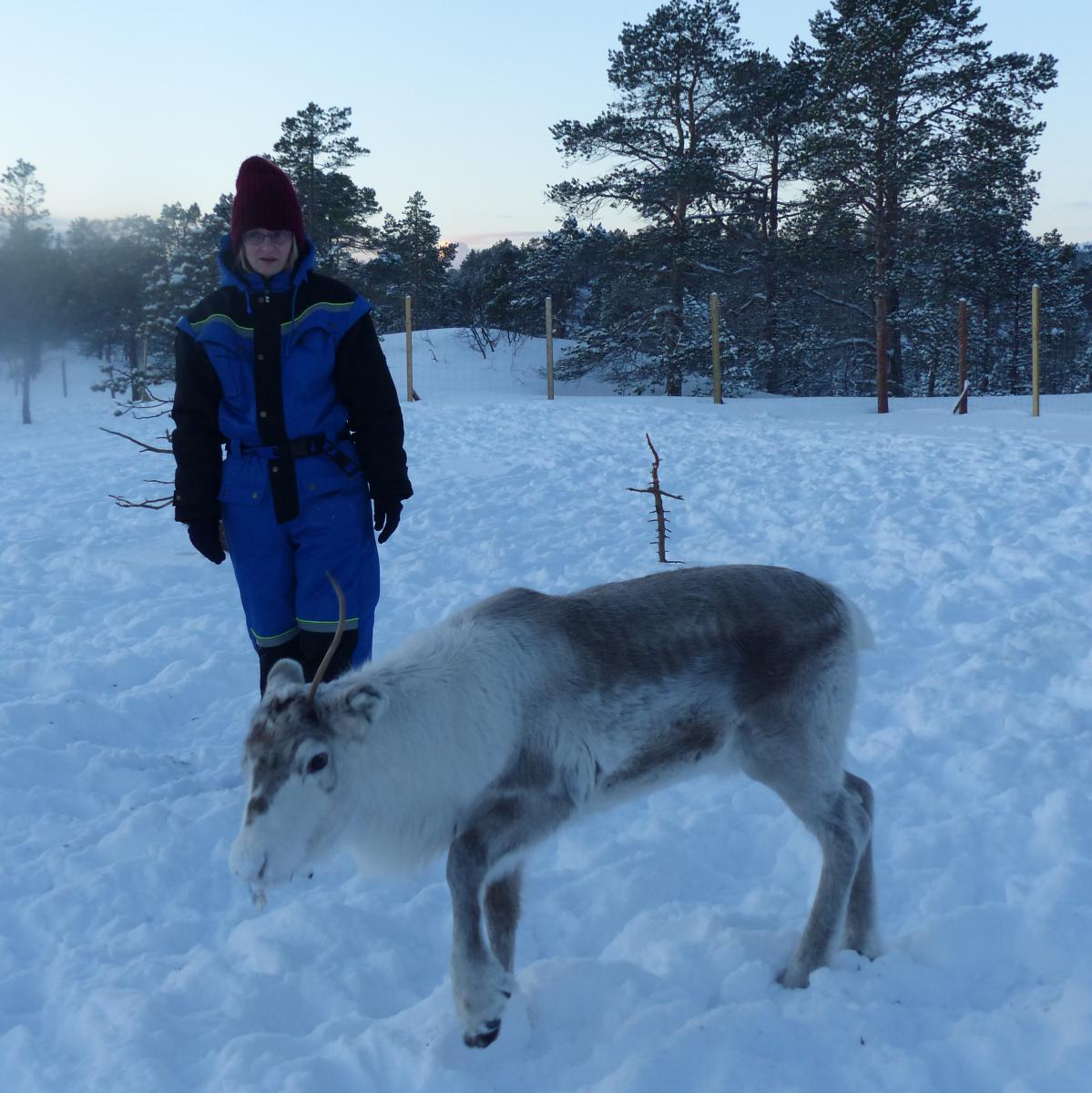
It wasn’t in Finland. It was in Norway (Malangen, south of Tromsø), in the winter of 2019. A young reindeer with one crooked antler walked past me, decided I wasn’t worth its time, and started digging in the snow in search of something to eat. I stood there in a borrowed blue snowsuit and waited quietly until it approached.
I had no idea at the time that I would spend the next six winters within walking distance of a herd.
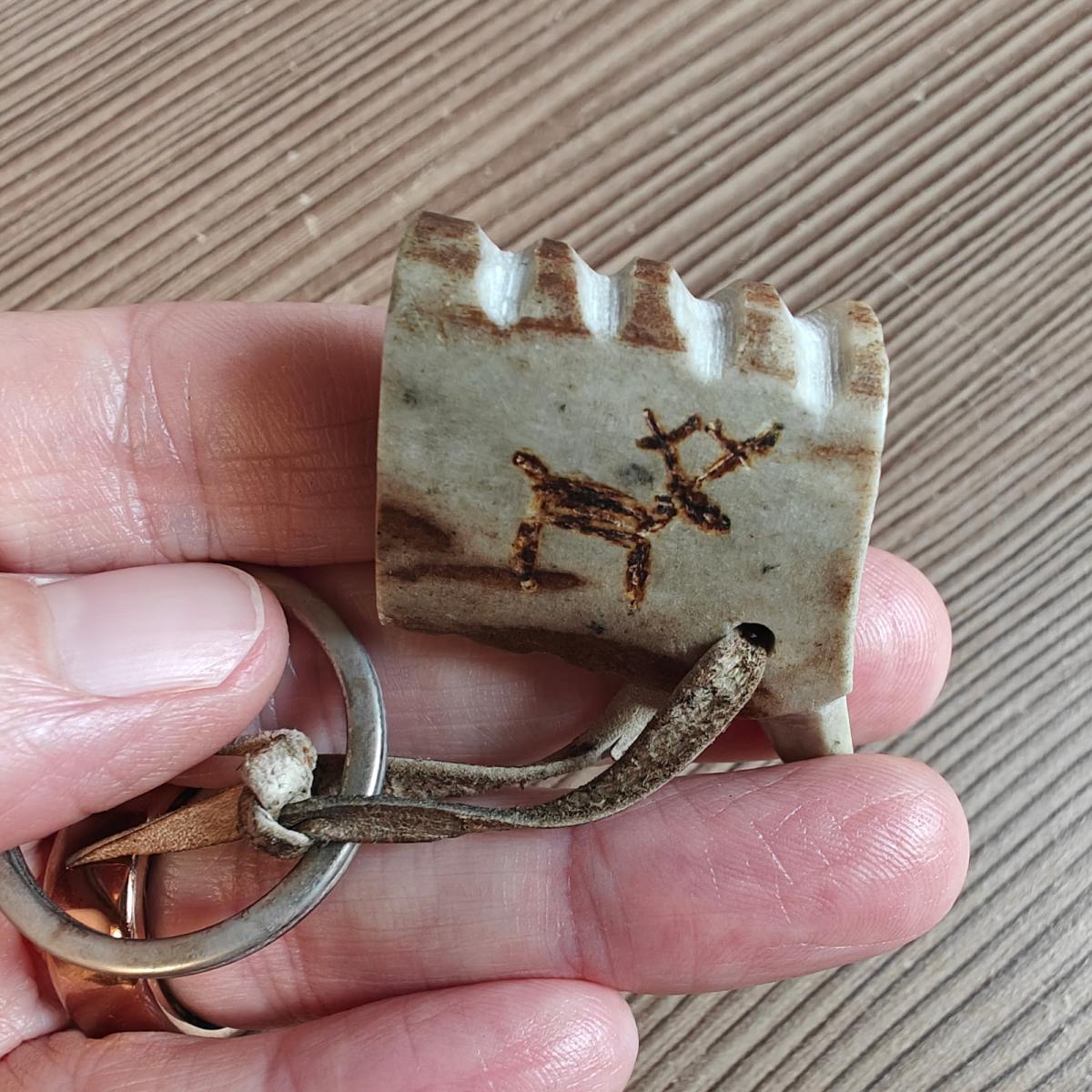
That same afternoon, there was a Sámi storytelling session, and afterwards we were allowed to make a little something out of a piece of antler. I burned a little reindeer figure into mine and turned it into a key ring.
I still have it. Looking back, it was one of the first reindeer illustrations I ever drew; a few years later, you’ll find them in several of my collections.
Every reindeer in Lapland has an owner
Visitors often assume that the reindeer they encounter in Lapland are wild animals. That is not the case: reindeer are semi-domesticated and each animal has an owner. They are tagged, counted and herded, and they spend most of the year roaming freely across vast areas, whilst still belonging to someone, no matter how remote the place where you encounter them.
The moose, however, that you occasionally spot at the edge of the forest, is truly wild.
Two things about their antlers surprise almost everyone. Reindeer are the only species of deer in which the females also grow antlers. They are shed every year and grow back at a rate that is hard to imagine when you’re standing next to a full set of antlers. Males shed their antlers after the autumn rutting season, in November and December. Females keep theirs throughout the winter, until the calves are born in the spring. With that in mind: the reindeer pulling a sledge on Christmas Eve, with their antlers proudly in place, are almost certainly females. (if that isn’t a good quiz question :-) )
Baby Reindeer: meeting at eye level
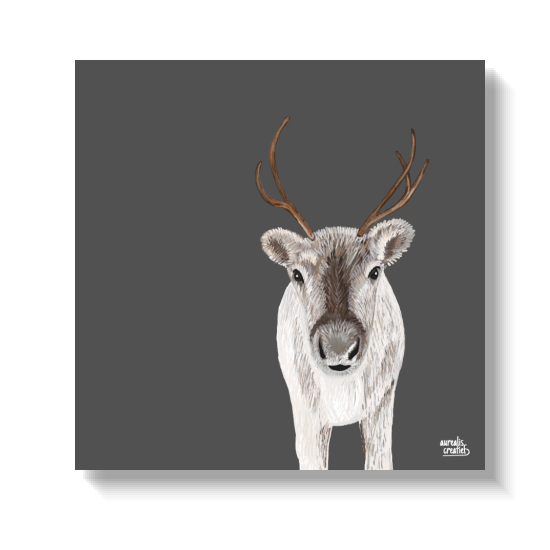
A young reindeer looks straight at you, calm and curious. Soft fur, dark eyes, a fledgling set of antlers that do not yet reveal the shape they will take. I have drawn this reindeer with delicate lines, because that is what the animal calls for: a reindeer with a curious gaze!
This is an encounter at eye level, with no fence between you. A young reindeer is more likely to approach you than an adult one, and it will lose interest just as quickly.
An encounter at eye level
A reindeer farm within walking distance
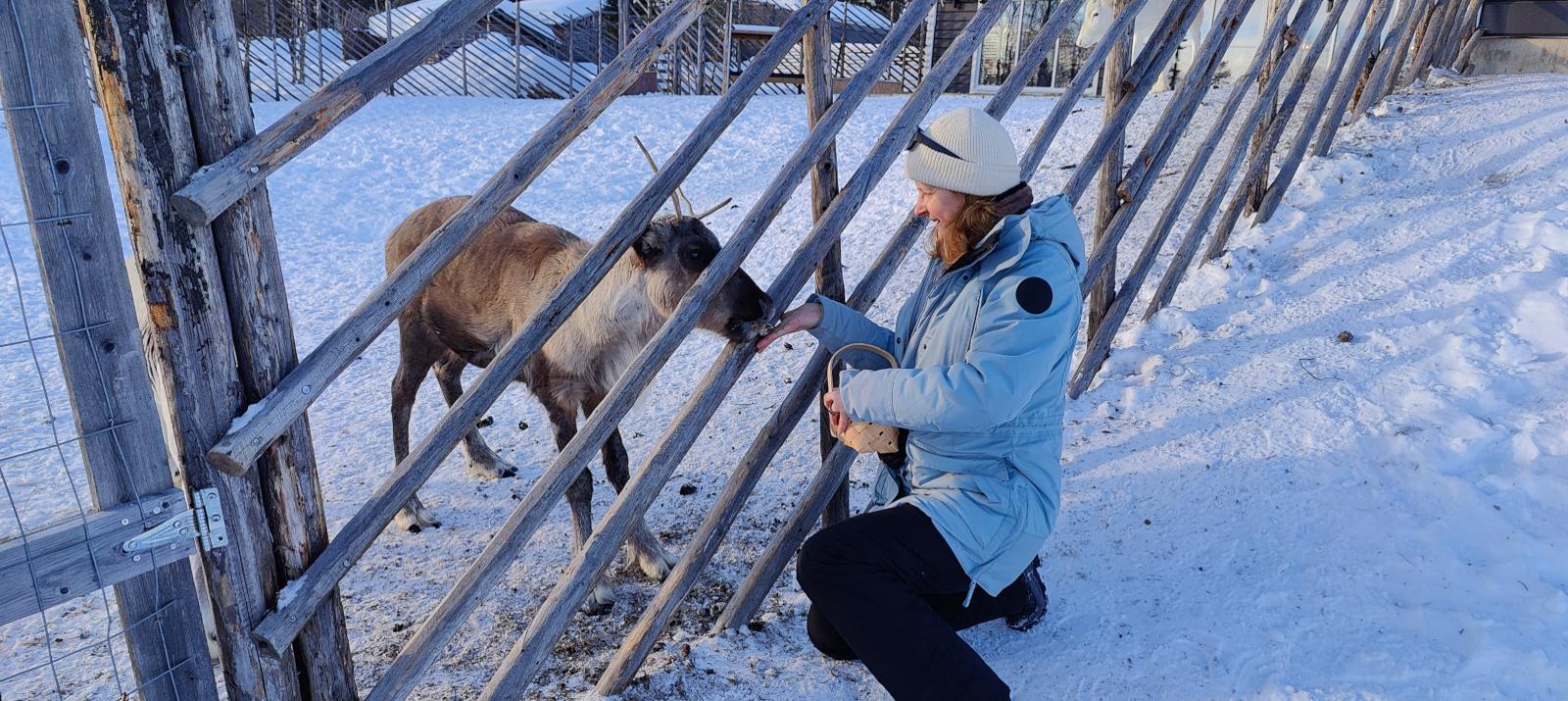
For six winters, I lived and worked in Finnish Lapland, and there was a reindeer farm just a short walk from our house. Through a small gate, you could feed the animals lichen by hand. I went there countless times after work. They were shy animals, unaccustomed to tourists.
Reindeer need to be patiently accustomed to people over a long period of time. A herder there told me that it takes more than three years before a reindeer is reliable enough to pull a sledge. So I knew I had to wait with great patience, because the reindeer itself decides whether to come to you or whether it isn’t curious enough to approach you.
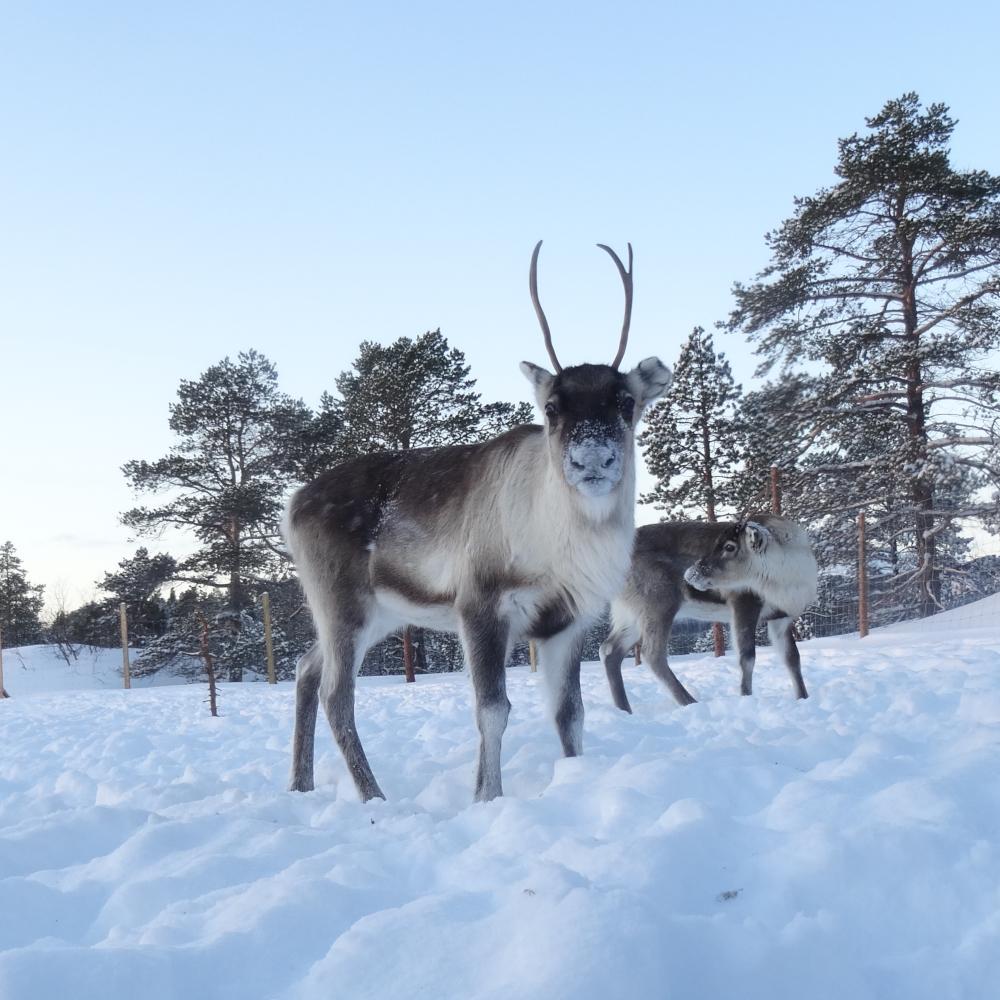
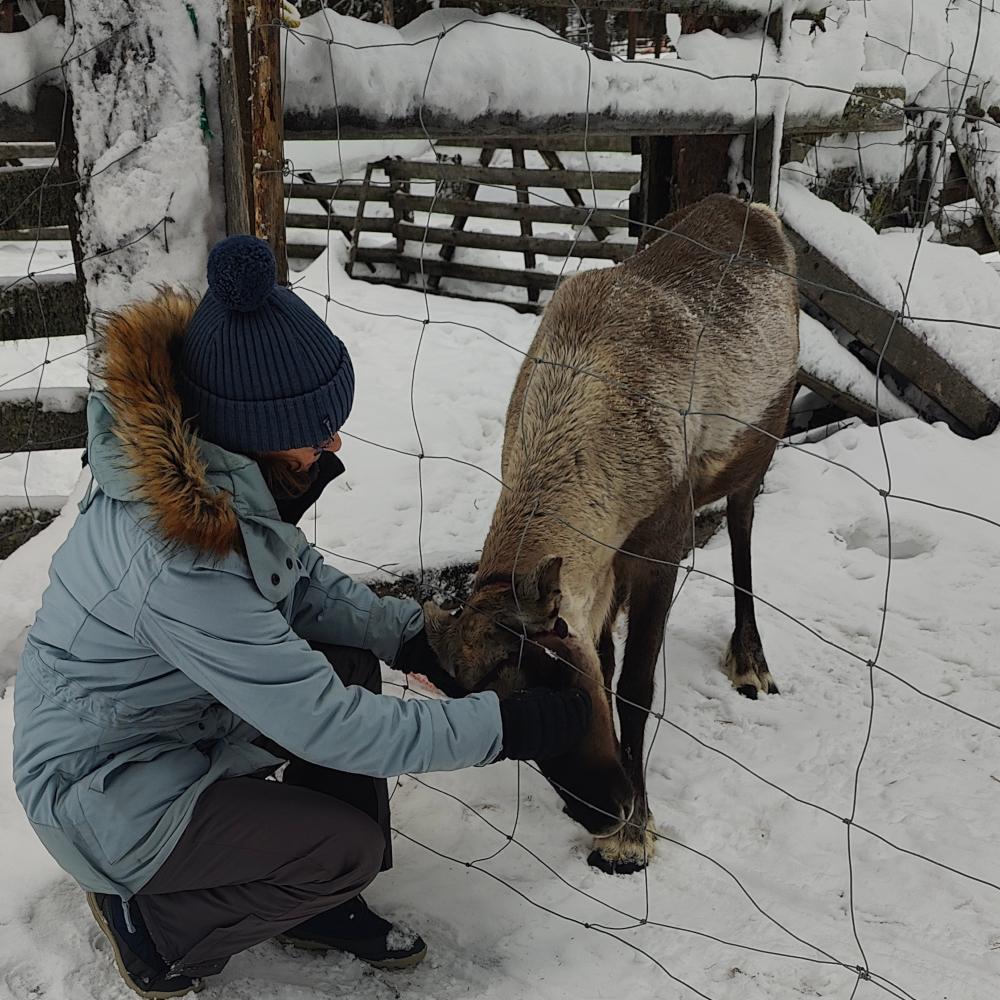
And then, one afternoon in February 2023, one of them came right up to the fence. It poked its head through the fence, nuzzled my hand and asked for a big cuddle. I stroked the thick winter coat behind its ear and its collar, and it thoroughly enjoyed it – just as my Ragdoll now comes begging for a cuddle whenever I take a break from drawing. That went on for several minutes.
Every time I stopped, it would lean against my hand again, which was sticking through the fence.
I’d been coming to watch them for years. That was the first time one of them had actually asked for something in return.
Featured work
Pink Frosty Morning: alone at first light
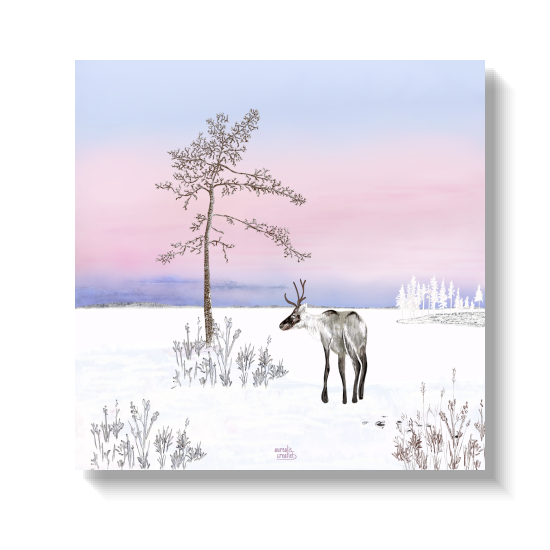
The second encounter is with a reindeer roaming freely, standing at the edge of a frozen lake, with a frost-covered pine tree beside it, whilst the whole sky is bathed in soft pink and lilac. The colours seem made up, but that really is the colour of the sky in Lapland. On a handful of clear days every winter, the sky above Lapland really does look like this, all day long, and the snow takes its colour directly from the sky.
This is the reindeer that is entirely at home in this landscape. Not a herder in sight, not a farm gate. When you see a reindeer like this from a car window, or on the other side of a lake, you understand why the animal has come to be at the heart of an entire culture.
An encounter alone at first light
‘Pink Frosty Morning’ is also the first season of my ‘Lapland 8 Seasons’ collection, and the story of the day a whole herd caused a traffic jam on the road to Pulju. You can read the story in ‘Frosty Winter’, the season when the sun reappears above the horizon.
Reindeer freedom
The spring release at Havøysund
In April 2022, we drove from our little yellow cottage in Finland to the Norwegian coast, and just outside Havøysund we witnessed something I had never seen before. On a barren, half-thawed mountain pass, a livestock lorry was parked at the side of the road. The driver told us that the animals came from a farm near Kirkenes, several hundred kilometres away. They were being released for the summer.
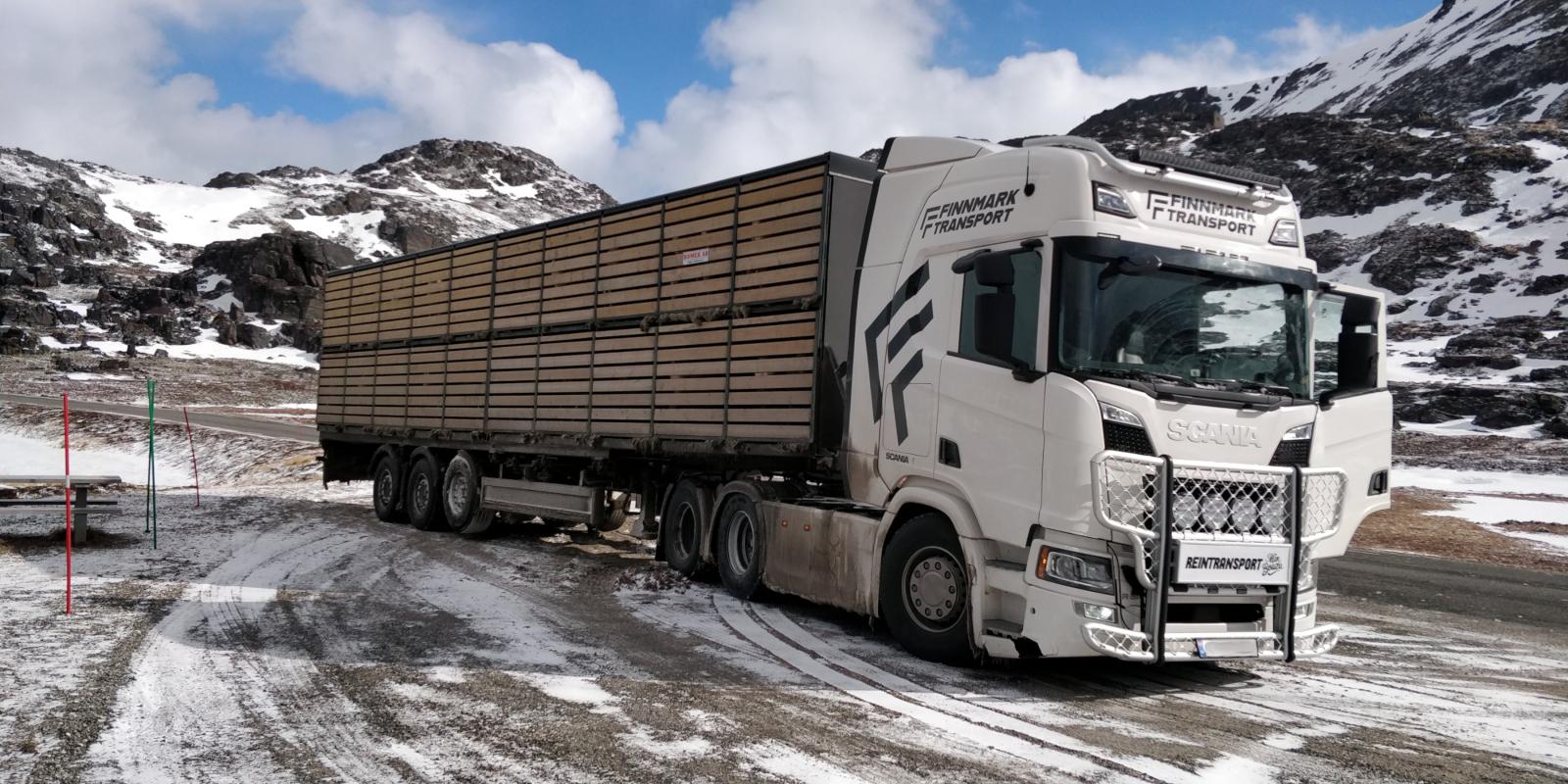
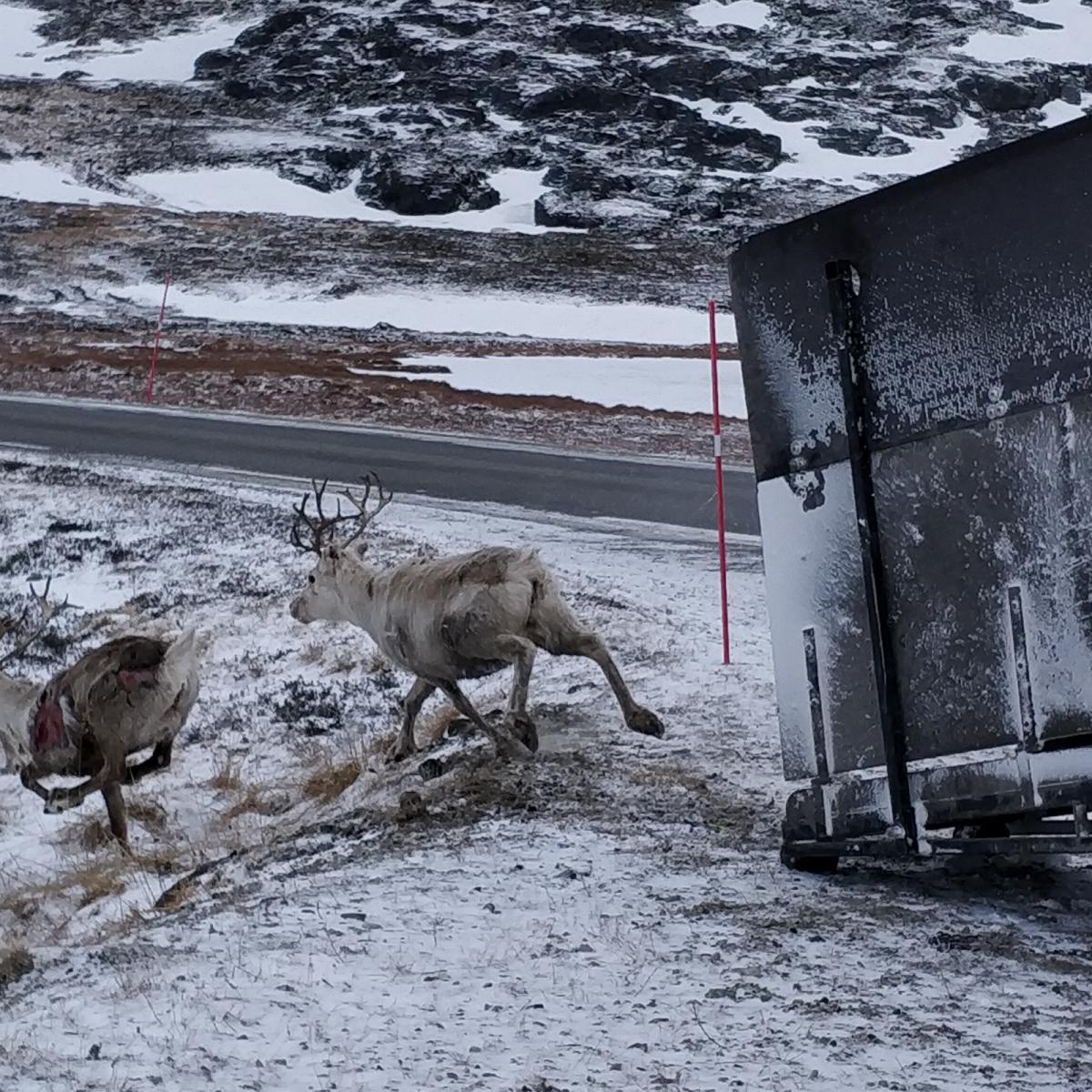
The driver lowered the rear ramp, and then the reindeer came running out one by one and dashed out onto the plain… Once they had all been released, they crossed the road, set off into the distance and disappeared behind the hill you can see in the background of this photo. Off to enjoy the freedom of summer.
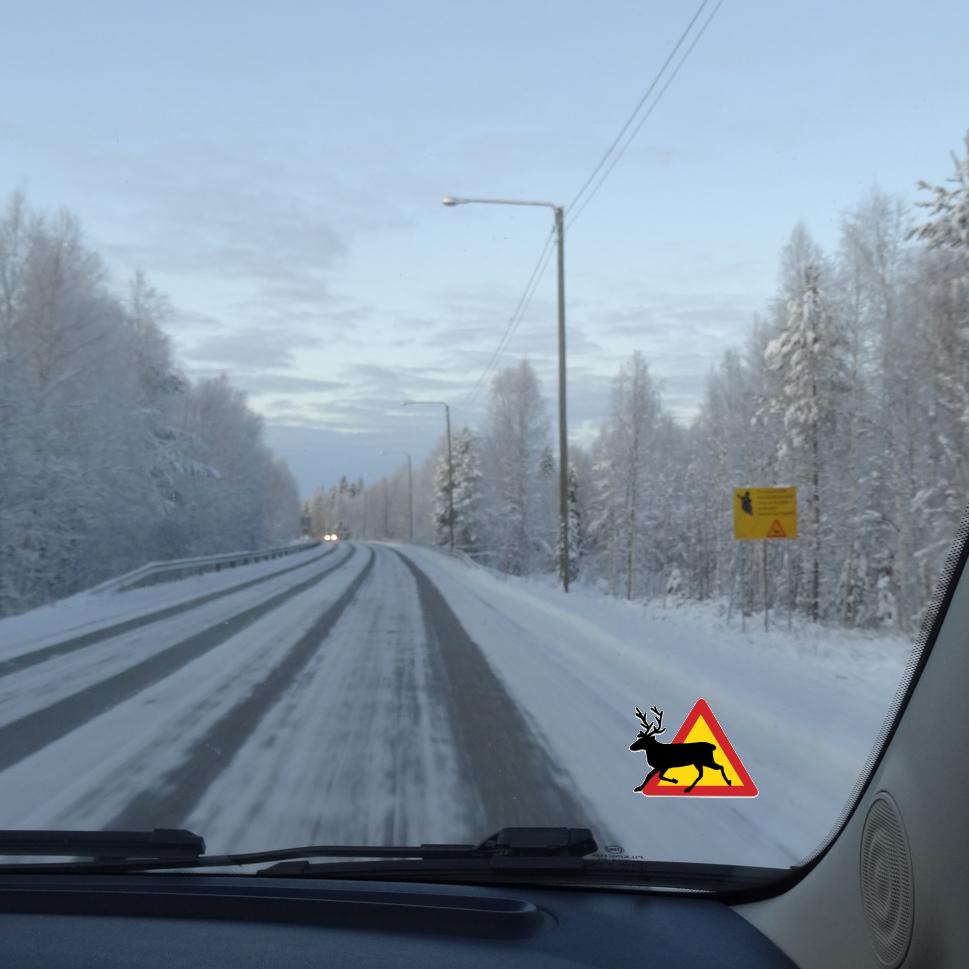
That is precisely why there are yellow warning signs everywhere along the roads in the far north. Norway, Sweden and Finland each use a different one, each featuring a different drawing of a reindeer. After six winters in which I’ve come across all three, I’ve finally drawn my own version of each sign. And if you’re driving north of Rovaniemi between May and September, that sign isn’t just for show: those reindeer really are out on the road.
Santa Claus Village
The sled I never took
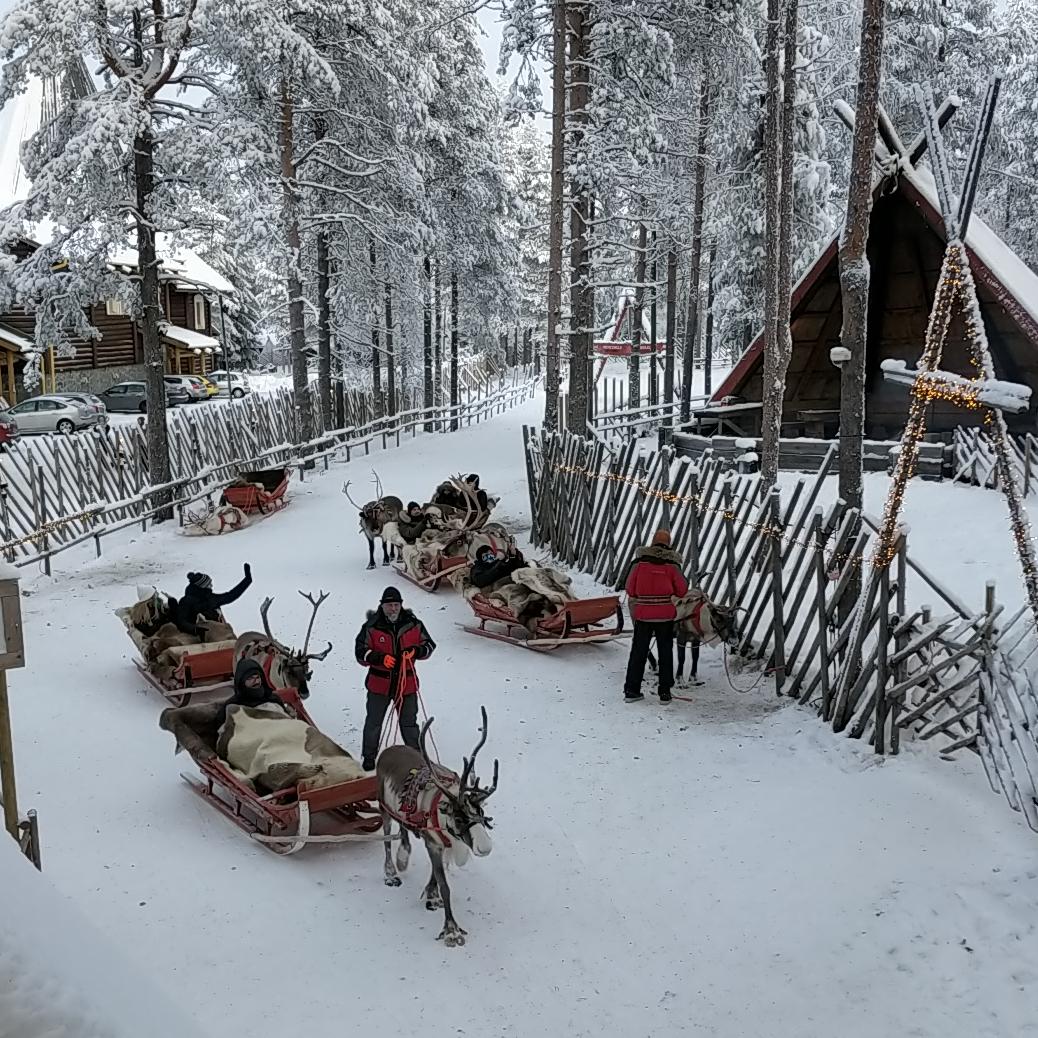
I have to be honest about this. In six winters in Lapland, I’ve never been on a reindeer sleigh. In November 2019, I stood by the fence in Rovaniemi and watched as other people, wrapped in fur, glided away at a leisurely pace amongst the pine trees.
It really is a different experience: gliding gently behind a reindeer, the sound of the sledge on packed snow, the guide walking alongside you, a forest that suddenly comes into view and through which you glide in silence.
Not even Santa Claus could get me onto his sledge
At Santa Claus Village in Rovaniemi, the reindeer sledges set off at a leisurely pace amongst the pine trees. I went to watch every winter, standing on the sidelines whilst others settled into the sledges and pulled the reindeer skins over their legs.
What people say about it sounds peaceful: the sound of the sledge on packed snow, the guide walking alongside you, a forest that ceases to be merely a backdrop and becomes a place you journey through.
And then there’s the Lapland you only encounter in December, or only in your mind.
Featured work
Magical Darkness at Santa Claus's House: Lapland of the imagination
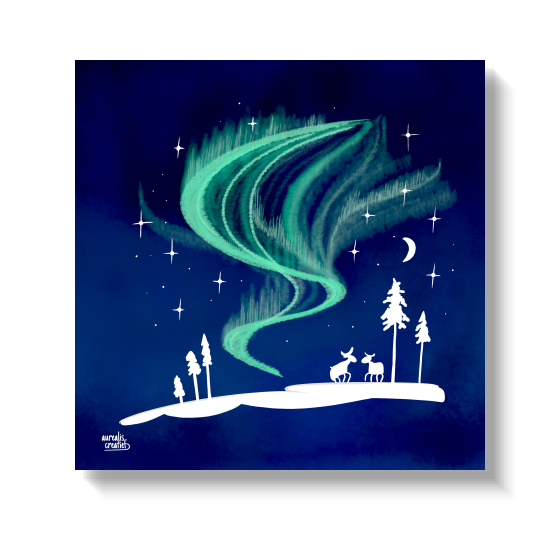
Above a snow-covered hill, the Northern Lights unfold in great green flames. A crescent moon rises, stars scatter across the darkness, and two reindeer stand beneath them, small and still in a scene far too beautiful to be ordinary.
This is the third encounter, and it takes place mainly in December. It is the Lapland of our childhood, the image people have in their minds before they have even seen a single reindeer: Santa’s reindeer.
I drew these two reindeer around Valentine’s Day. In Finland, 14 February is ystävänpäivä, Friends’ Day: the cards and small gifts are for friends rather than for a romantic partner. That suits this drawing better than romance: two animals standing together in the dark, keeping each other company beneath the Northern Lights.
Frequently asked questions
Are reindeer in Lapland wild?
No. Reindeer in Finland, Sweden and Norway are semi-domesticated, and every animal has an owner, even those you come across far from built-up areas. They are tagged and herded by herding families, and they roam freely across vast areas for most of the year. The truly wild large animal of the northern forests is the moose. If you come across a reindeer on a road or on a hill, you’re encountering someone’s livestock. I hope you have the opportunity to encounter some of them, because it's amazing to see them run around in the wild!
Can you cuddle a reindeer in Lapland?
Not in the same way you would cuddle a dog, and you should never try it with an animal that hasn’t approached you of its own accord. Reindeer are shy, and it takes years of patient interaction before they feel at ease around people. At a reindeer farm, you can usually feed them lichen from your hand, and with some of the calmer animals, you’re allowed to scratch their thick winter coat around the neck and behind the ears. Always follow the herder’s instructions and let the reindeer set the pace for the cuddle.
Do female reindeer have antlers?
Yes. Reindeer are the only species of deer in which both males and females have antlers. The timing differs: males shed their antlers after the autumn rutting season, in November and December, whilst females keep theirs throughout the winter and shed them in the spring, after the calves have been born. A reindeer with antlers in the middle of winter is therefore most likely a female, which makes Santa’s team a very different story from the one we grew up with.
Where can you see reindeer roaming freely in Northern Norway and Finland?
In summer, almost everywhere north of Rovaniemi. In Finland, you’ll often come across them around Inari and Ivalo and along the roads through the hills, whilst in Northern Norway you’ll see them north of Tromsø, towards Kirkenes and Havøysund, and on the plateau near the North Cape. They are released into the wild in spring and rounded up again in autumn, so from June to September is the best time to spot them roaming freely in the countryside. In winter, you’re most likely to get a close-up encounter at a reindeer farm, although you’ll still come across them on the roads as their home is nearby.
Arctic Adventures · Reindeer
All three featured works are available as premium illustrations on art blocks, metal plates and acrylic glass prints.