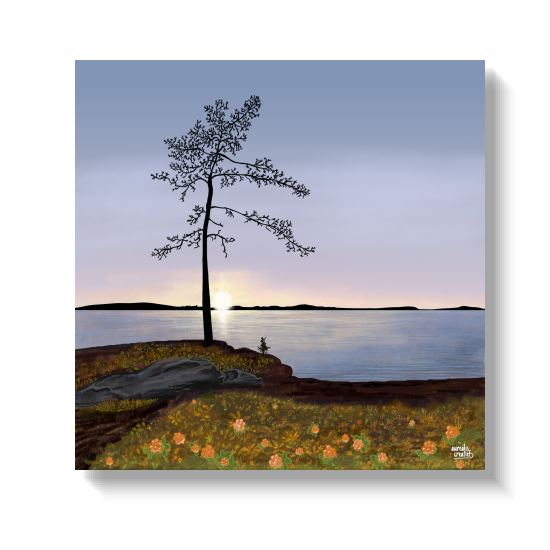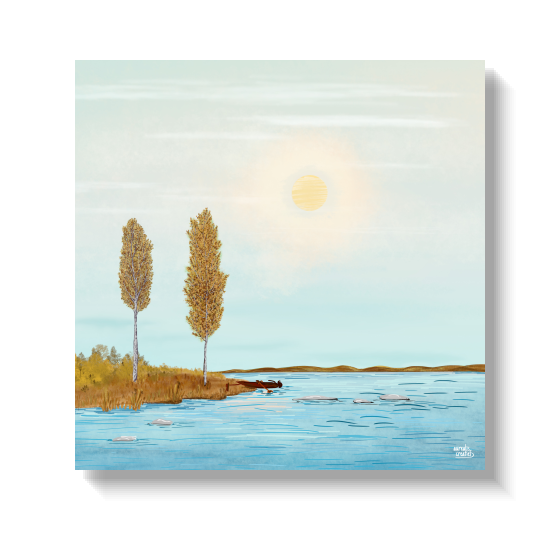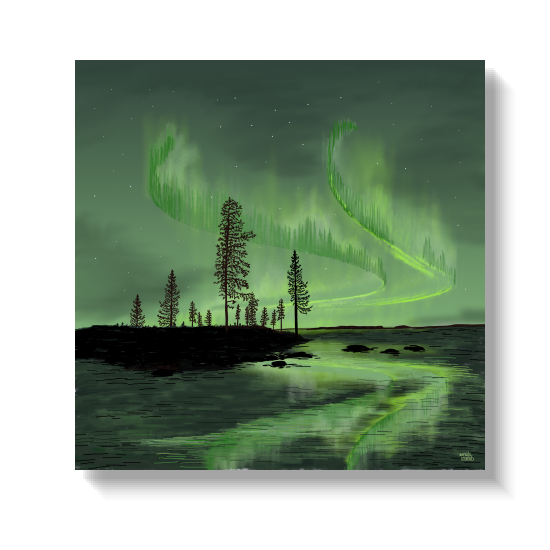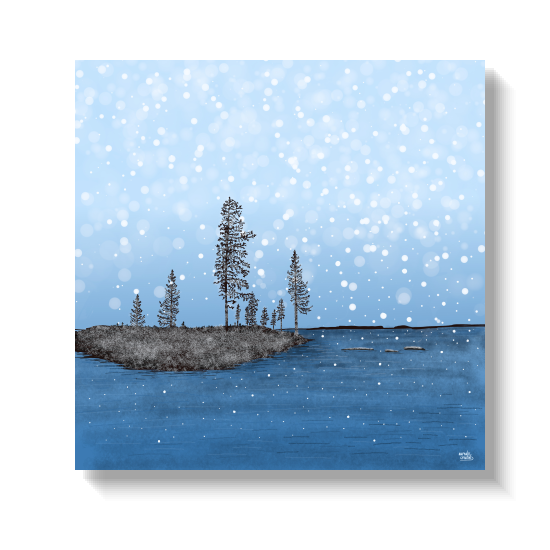
Welcome to Lapland
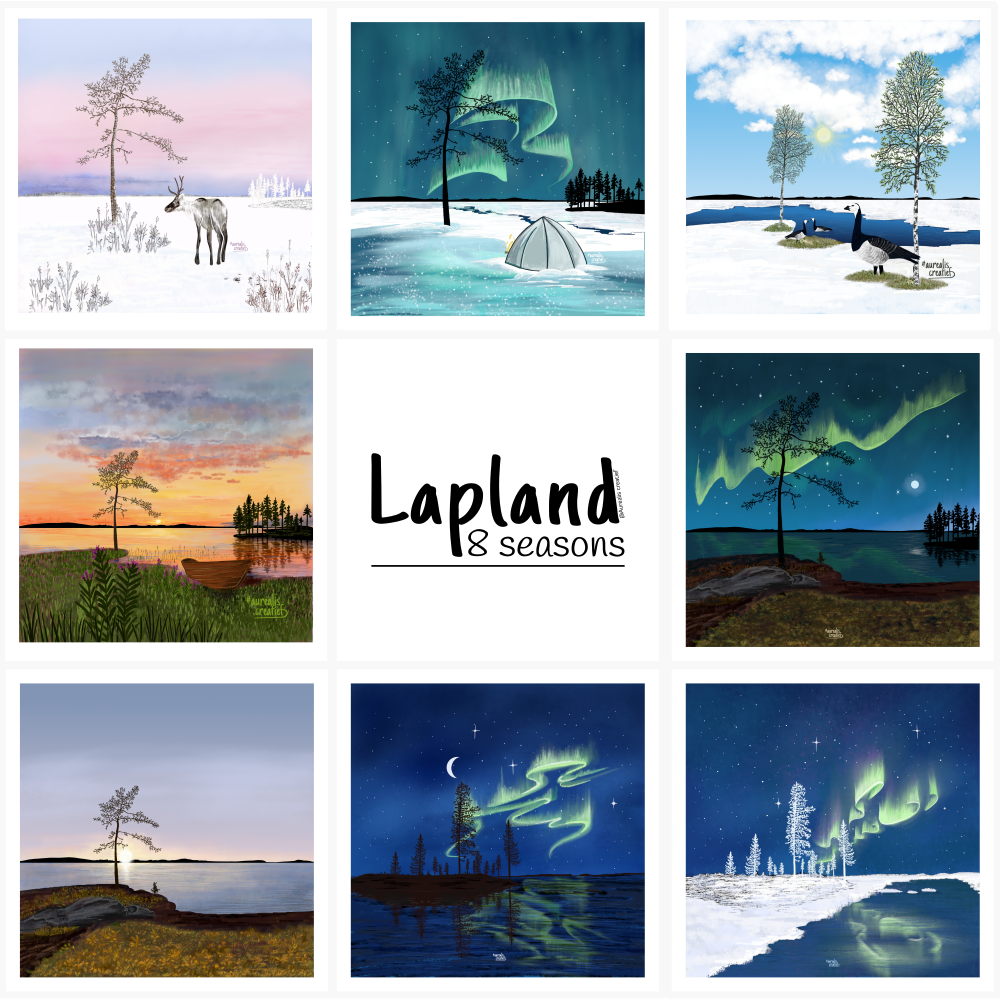
The 8 seasons of Lapland
Lapland8Seasons · AUREALIS CREATIEF
Lapland Doesn’t Have Four Seasons.
It Has Eight.
I spent six winters in Finnish Lapland. I lived there from November through May, and that’s long enough to discover that what I’d called “winter” my whole life was actually four different seasons up there. Most travel guides say that Lapland has four seasons, just like everywhere else: winter, spring, summer, and fall. But they aren’t entirely correct, they were looking at the wrong calendar.
The Sámi, the indigenous people of Lapland, divided the year into eight seasons, not four. Over the years, in addition to these varied winters, I’ve also spent many summer vacations in the region, and I’ve experienced 7 of the 8 seasons myself, so the logic of their calendar makes perfect sense to me.
This article is the expanded version of the story behind my painting collection Lapland 8 Seasons. It’s also a love letter to Lapland. A more detailed story about each season will follow in separate articles.
Which country has 8 seasons?
Not a single country, but a region: Lapland, or Sápmi in the Sámi language. It stretches across the northern parts of Finland, Sweden, Norway, and Russia's Kola Peninsula. The 8-season calendar comes from the Sámi people, the indigenous inhabitants of this Arctic region, whose ancestors have long observed eight distinct seasons based on the rhythms of nature.
Whose seasons are these?
The 8 Seasons are part of Sámi heritage: the eight-season calendar is part of Sámi heritage; it is not a marketing invention. The Sámi have lived for centuries in the Arctic regions of Finland, Sweden, Norway, and the Russian Kola Peninsula. Their way of life consisted of herding reindeer, fishing, and observing a landscape that adapts very quickly to the Arctic climate and requires more than four seasons. Just as they have many names for snow, they have not four but eight seasons.
You’ll notice that Finnish tourist offices also write about the eight seasons, and I’ve based this article on those sources (but the calendar itself comes from the people who needed it: those whose livelihoods depended on precise knowledge of when the ice would break, when the reindeer calves would be born, and when the snow crust would be thick enough to support a sled).
The Sámi Calendar Illustrated by a Belgian Artist
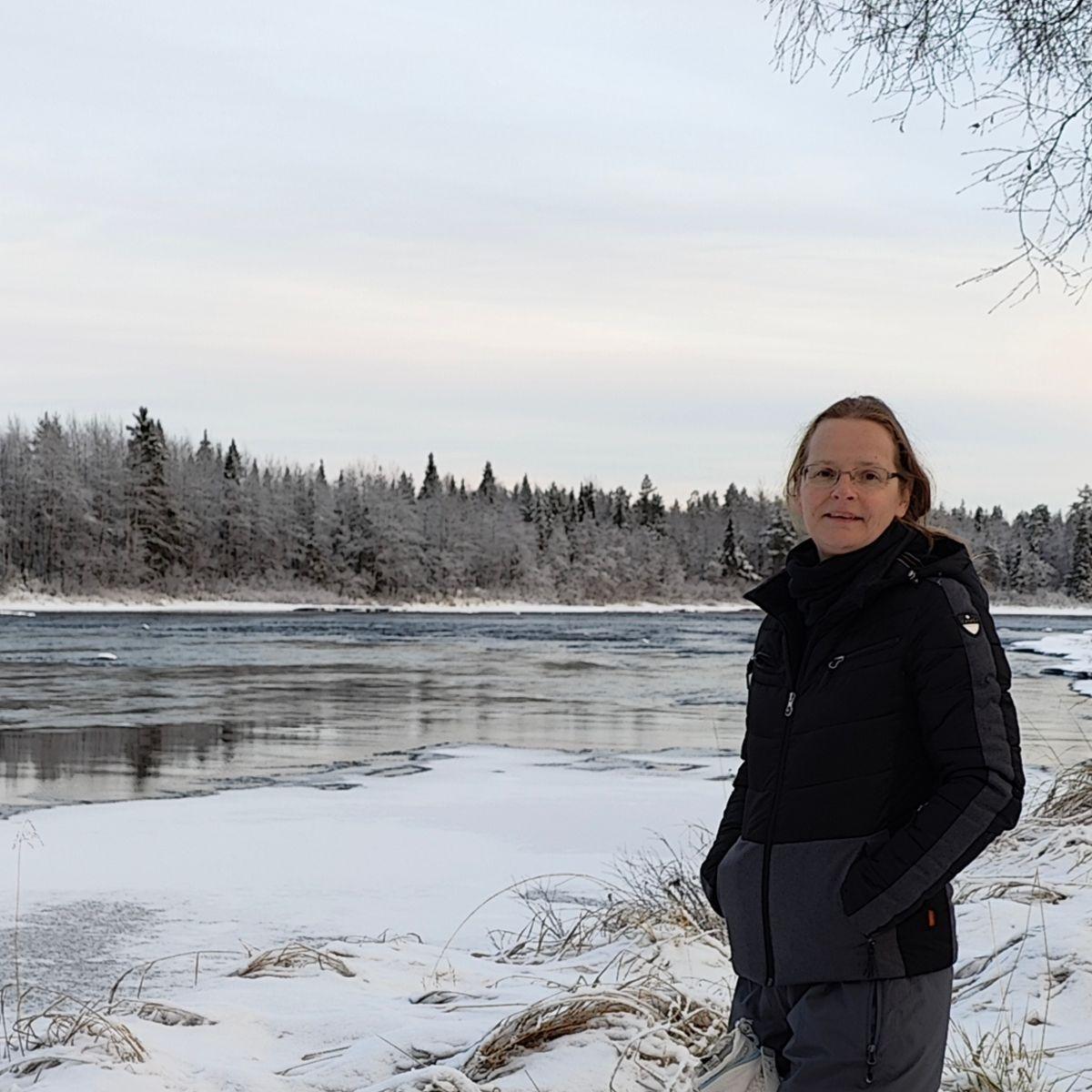
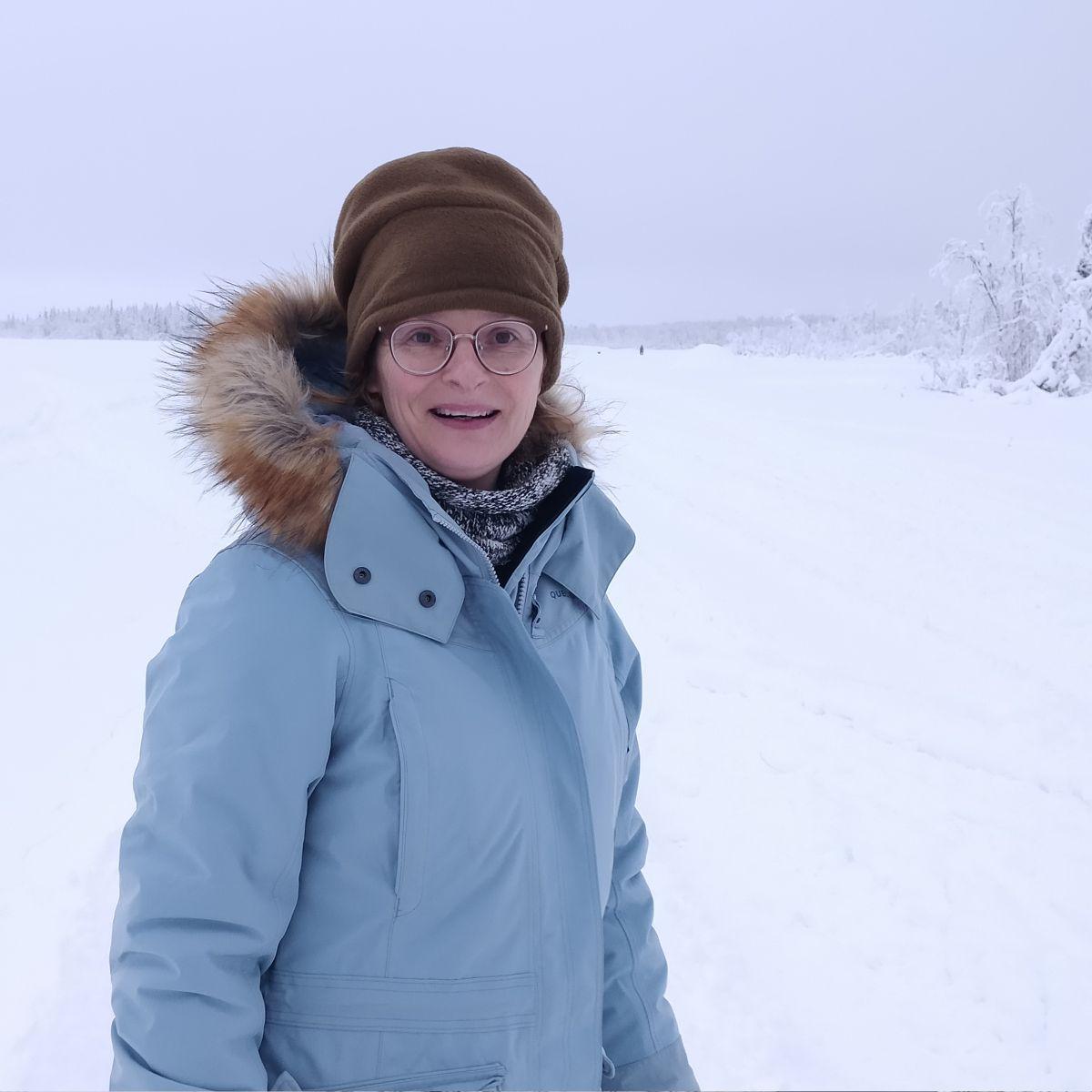
I am not Sámi. I am a Belgian illustrator who worked for six winters at a boutique hotel in Kittilä, in Finnish Lapland, I live here long enough to understand that the rhythms here are not a marketing concept. They are real, and they are important. I’ve also experienced that, with current climate change, these eight seasons no longer always align with the old calendar ... unfortunately.
Why eight seasons, not four?
The climate in Lapland doesn’t change gradually. It doesn’t transition smoothly from one season to the next. Sometimes it changes overnight. The crisp, dark days of early winter are nothing like the warm, dazzling snowy days of late winter. According to our calendar, they’re both “winter.” But experiencing them feels very different.
Four seasons aren’t enough to capture that. Eight are.
Each Sámi season has its own character. Each season has its own light, its own weather. For instance, the icy winter asks you to dress warmly before going outside, and the melting ice asks you to listen to the rivers as they awaken. Ruska gives you fourteen days to see the trees turn red, orange, and gold before the cold returns.
Lapland 8 Seasons · ART COLLECTION
Discover the complete Lapland 8 Seasons collection
Each illustration captures a season that I could not have painted anywhere else.
If this story appeals to you, you can read more in the article on Nordic Nature Wall Art, about the common thread running through my work and what still draws me to the north.
The 8 Seasons of Lapland
1. Frosty Winter
Mid-January through February | Finnish: pakkastalvi
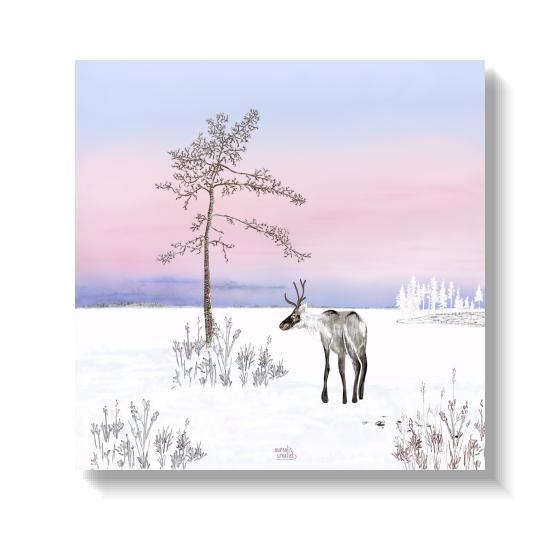
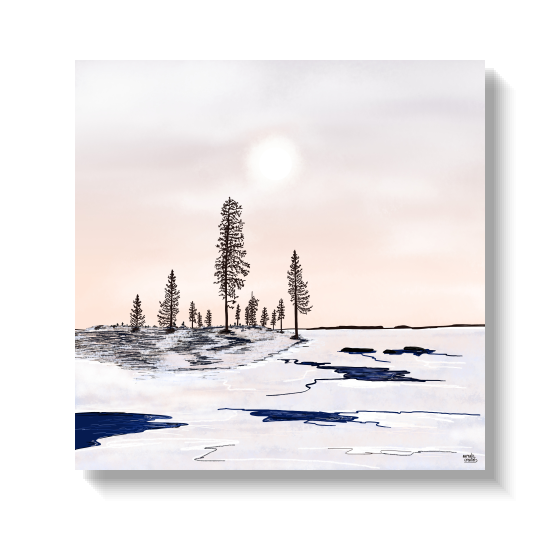
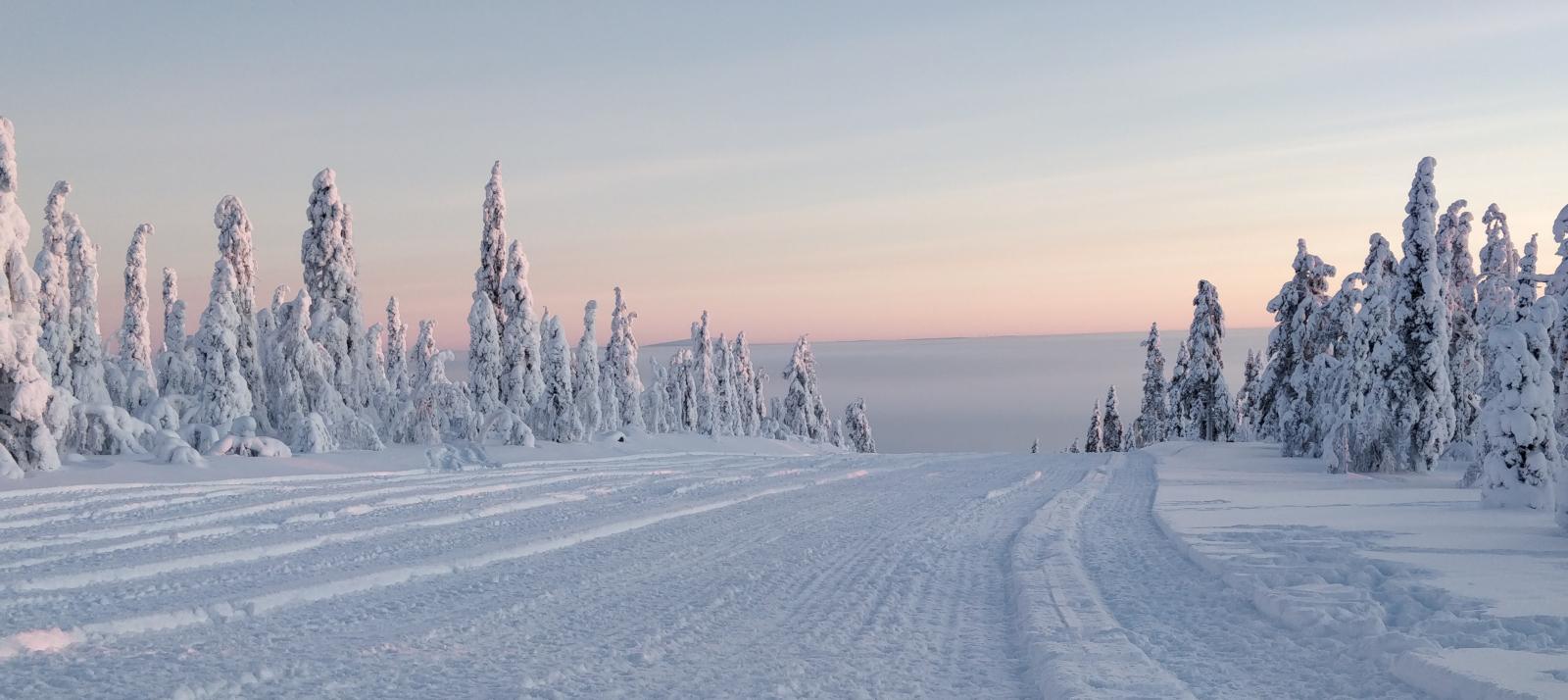
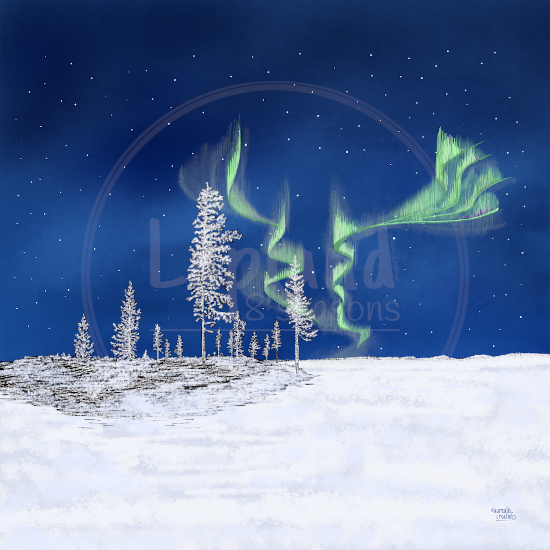
The deepest winter, the season with the most extreme temperatures. Daytime temperatures of -30 °C are normal. Unassuming pine trees transform into fantastic snow creatures, weighed down by heavy snowfall. The first real sunshine returns to Southern Lapland (Rovaniemi) after weeks of short, blue-lit days. In the north, the sun is still absent; there, time is marked by the moon and the soft pink-and-blue pastel glow of twilight around noon.
This is the season when your eyelashes can freeze together if you stay outside too long. It’s also the time when the light, finally returning, begins to shine on the snow in surreal shades of pink at sunrise.
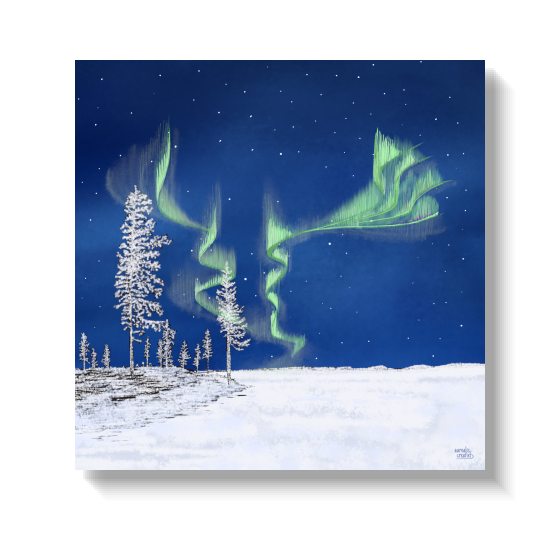
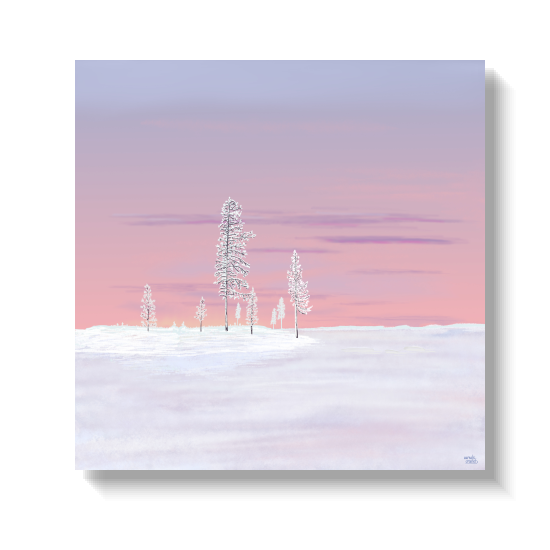
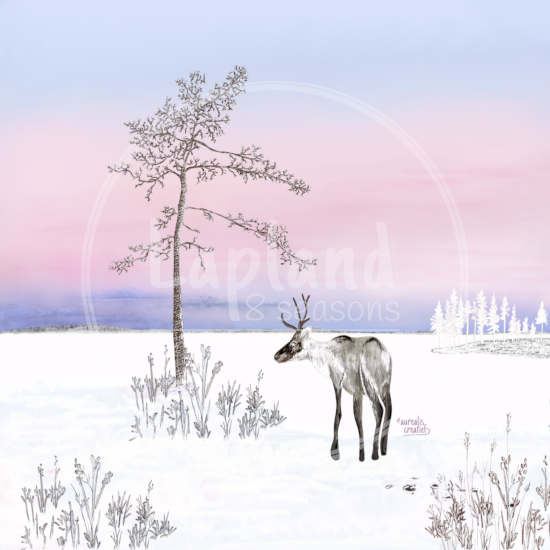
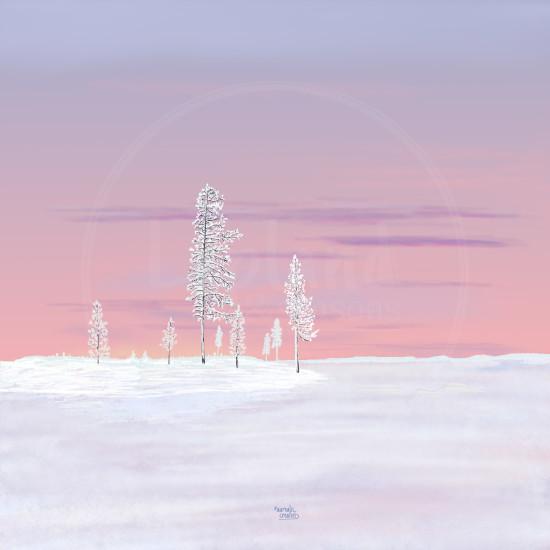
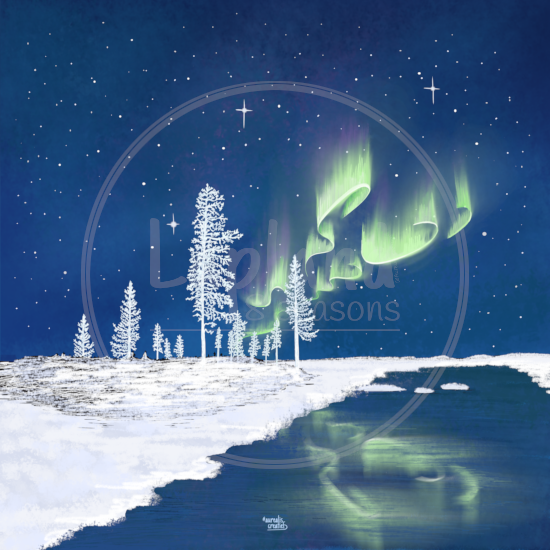
I’ve painted this season as 'Frozen Forest'. The landscape is filled with pine trees so stiff with frost and snow that they resemble creatures more than trees, with green auroras above their heads. A second illustration is titled 'Pink Frosty Morning in Lapland' and depicts the soft pink sky of a clear afternoon during the final days of the polar night. The polar night fades quickly and is never as dark as its name suggests.
2. Crusty Snow (Spring)
March through mid-April | Finnish: kevät
The first season when the sun really starts to give warmth. Not enough to melt the snow, but enough to soften the snow surface a bit every afternoon. At night, it freezes again. Day after day, a hard crust forms on top of the snowpack.
For a few weeks, you can walk on that crust. Standing on 1.2 meters of compacted snow without sinking is one of the strangest sensations Lapland has to offer. Snowshoes are no longer necessary, because you can walk across the surface of an entire landscape that was still unwalkable just two weeks earlier.
Millions of ice crystals catch the spring sun, and vast snowfields glisten in the sunlight. Against all expectations, it is one of the most photogenic seasons.
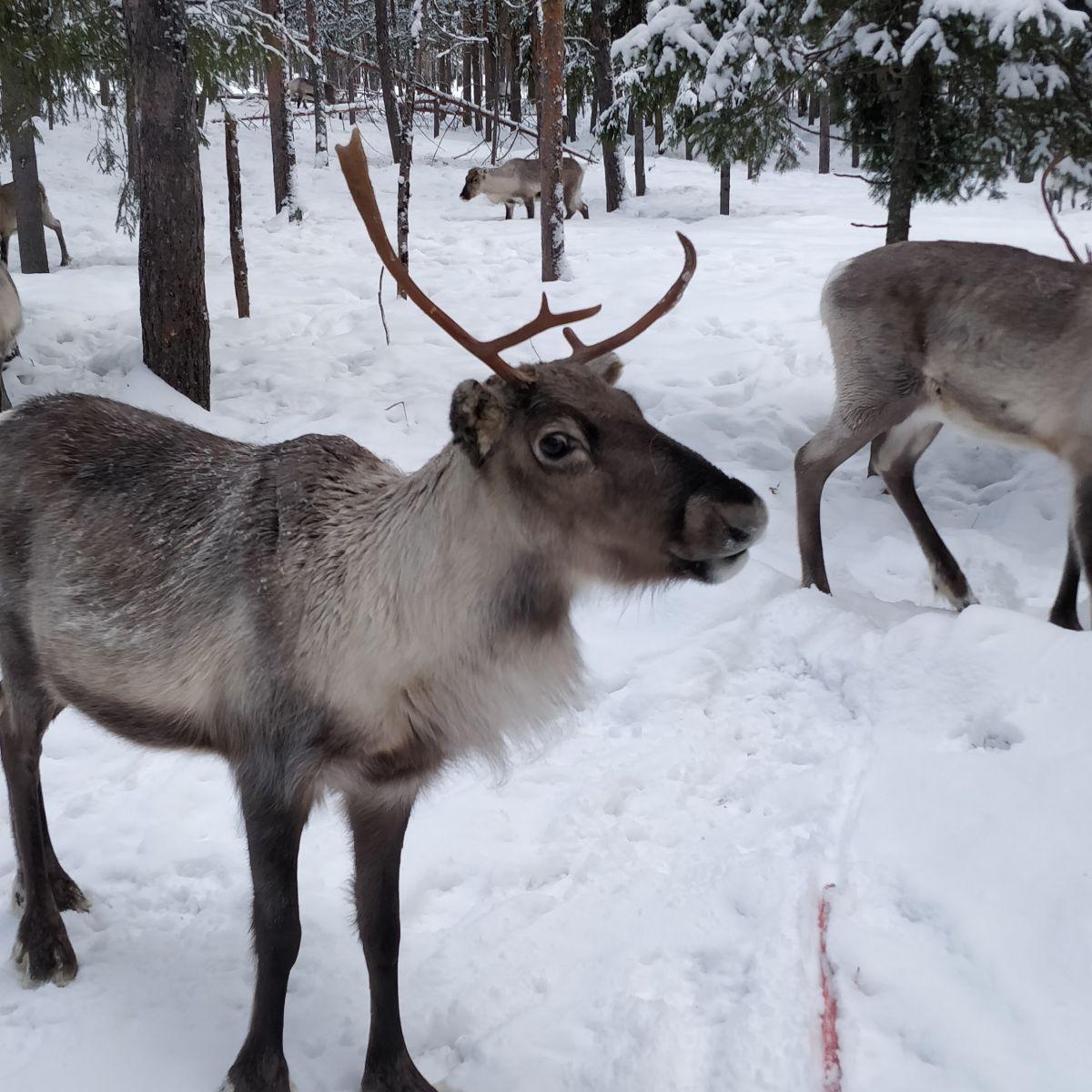
This is also the time when pregnant reindeer give birth to their calves. The cycle begins anew beneath the fragile light.
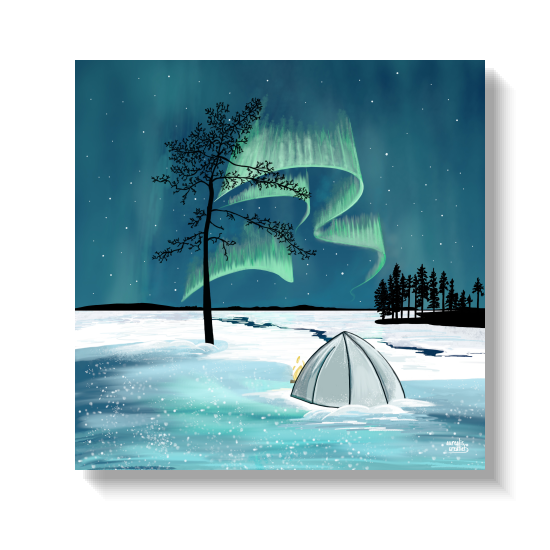
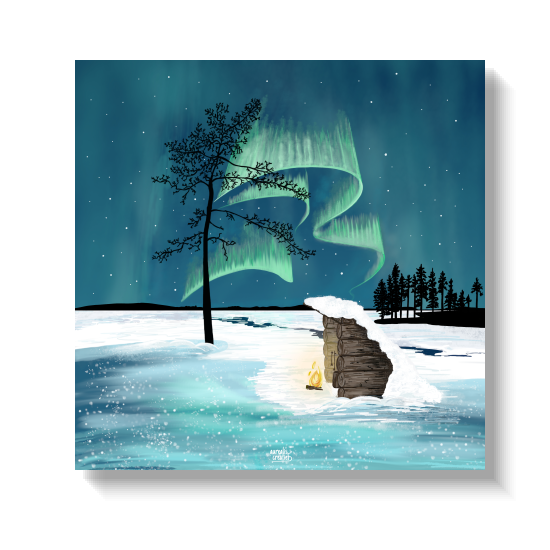
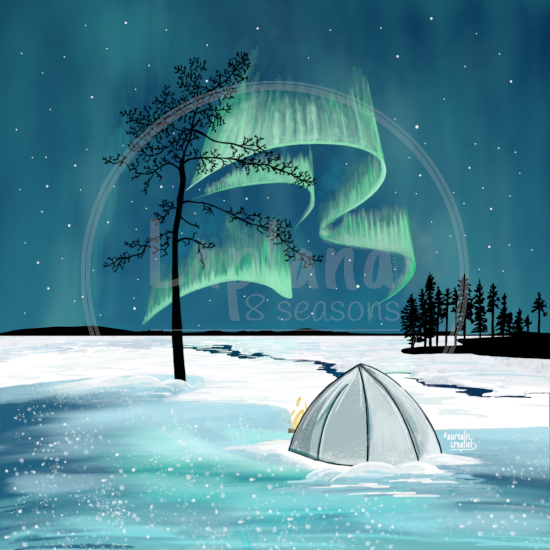
I have depicted this season in two paintings: 'Crusty Freshness', an illustration showing the glistening, unbroken surface, and 'Arctic Campfire under the Northern Lights', because the aurora is still active during the dark hours, and the contrast between the green sky and the snow beneath it creates a world all its own.
3. Departure of Ice
Mid-April through mid-May | Spring-Summer
The change of seasons you can hear.
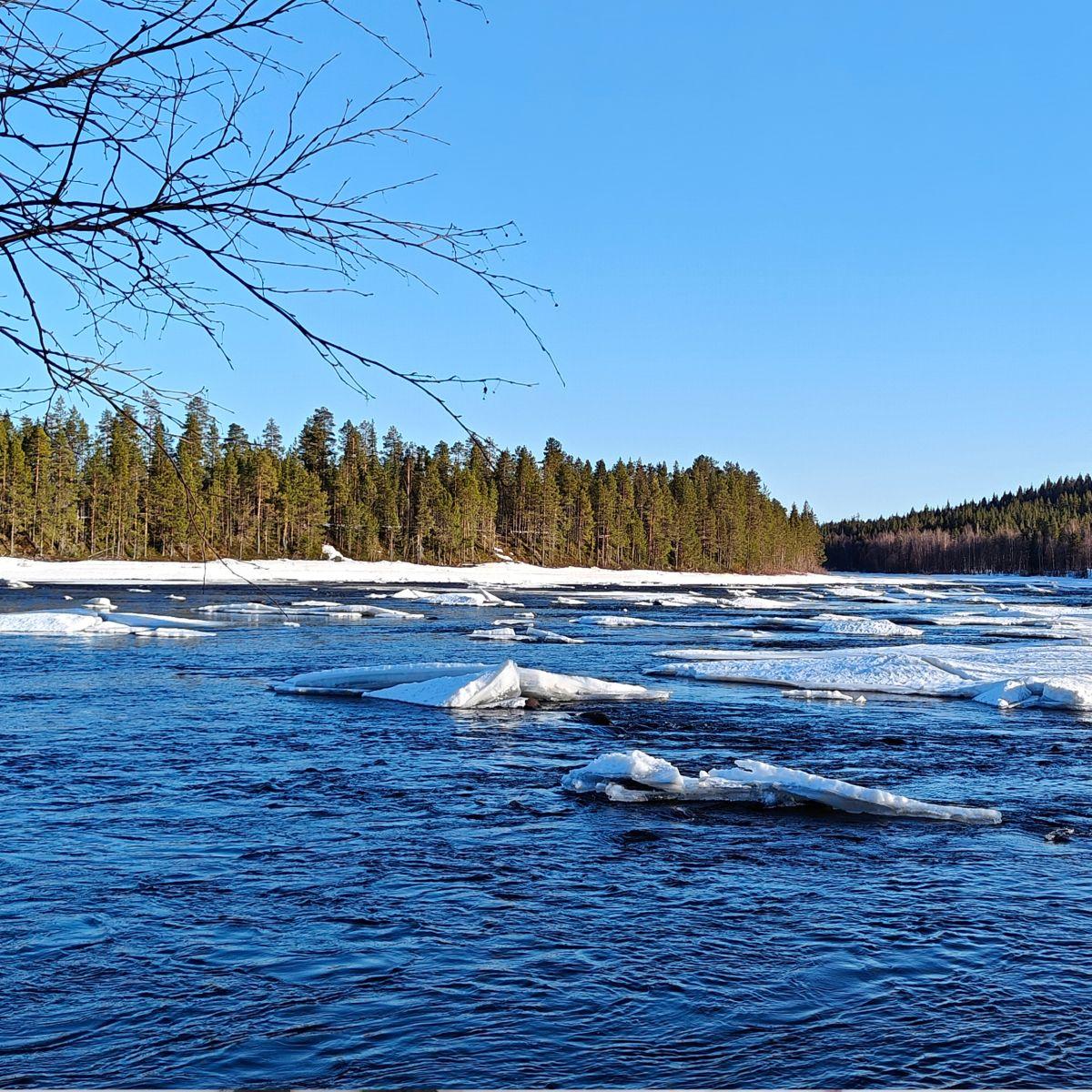
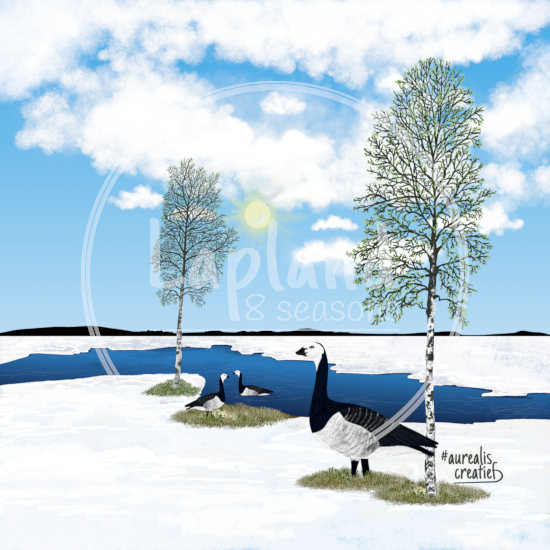
For months, all the rivers in Lapland have been silent, covered by a thick layer of ice, sometimes the river was usable as an ice-road. Then, sometime in mid-April, the warmth finally breaks through. The ice cracks. It shifts. The rivers awaken.
If you’ve been there in the winter and return when the ice begins to melt, you’ll notice the difference first in the sound, even before you see it with your own eyes. The babbling that returns to the world sounds almost loud. Snowmobile trails disappear. Ice roads close. The first ice cream cone of the season starts to feel like a well-deserved reward.
It takes more than a month for the ice to disappear completely. In the meantime, the rivers are partly frozen, partly flowing. It’s an unstable, photogenic state.
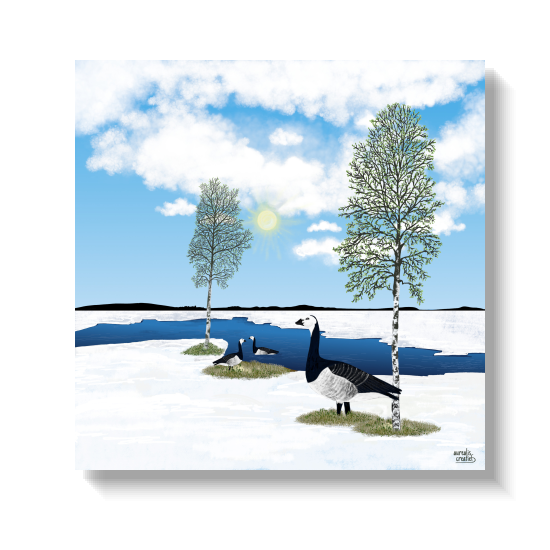
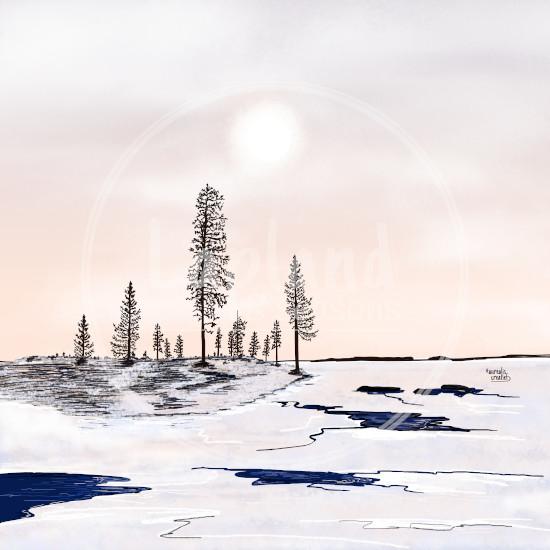
This season, I’ve painted these scenes as 'Floating Ice': the riverbeds in transition, and 'Awaken', for the moment when the first green returns and the birds too.
A Finnish phrase that fits this season: "Onpa kaunis aamu" — "What a beautiful morning". You hear it more, here, in May than at any other time of year.
4. Midnight Sun
Mid-May through mid-July | Finnish: keskiyönauringonaika
Around May 15, the sun sets behind the horizon for the last time in weeks. After that, it no longer sets. Twenty-four hours of daylight. Nights without darkness.
For the locals, this is the season that justifies all the others. The festivals kick off. Kayaks are brought out. Mountain bikes make an appearance. People hike across ancient, rocky hills at one o’clock in the morning, simply because they can. Blackout curtains are essential for getting any sleep at night.
The farther north you go, the more nights without darkness you experience. On Juhannus (Midsummer’s Day, around June 21), the sun is at its highest point. Many businesses close their doors. Lakes fill with swimmers. People no longer sleep in the usual way.
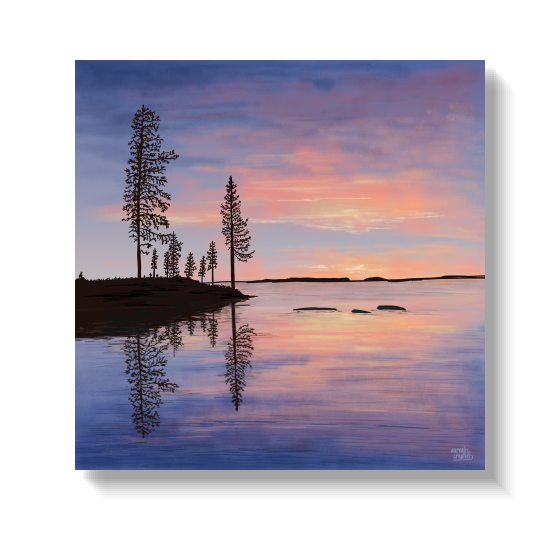
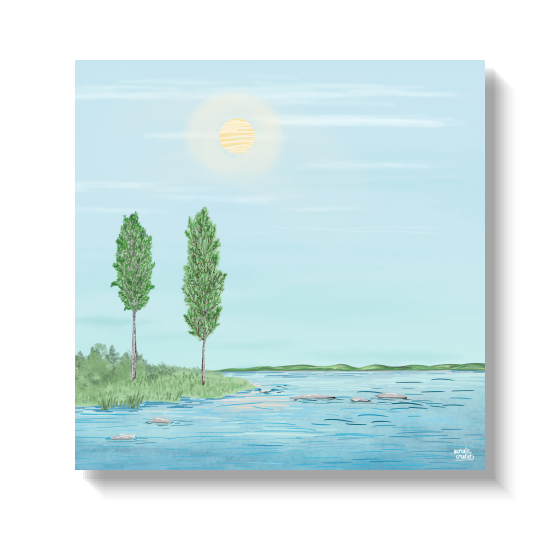
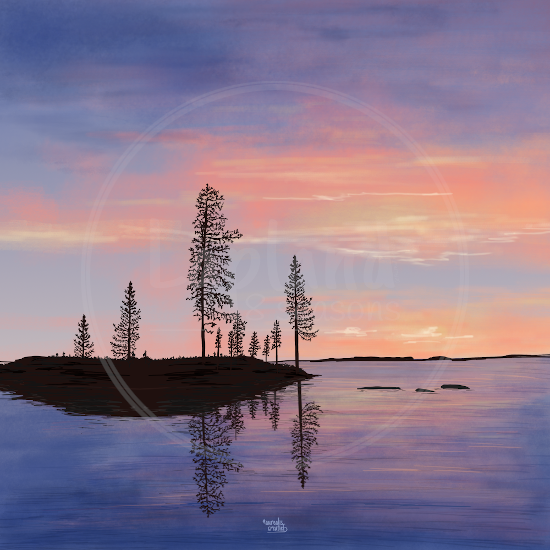
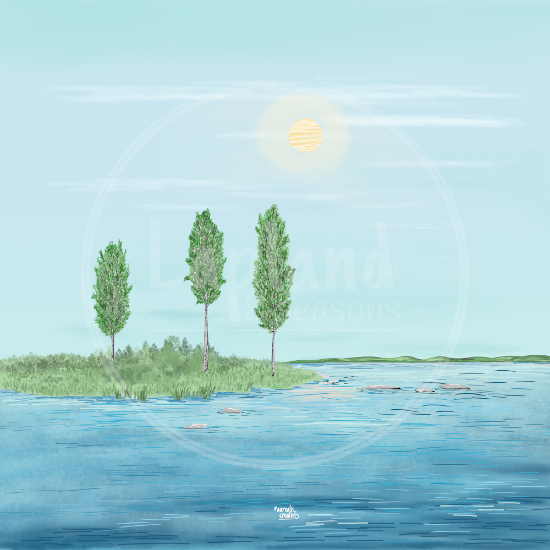
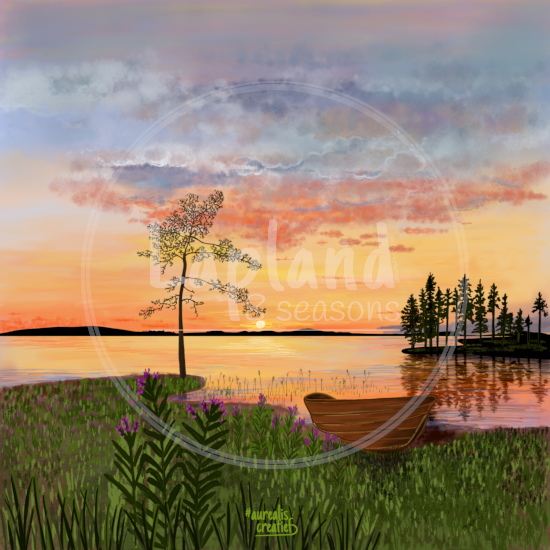
I’ve painted this season several times, because it calls for different perspectives. 'Summer Evenings' is the version that doesn’t feel like evening at all. 'Midnightsun in lapland' shows the sun high in a sky that should be dark. And 'Nightless Nights', the title says it all.
5. Harvest
Mid-July through early September | Finnish: sadonkorjuunaika
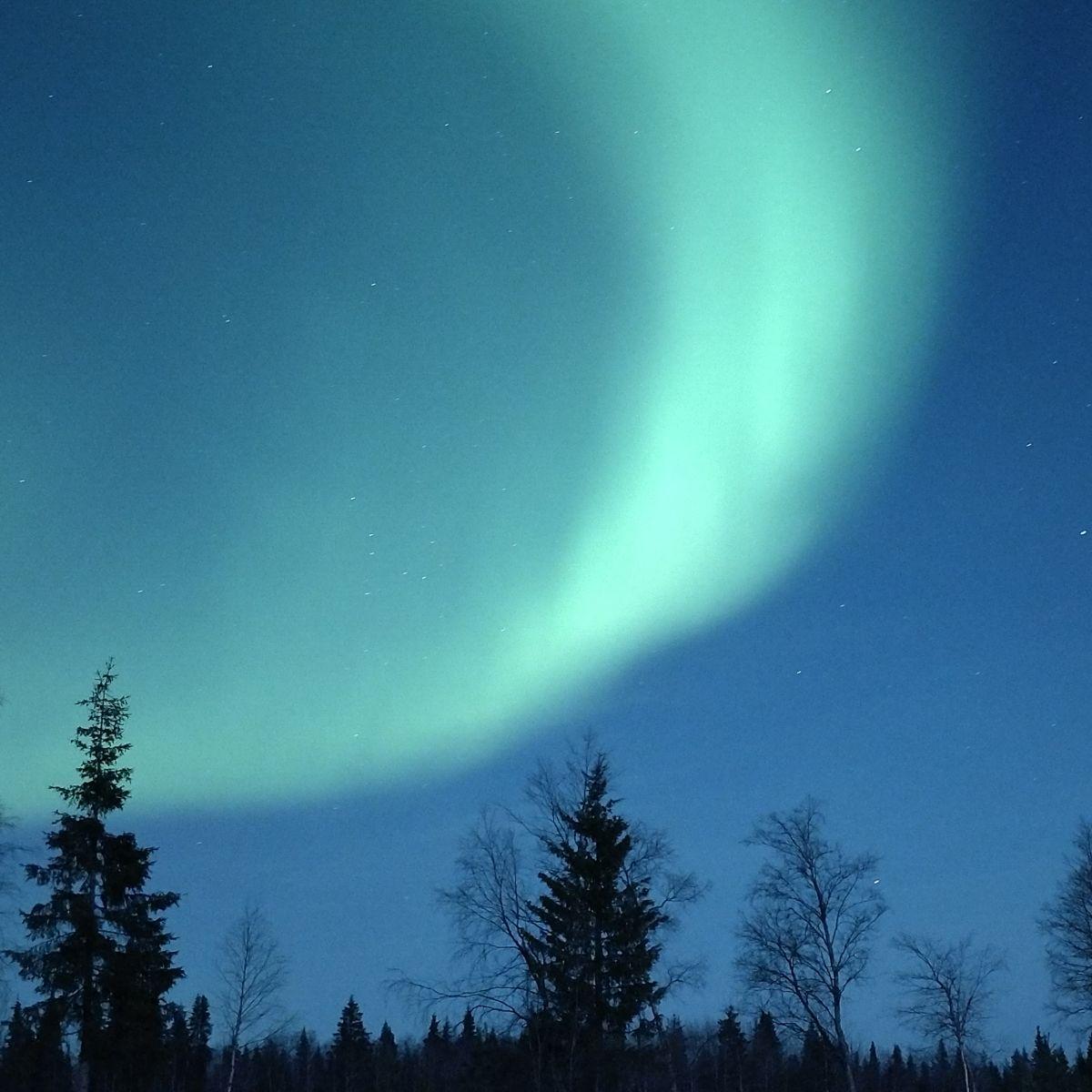
The return of the dark, and with it, the return of the northern lights.
By the end of August, the first northern lights are back. It’s getting cooler, the stars are visible in the sky again, and the leaves are beginning to change color. This is the time when the marshes fill with foragers. Cloudberries (lakka), blueberries (mustikka), lingonberries (puolukka), cranberries (karpalo), and bog whortleberries (suopursunmarja). There’s also an amazing variety of mushrooms, in colors and textures you won’t find the rest of the year. It’s time to restock your pantry with delicacies from Lapland’s wilderness.
The reindeer are now eating nonstop to build up fat and muscle mass for the winter. They know what’s coming.
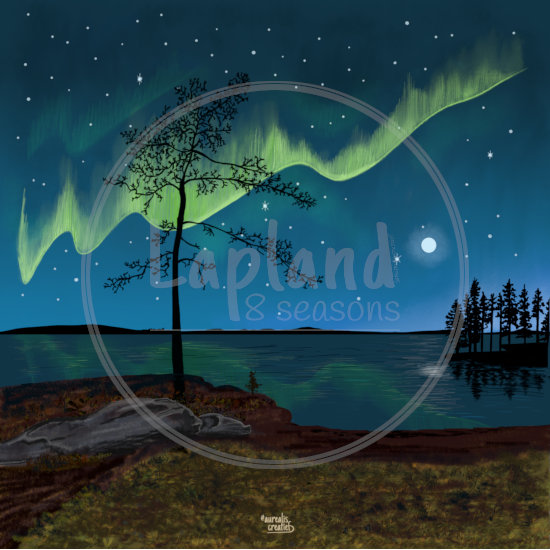
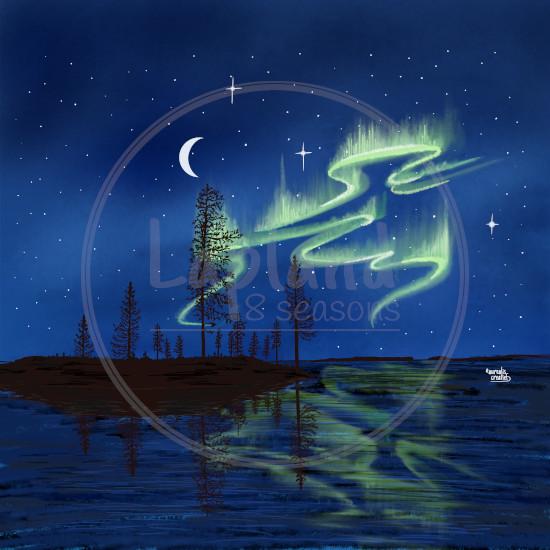
This season also marks the beginning of a new aurora season. Northern Lights hunters set out in search of the most beautiful “double aurora”, the name given to the aurora reflected in the many lakes and rivers.
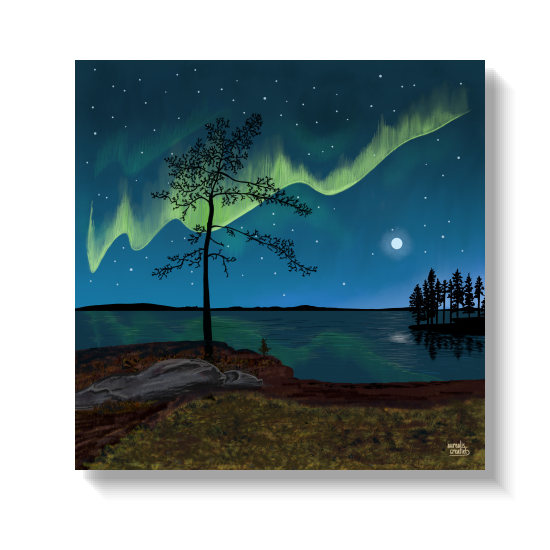
I’ve painted this season as 'Return of lady Aurora', because the Northern Lights truly feel like a recurring presence, and 'First glimmer of the Northern Lights'. The northern lights are faintly visible; sometimes you can even see the first auroras in the north at the same time as a sunset low on the horizon in the east (at the end of summer), before the full winter season takes over.
6. Ruska (Autumn Colours)
Mid-September through mid-October | Finnish: ruska / syksy
If you can only visit Lapland once and the bitter winter cold isn’t your thing, come during ruska. The colors are in the trees and in the sky.
There isn’t a good English word for it. “Autumn color” is too general. “Foliage” is too reminiscent of Vermont. Ruska is the specific phenomenon in which the trees in Lapland turn red, orange, and gold all at once, before they’ll be bare again within a few weeks. The period is short (the peak lasts about two weeks) and the exact timing is completely unpredictable.
In the far north, entire weekend trips have been organized around it. During ruska, you can hike through a national park and not encounter a single person for hours, while every birch tree around you sparkles.
The first cool nights have now arrived. Darkness has returned. This is the last season before the snow comes, and everyone there knows it.
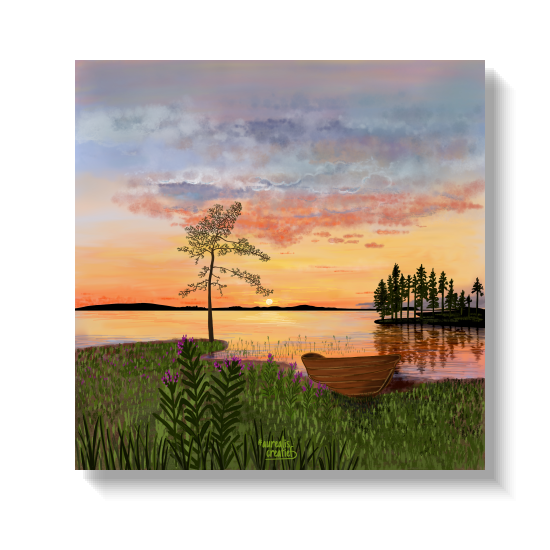
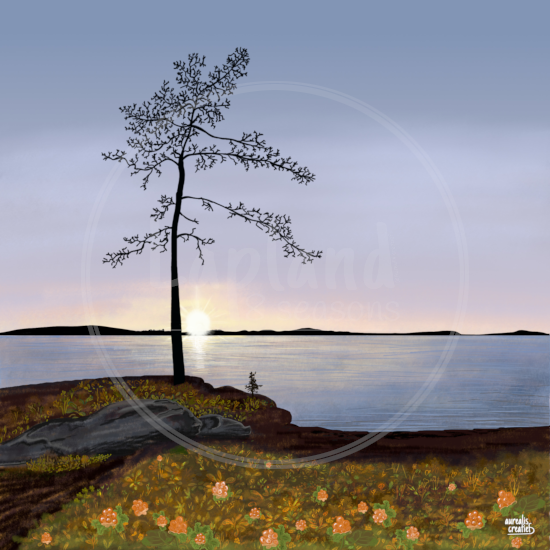
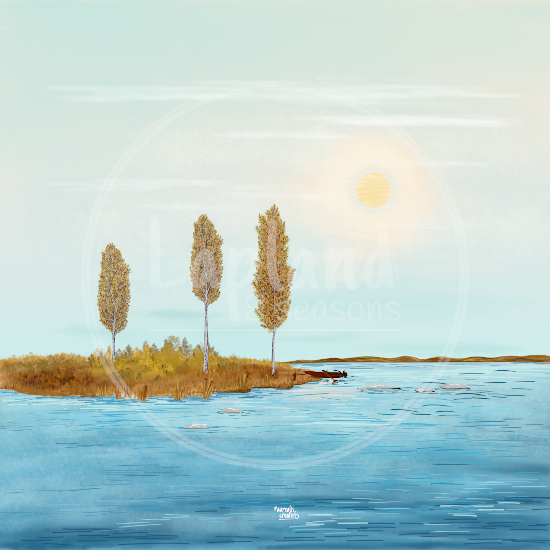
I’ve depicted this season as 'Golden hour', when the low autumn sun bathes the season’s late berries, and as 'Indian summer', where the birch trees shimmer orange-gold against still water. Both illustrations capture a quality of light that doesn’t exist further south.
7. First Snow
Mid-October through mid-November | Finnish: ensilumi
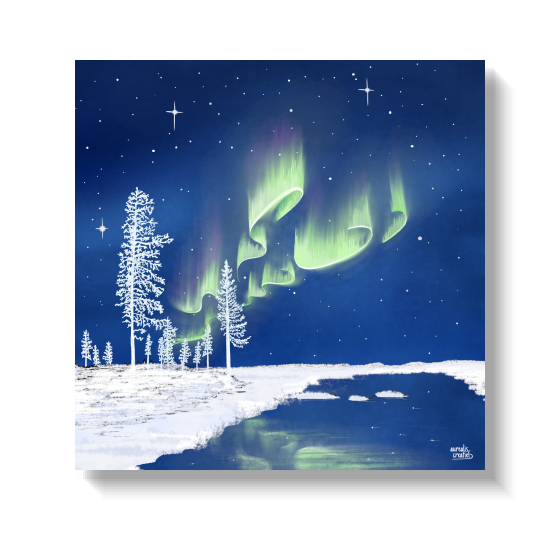
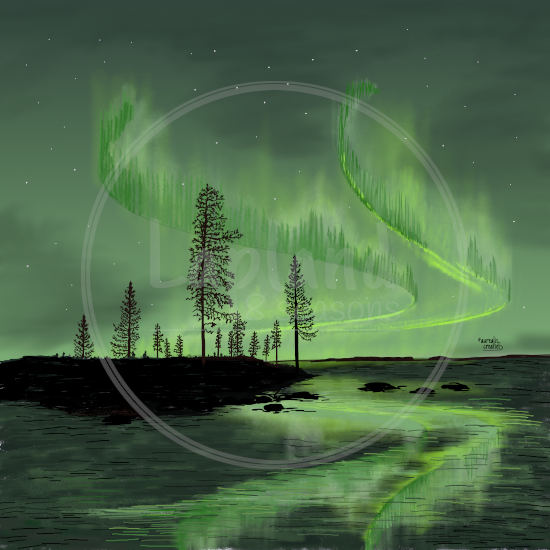
The first kiss of winter. The days are getting shorter, and the weather is getting cooler. The visual beauty of this transitional season is extraordinary: along the banks of a fast-flowing river, the northern lights reflect off the water’s surface. There’s no snow yet to brighten the darkness. Truly magical.
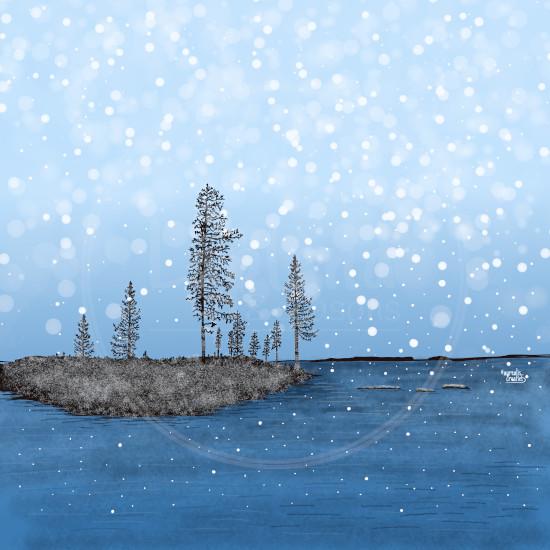
Mid-November snowflakes begin to fall without warning and often melt away within a few hours. But every cold snap adds another layer. By the end of November, there can already be 20 cm on the ground, and the lakes begin to freeze.
This is also the season when the Sámi begin the winter slaughter and prepare their herds for overwintering in the forests and sometimes along the coast.
Christmas carols are already playing in the stores. There’s no doubt about it: winter, in all its glory, is on its way.
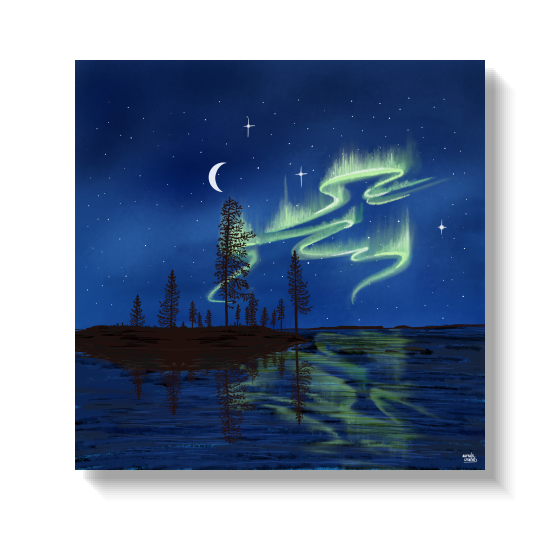
I’ve captured this season in the paintings 'Green reflection' and 'Snowflakes'. It reflects that specific moment of the northern lights on the water in a dark night and 'Snowflakes', because the first snowflakes bring with them the Christmas spirit.
8. Deep Winter / Kaamos
Mid-November through mid-January | Finnish: joulukaamos
The darkest months. North of the Arctic Circle, the sun never rises above the horizon. There are only a few hours of twilight each day.
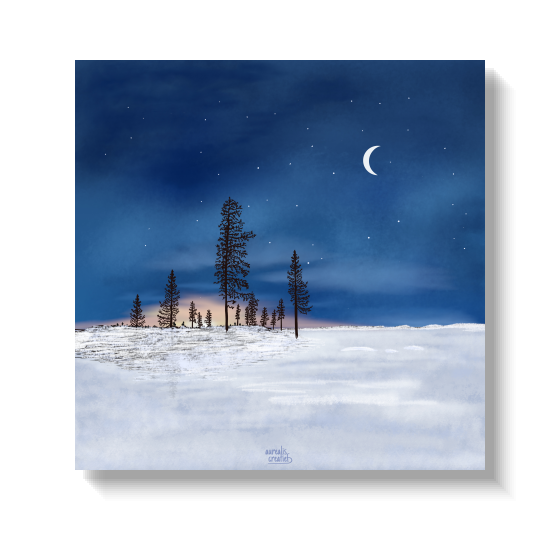
The Finnish word for this twilight atmosphere is kaamos. Kaamos is the soft pink-and-blue pastel glow that fills the middle of the day during polar night. It’s beautiful. It’s magical and very mysterious, not “darkness,” but kaamos.
Two hundred kilometers north of the Arctic Circle, there’s a twilight period of about six hours every day, between 10:00 a.m. and 4:00 p.m. After that comes true darkness. Then: time for a sauna. A fire. A meal. And the call of the Northern Lights drawing you outside.
This is also Christmas season. Santa Claus officially lives in Rovaniemi on the Arctic Circle, and it’s a good time to visit Father Christmas this time of year. It’s also the longest night of the year: the sun rises for a few minutes at the Arctic Circle. The winter solstice, the most important turning point in a calendar older than humanity itself. A week later, the country bursts into fireworks for the New Year.
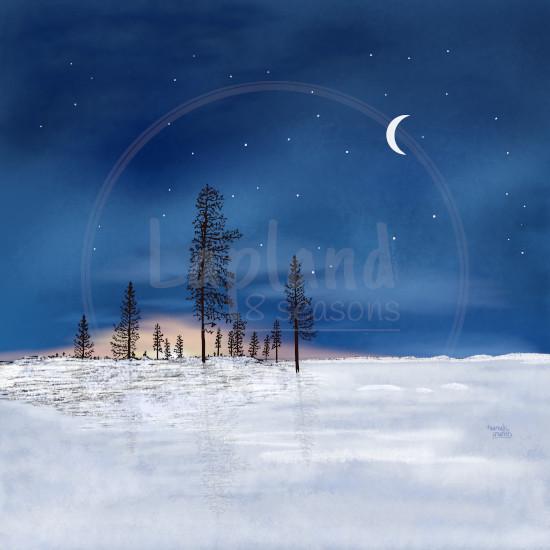
I captured this season in 'Kaamos' (the twilight itself) and 'Sub-Zero Winter', a work that draws its name and inspiration from a night in December 2021 at -30 °C in Tepasto, a small village in the middle of the wilderness without light pollution. The cold of that night is reflected in the title.
Lapland
So which is the “real” Lapland?
All of them.
Every season has its own character, its own light, its own activities. Summer is just as much Lapland as winter, even though most travel marketing seems to claim the opposite (but fortunately, this has been changing in recent years).
If you ask me which season is my favorite, I’ll answer, “All of them.” After six winters in Finnish Lapland, I came home with eight portraits, not just one.
Lapland 8 Seasons · ART COLLECTION
Discover the complete Lapland 8 Seasons collection
Each illustration captures a season that I could not have painted anywhere else.
If this story appeals to you, you can read more in the article on Nordic Nature Wall Art, about the common thread running through my work and what still draws me to the north.
Frequently Asked Questions
Lapland in a nutshell
Is there always snow in Lapland?
No, in summer Lapland is largely snow-free. From early June to late September, there is generally no snow left in Finnish Lapland, except on a few high fjell peaks in the north. The vegetation comes to life, the rivers flow, and the midnight sun remains above the horizon 24 hours a day.
When is there snow in Lapland?
In Finnish Lapland, there is usually snow from late October to early May. The first snow (ensilumi in Finnish) usually falls in October or early November, and the last snow doesn’t melt until May, sometimes even later in the far north. For a trip with guaranteed snow, December to March are the safest months. In the depths of winter (January–February), the snow cover is at its deepest, often exceeding one metre.
Which country has 8 seasons?
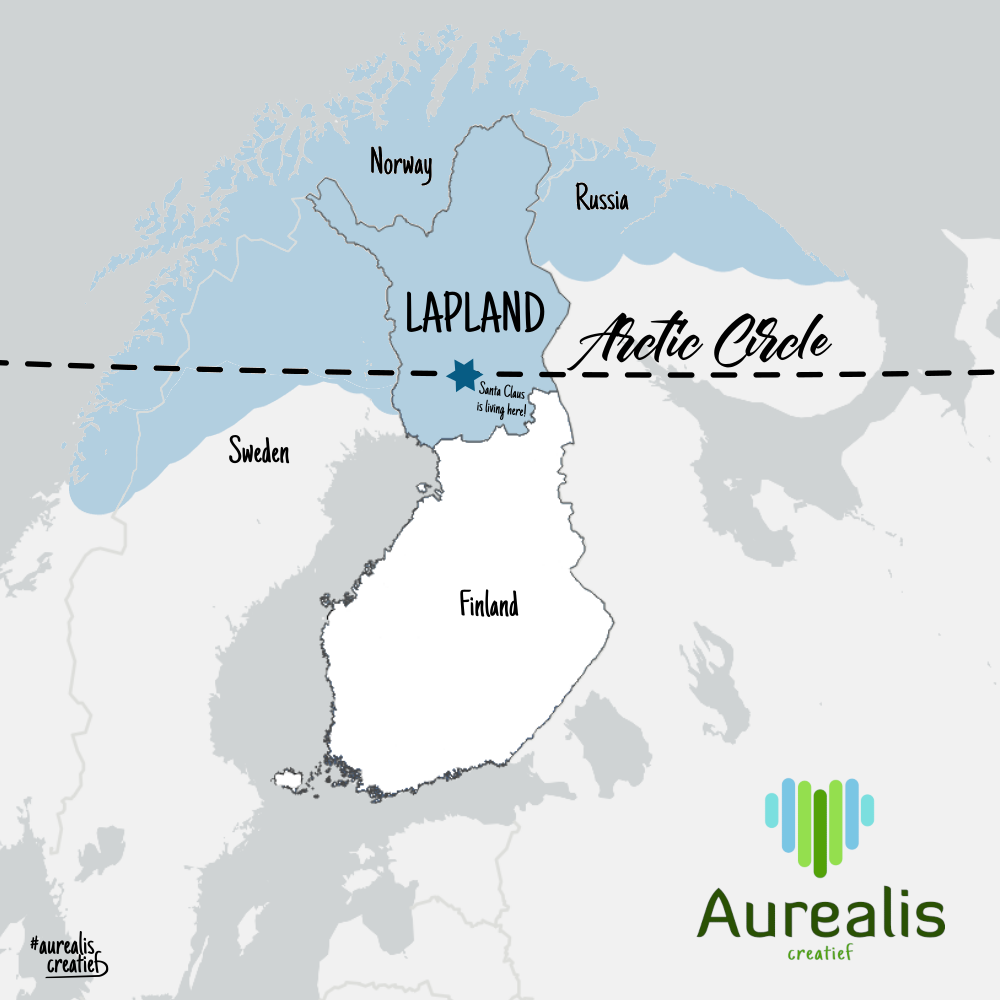
Finland, Norway and Sweden – specifically Lapland – have eight seasons, according to the traditional Sámi calendar.
Instead of the four broad seasons used in the rest of Europe, the Sami divide the year into eight more nuanced periods that reflect what actually happens in the Arctic landscape: from the midnight sun to the polar night, from crisp snow to colourful ruska (autumn).
ART COLLECTION
The 8 seasons of Lapland
View the collection in the shop
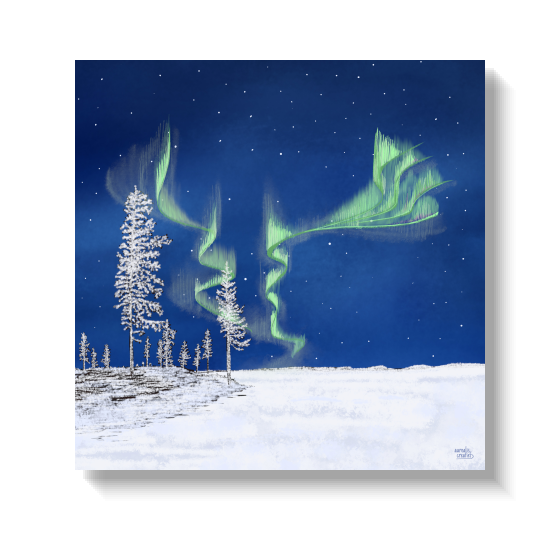 Frosty winter - The 1st season
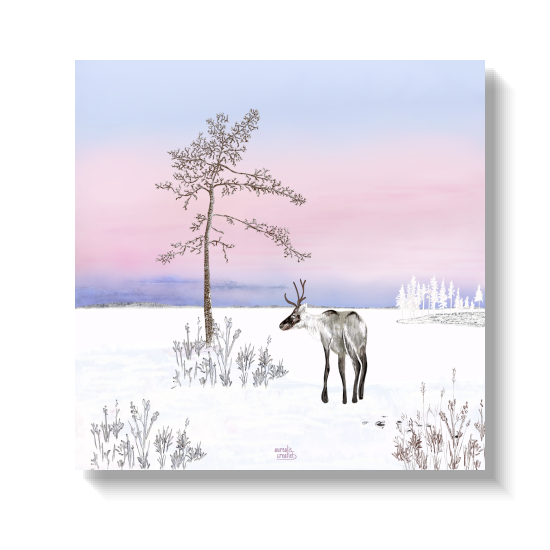 Frosty winter - The 1ste season
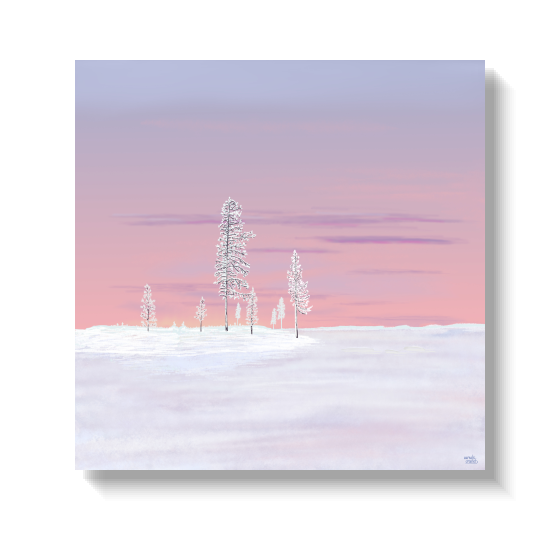 Crusty Snow - The 2nd season
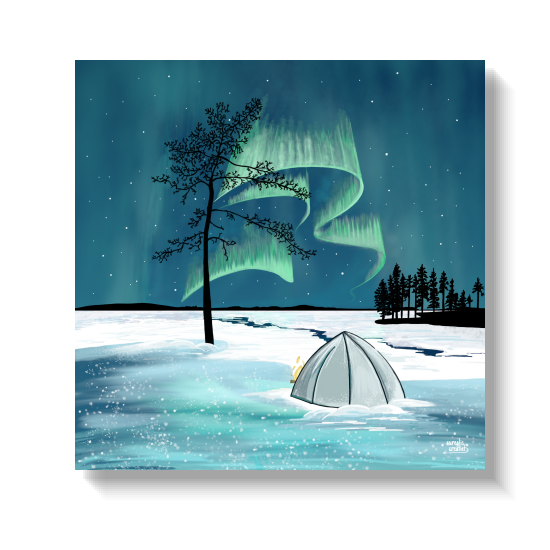 Crusty Snow - The 2nd season
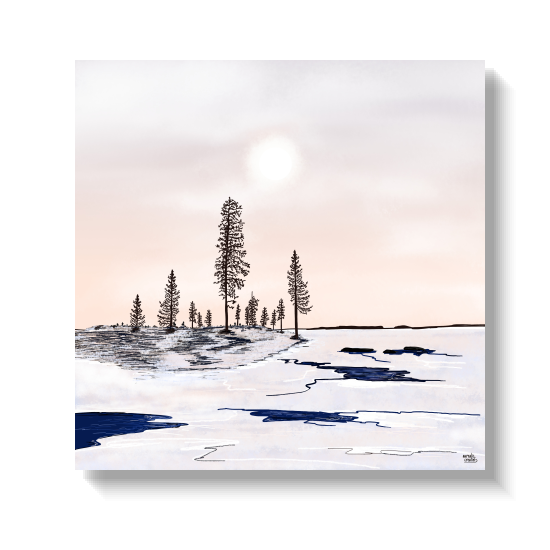 Departure of Ice - The 3th season
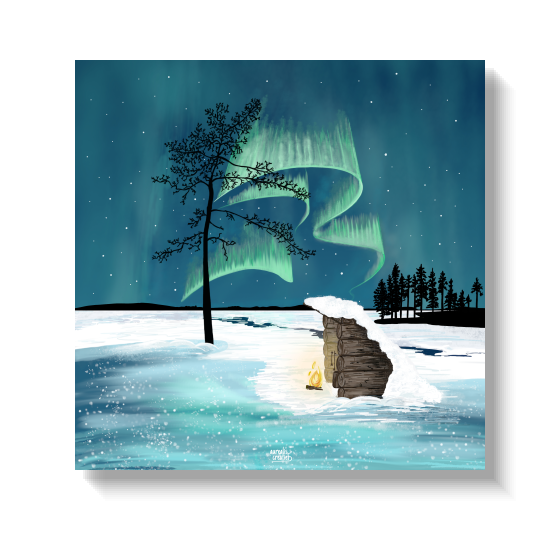 Crusty Snow - The 2nd season
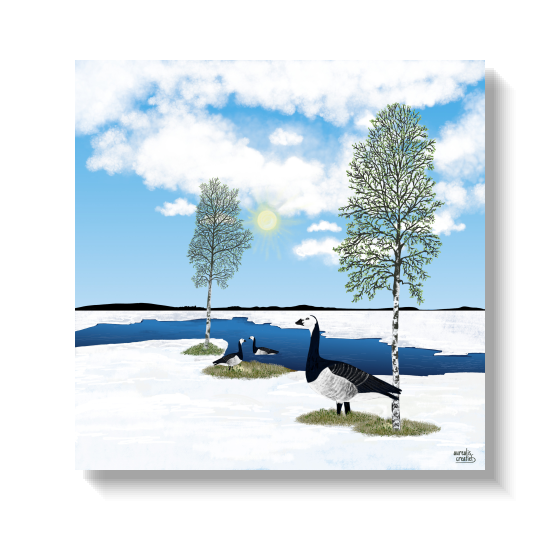 Departure of Ice - The 3th season
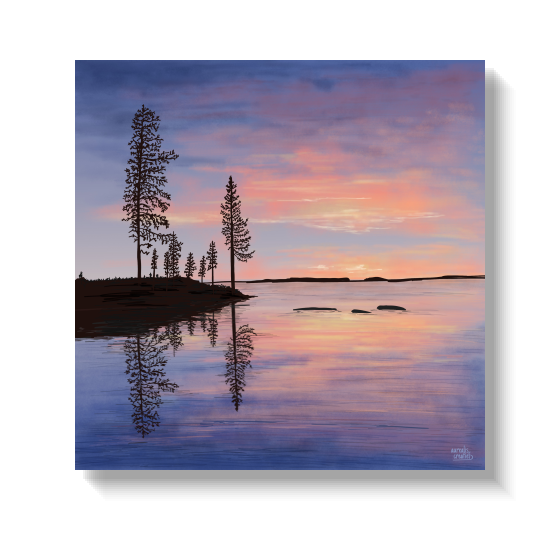 Midnight Sun - The 4th season
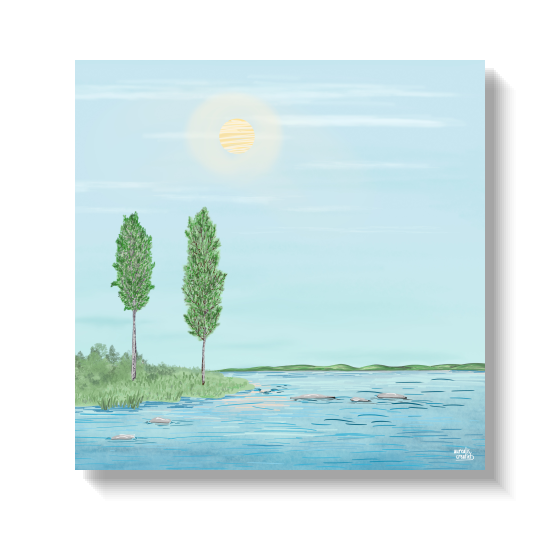 Midnight Sun - The 4th season
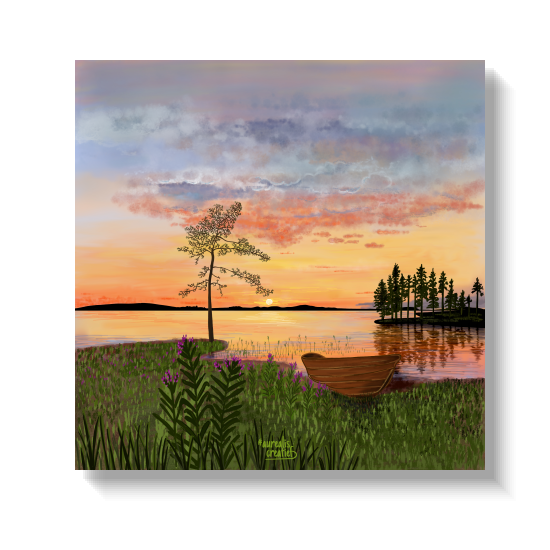 Midnight Sun - The 4th season
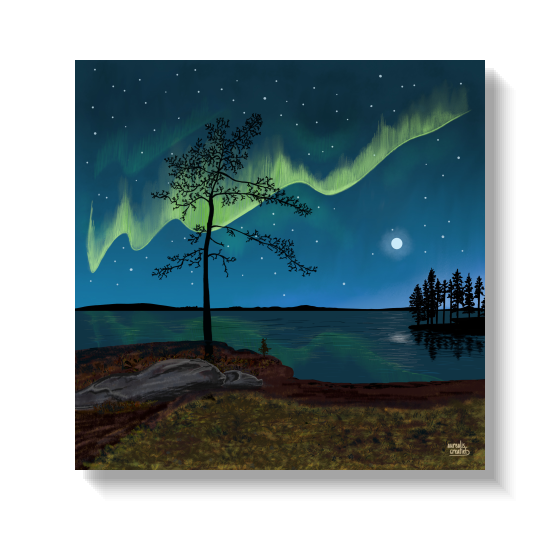 Harvest - The 5th season
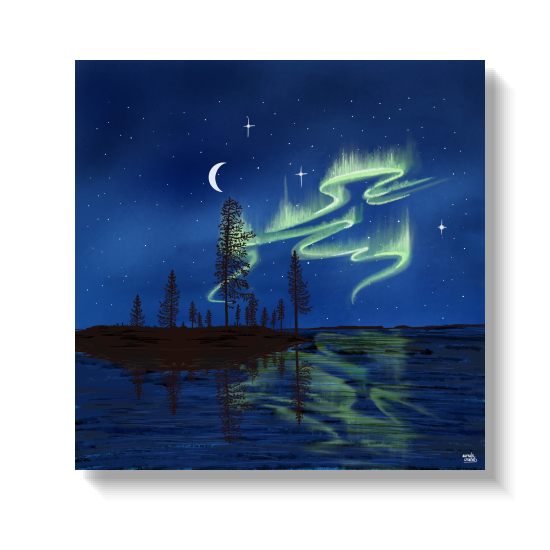 Harvest - The 5th season
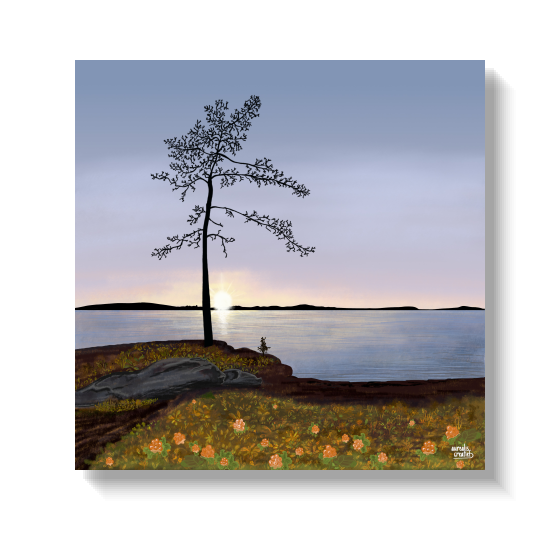 Ruska - The 6h season
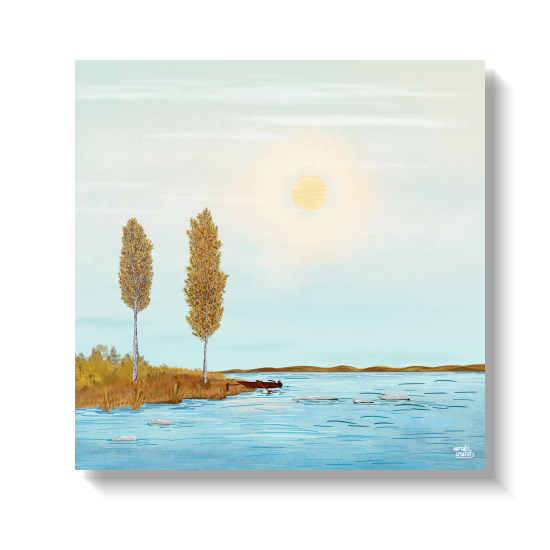 Ruska - The 6th season
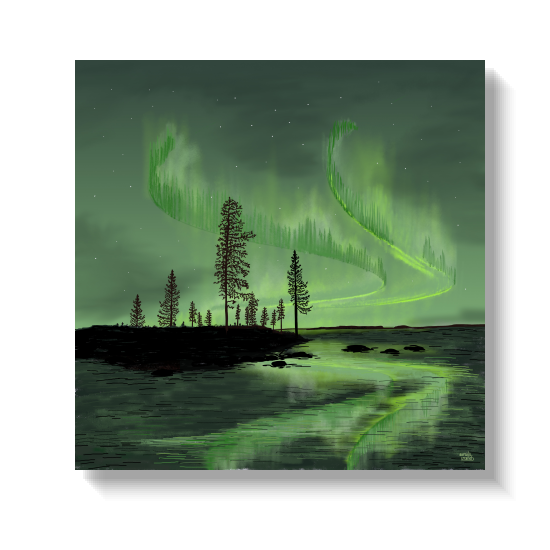 First Snow - The 7th season
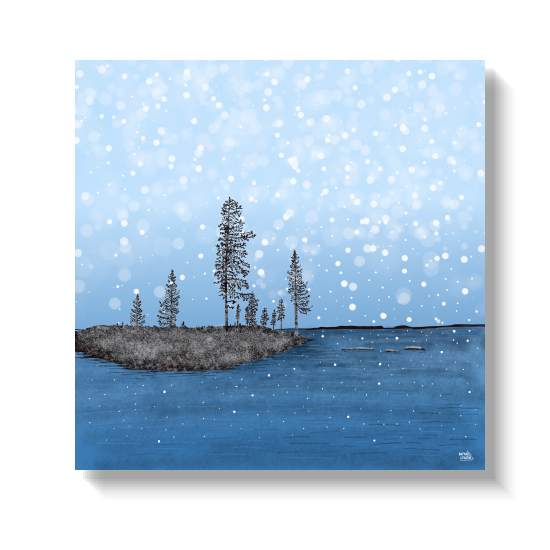 First Snow - The 7th season
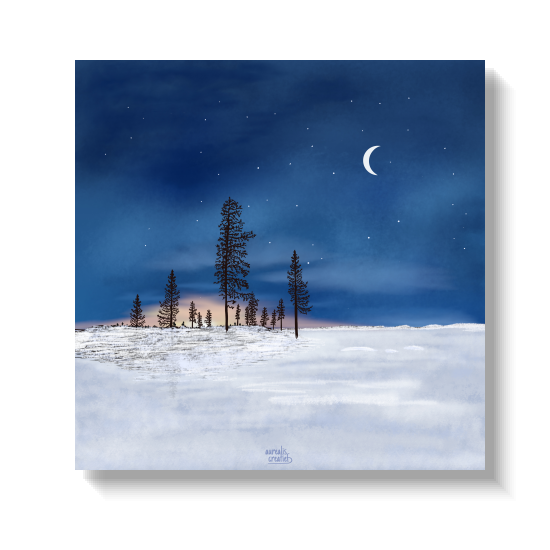 Deep winter - The 8th season
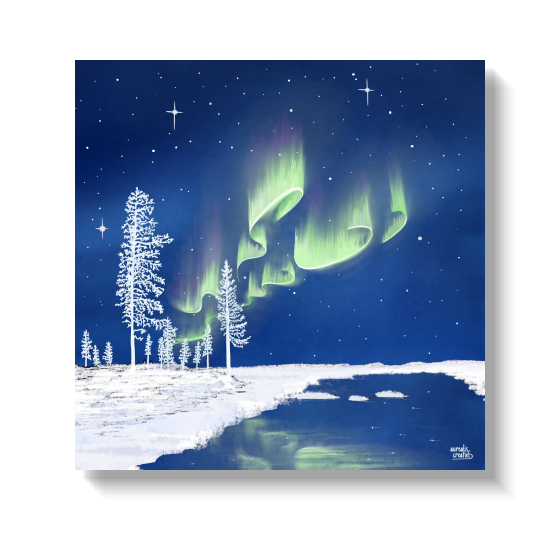 Deep winter - The 8th season