
Frosty Winter: when the sun comes back
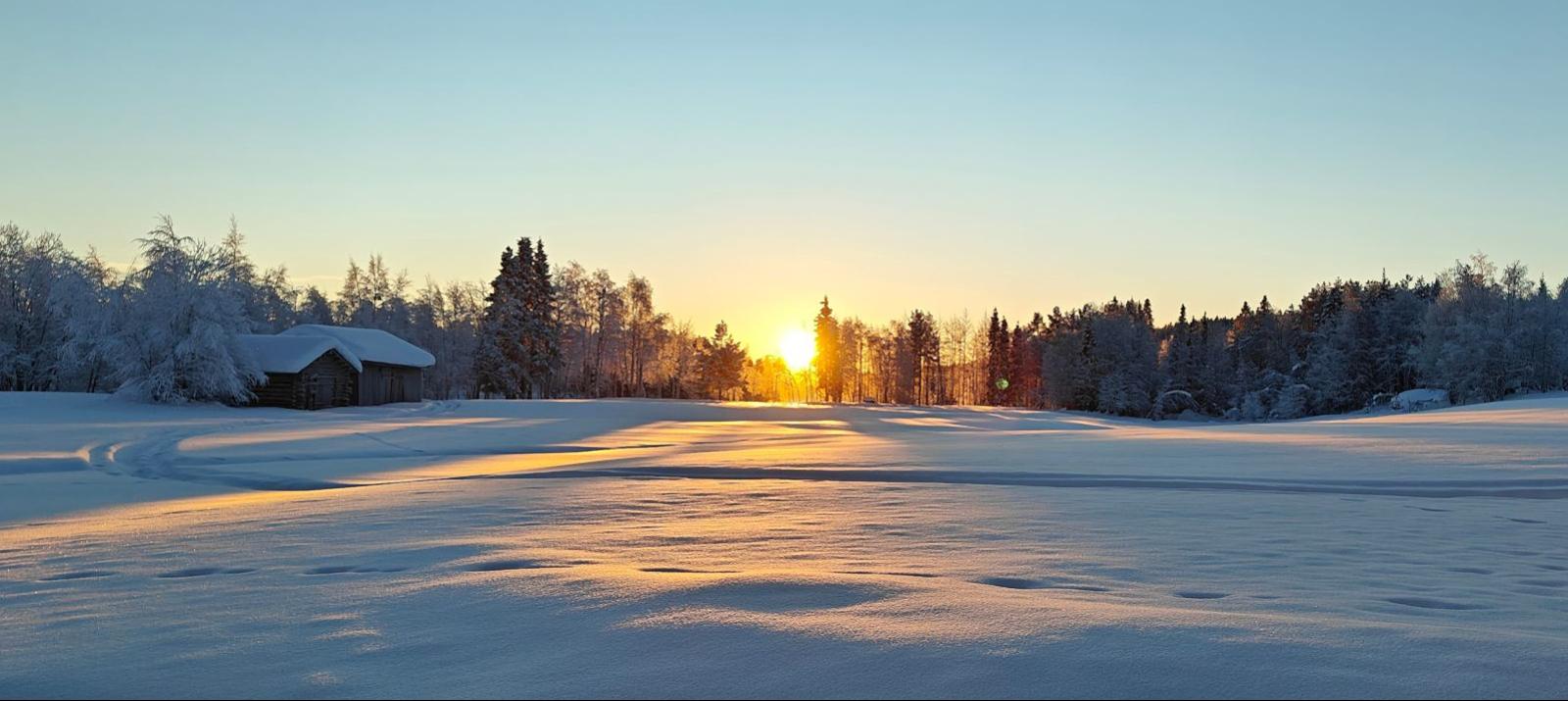
20 January. The first sun of the year, back above the horizon after weeks of twilight.
Season 01 / 08
Everyone comes for Christmas: The lights, the reindeer, the snow that falls at just the right moment. Then, in the first week of January, things quieten down again as most people’s Christmas holidays are over, and people head home, convinced they have seen Lapland at its best.
They leave just before it begins.
On 20 January, after weeks of barely being visible above the horizon, the sun returns. The glow in the treetops is replaced by the real sun, low and orange, filtering through the branches, casting long shadows… A special moment in this season. It’s a moment every local looks forward to! I photographed it every year I lived there, and every year it felt like the first time.
A few days earlier, the sun had only reached as far as the treetops. Long before the sun rises above the horizon, it’s already illuminating the highest branches, so you see forests where the treetops glow gold whilst everything beneath remains blue and white. That lasts for weeks, and as January progresses, the light slowly creeps lower down the trunks. That in-between light has its own beauty, but it’s also a countdown. You start to keep an eye on it.
This is Frosty Winter, the first of Lapland’s eight seasons. And it is the season for which I would return.
The season in a single sentence
Everything in this season follows from that returning light. The cold, the colours, the northern lights, even the reindeer on the road: it all comes back to how much light there is, and how clear the sky happens to be.
The Season
What Frosty Winter actually is
‘Frosty Winter’ runs from mid-January through to the end of February. It falls between the polar night and the first signs of spring; it is an in-between season.
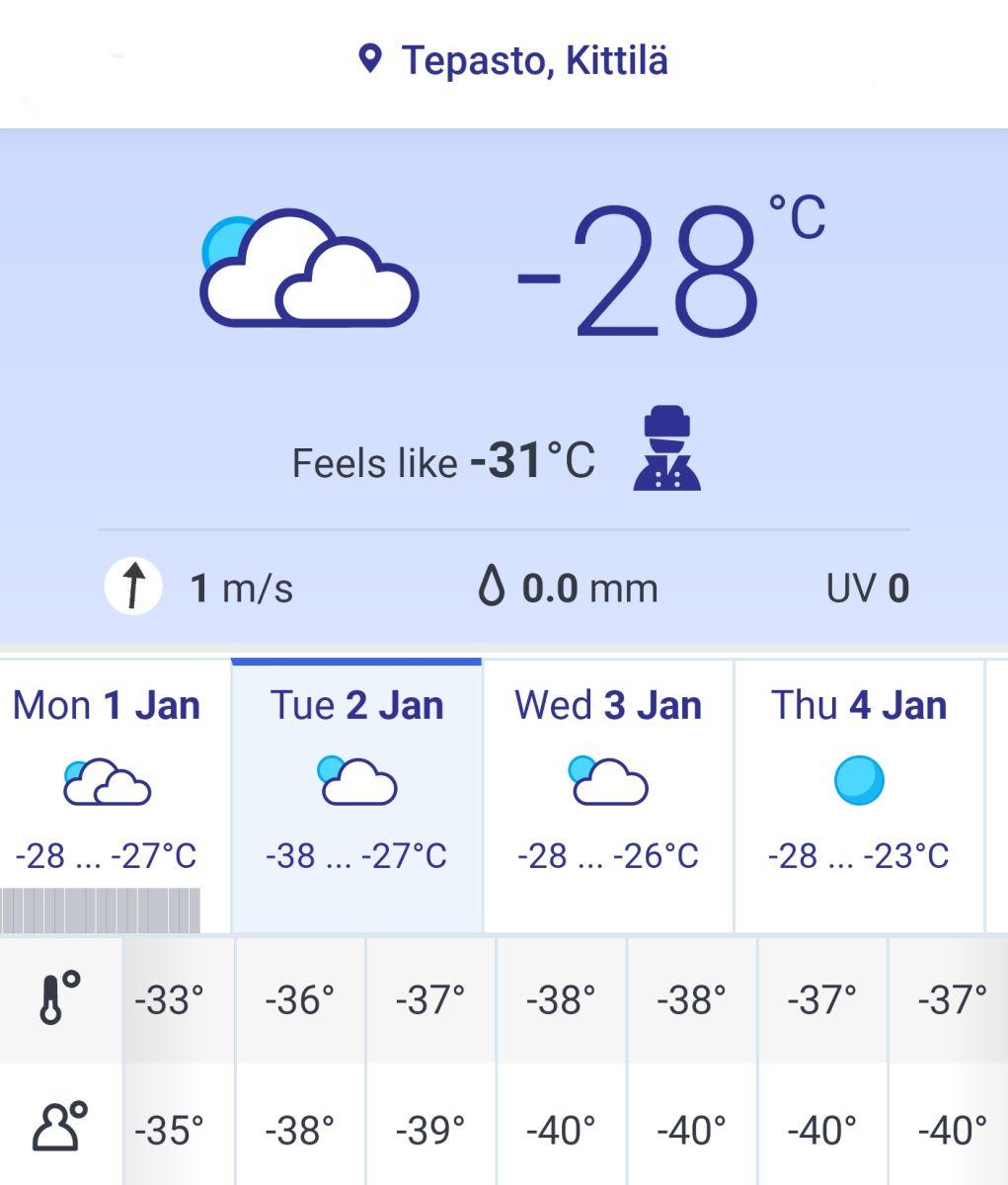
Three things characterise this period. The snow is at its deepest, as this is when it snows most heavily. Temperatures are at their most extreme. And daylight is returning rapidly, with a few more minutes each day – increasing by 5 minutes in the morning and evening every day.
The cold is no abstract concept. The coldest morning I’ve recorded in six winters was –37.8 °C, on 5 January 2024. During ‘Frosty Winter’ itself, temperatures of –20 °C during the day are quite common. You dress for it, switch on the engine block heater and simply get on with your day.
· THE FIRST Season ·
Discover the ‘Frosty Winter’ collection
The artworks shown are available as high-quality illustrations on art blocks, metal prints and acrylic glass. Each work forms part of the Lapland 8 Seasons collection.
The real cold
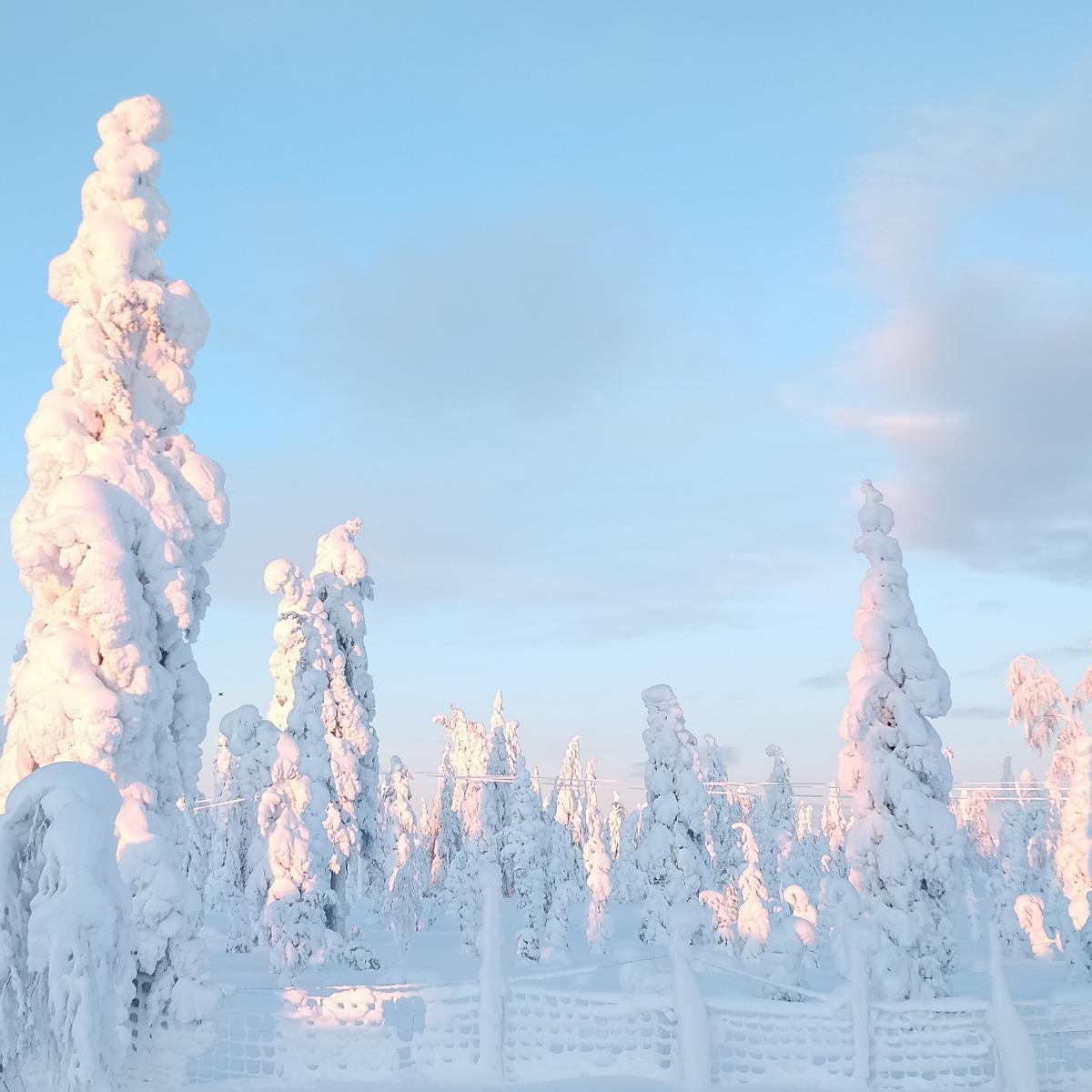
What surprises people is that the coldest days don’t feel the worst. The real cold actually sets in on clear, sunny and windless days: -13 °C on a clear day can bite harder than -24 °C when it’s overcast. Wind and humidity cause more harm than the figure on the screen. And the snow does something strange to the pine trees. Each branch becomes so laden that the trees no longer look like trees, but like statues, bent over and covered in a thick layer of snow, standing in dense rows along the road and making the off-road tracks even more impassable.
And here is the part that catches people out: that biting cold and the beautiful light are the same weather. A clear sky lets the heat escape overnight, so the mornings that look the most beautiful are exactly the ones that hurt the most.
Pink Sky
Light, cold and the colour of a grey day
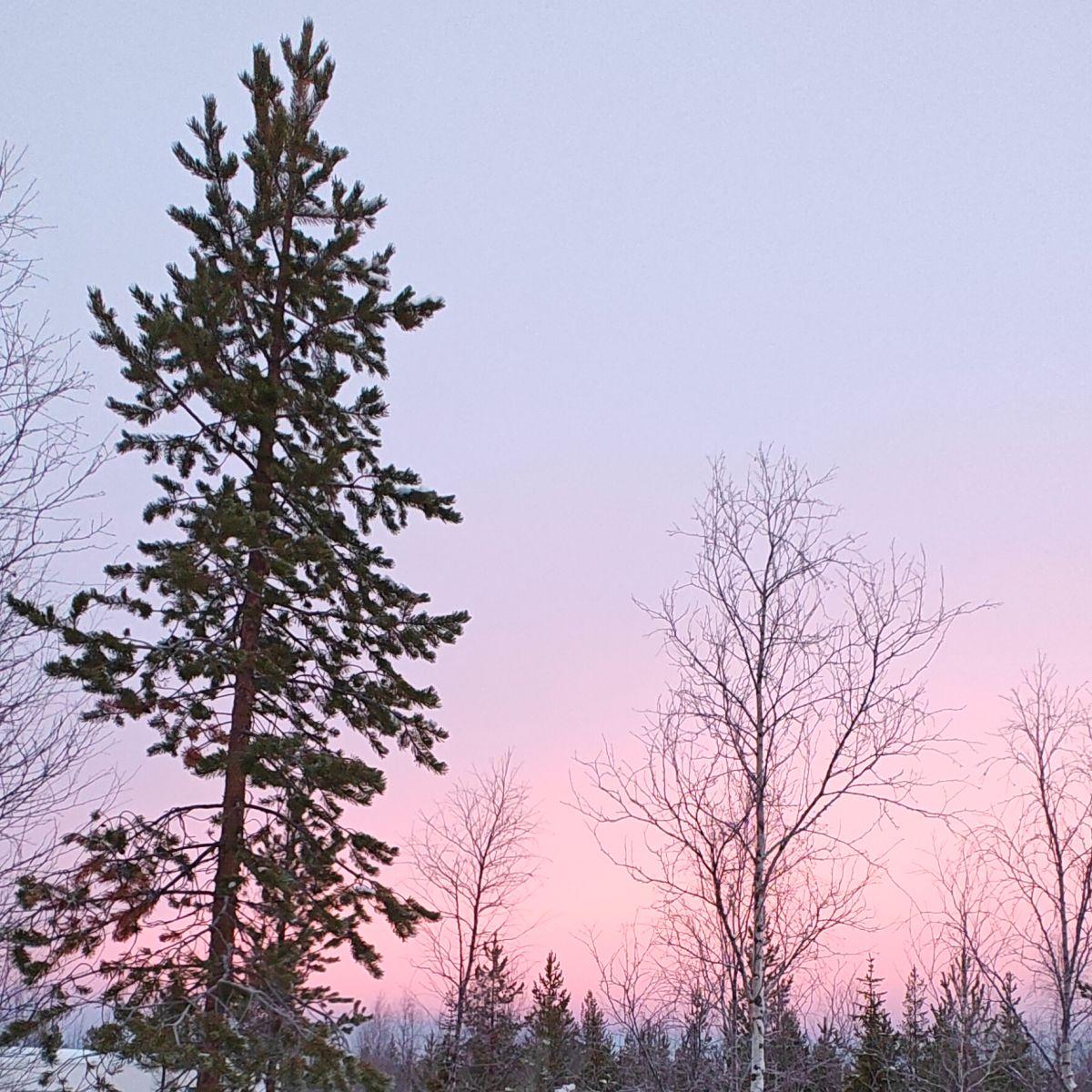
The light at this time of year does something I’ve never seen anywhere else. Every winter, for about ten days, we have a stretch of clear mornings with a pink sky – the sort of pink that makes you pull the car over for a moment. And not the pink of sunrise, because the sun hardly plays a part here. The whole dome of the sky turns a soft pink and lilac, and the snow immediately takes on that colour.
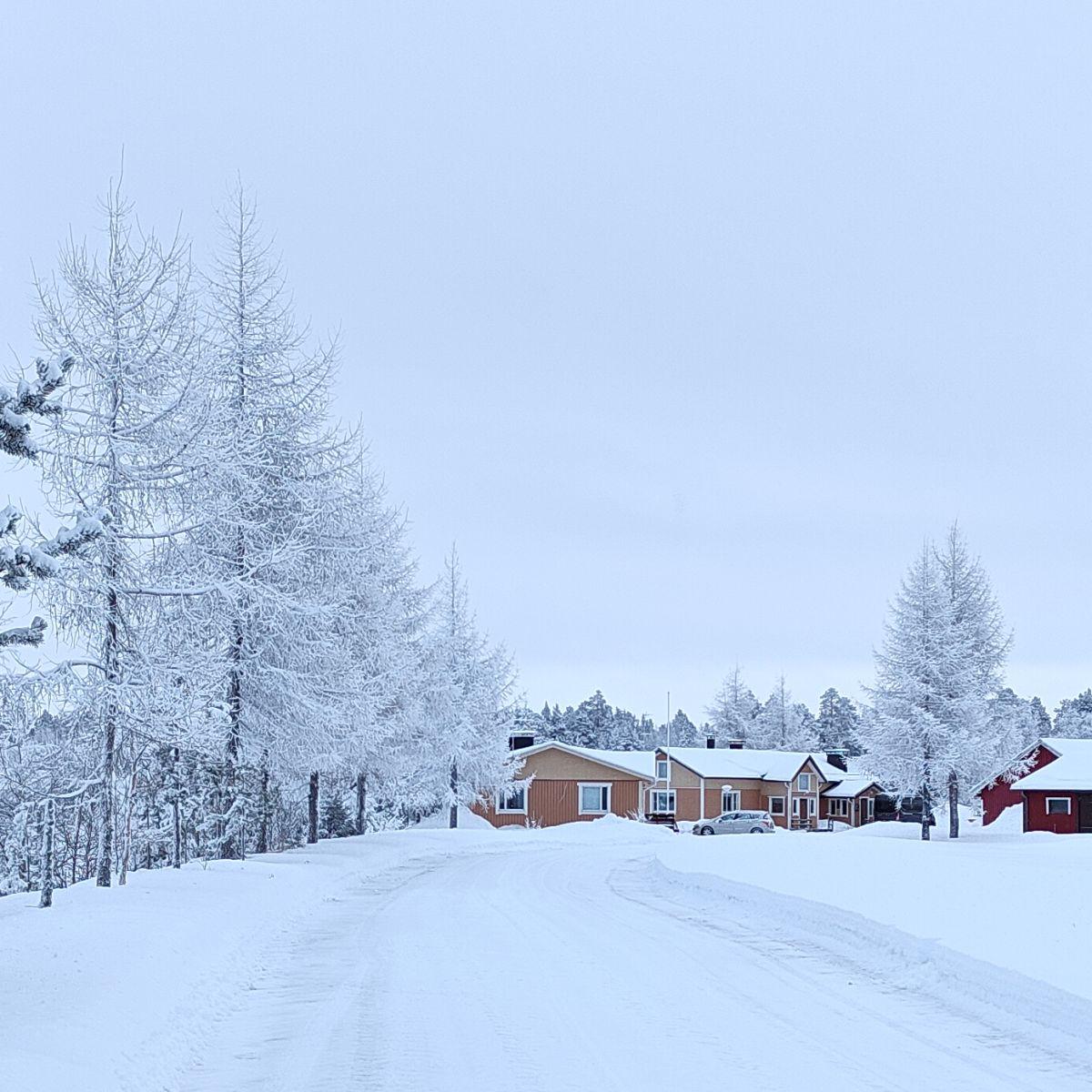
Cloudy days aren’t gloomy here in Lapland. A grey day in Belgium is truly grey, gloomy and dreary, and has the colour of wet concrete. A cloudy day in Lapland is white. The snow reflects so much light that the sky glows, the shadows disappear and the whole world becomes soft and even. A grey day in Lapland isn’t grey and gloomy; you simply miss the sun...
Which is the trade-off of this season in one image. Clear means cold and colour. Cloudy means milder and white. You do not get to choose, you just get to dress for it.
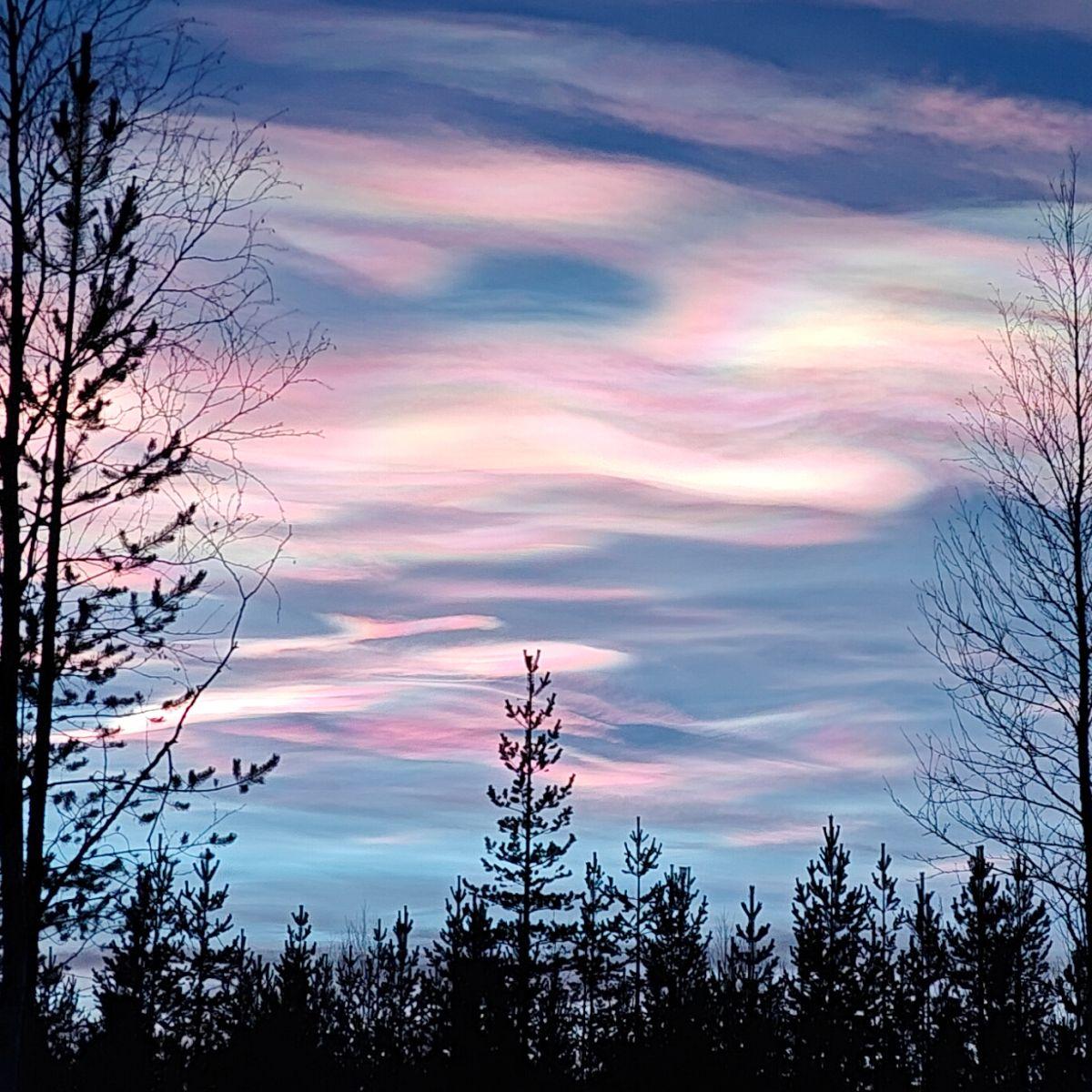
And then there are the days when the sky conjures up something even rarer. Mother-of-pearl clouds, also known as ‘pearl clouds’. These extraordinary patches appear after sunset in bands of iridescent pink, mint green and gold, and look so unbelievable that people think the photo has been doctored. In six winters, I’ve seen them a handful of times. They’re worth knowing about for one reason: they’re a sign. When they hang up there, it’s going to get very cold down here soon.
Featured work
Frozen Forest
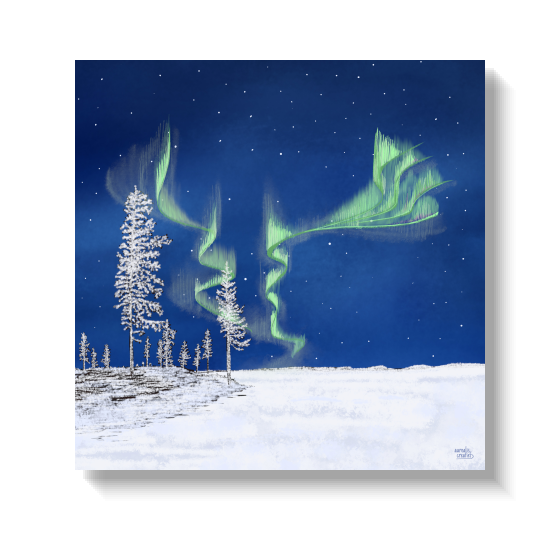
The entire ‘Lapland 8 Seasons’ collection is built around a single imagined landscape: the small group of islands, the large tree, the water flowing past it. That water changes completely over the course of the eight seasons, and in ‘Frosty Winter’ it stands completely still.
For me, the frozen river in 'Frozen Forest' says everything about this season.
We used to live by a fast-flowing river. In summer, you couldn’t imagine it ever standing still. But when the cold sets in and lingers for days on end, the frost creeps in from the banks and the open riverbed narrows week by week. For a while, a single last patch of open water remains, standing out darkly against all that white, and then one morning that too has vanished. A white path where the river once flowed.
The Northern Lights in this image are also worth mentioning: Northern Lights activity peaks around the equinoxes, in autumn and again in March, so ‘Frosty Winter’ isn’t, on paper, the best part of the season. What it does have, however, are the right conditions. January is the classic aurora month: cold and clear enough for the arcs to appear time and time again in the sky. February is even better: the polar night is over, heavy snowfall is easing off and we have more nights with clear skies. The closer you get to March, the more spectacular the Northern Lights appear in the sky. The nights when the cold is unbearable are precisely the nights that deliver the most beautiful display.
It is the same rule as the daytime, only after dark. The clear sky that drops the temperature is the clear sky that lets you see anything at all.
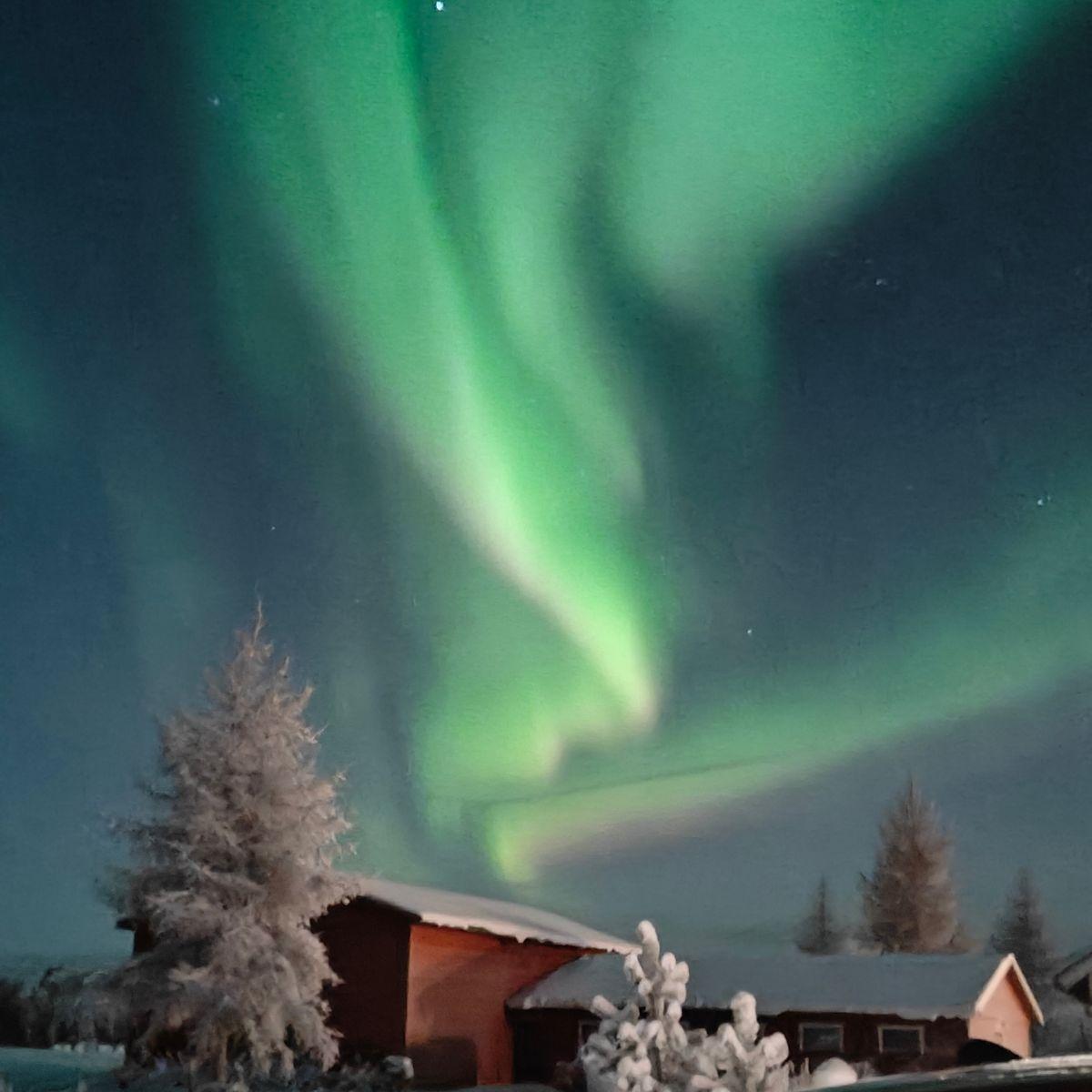
aurora corona
On 20 February 2023, I saw a corona. An aurora corona occurs when the display takes place directly overhead and the rays seem to converge at a single point, making the light appear to explode outwards directly above you and then dance around you in a 360° circle like a curtain. This requires the right geographical position in relation to the magnetic field, combined with strong solar activity; that is why most tourists who spend years chasing the Northern Lights never actually see one.
I was, however, very lucky: It came without warning. We were taking a short walk up our own driveway, just to get some fresh air before going to bed, at around nine o’clock in the evening. The aurora hunters hadn’t even started their evening yet. Then a long curtain appeared right in front of us. Then another to our right, and what seemed to be one on the left. And then the whole thing closed in above our heads to form a crown, and we were surrounded by it on all sides. We both ended up flat on our backs in the snowdrift alongside the driveway, because that was the only way to take it all in. That is the spectacle I will still be describing when I am old.
That winter I counted 44 sightings between November and April, and that wasn’t an exceptional year. Every winter I lived there, the number was somewhere in the same range. The Northern Lights you see at this time of year have nothing to do with the eleven-year solar cycle that’s written about every few years. They originate from coronal holes, dark patches on the Sun where the solar wind flows freely outwards and these appear regardless of which phase of the cycle we’re in. After six winters, my honest answer is that every single one of those winters was a peak year for spotting the Northern Lights.
Featured work
Pink Frosty Morning
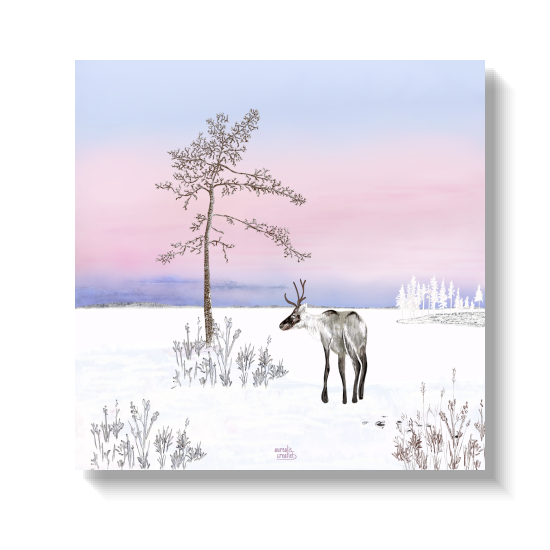
A solitary reindeer on a frozen lake, standing in that pastel-coloured light. The sky looks unreal, but it isn’t …
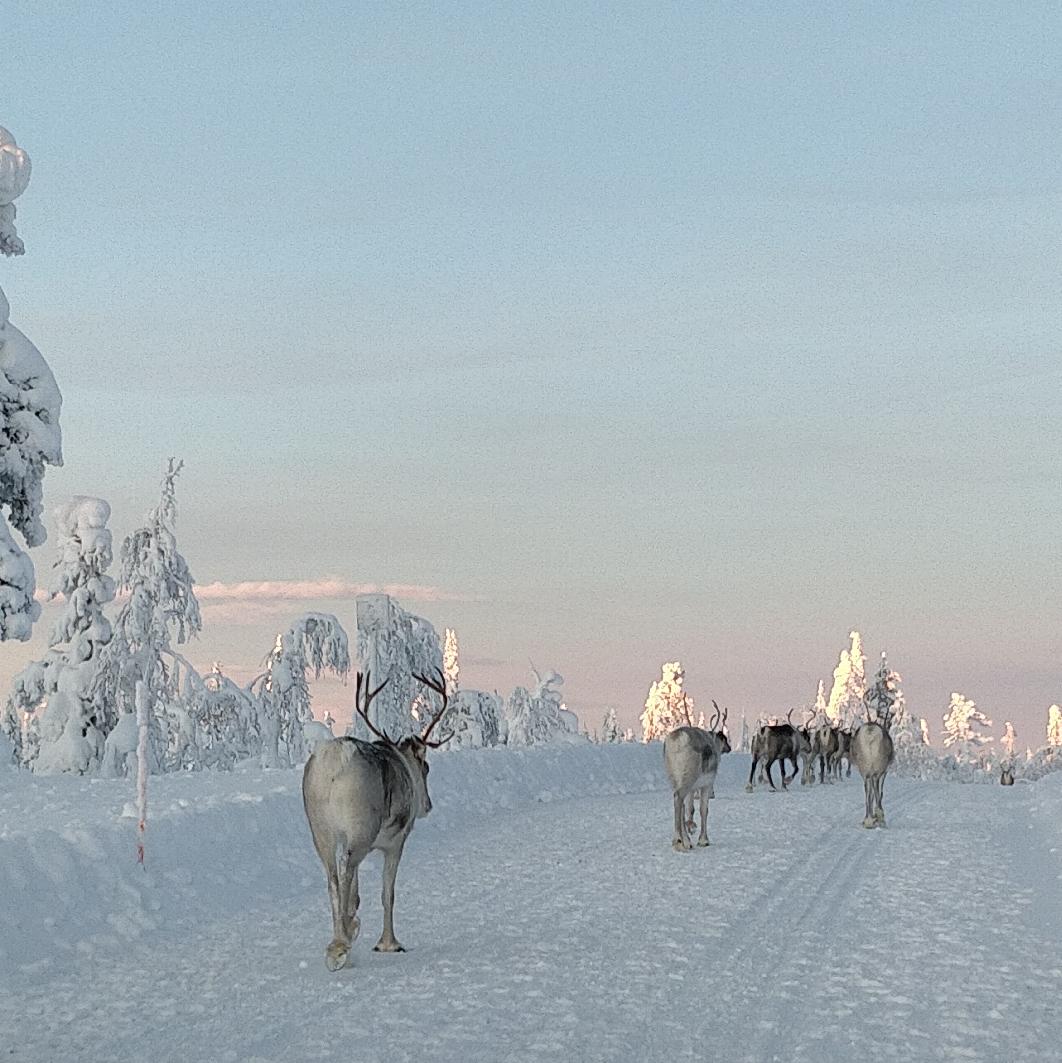
On our days off, we’d drive around aimlessly, a loop of about a hundred kilometres, mainly to seek out the sun. During one of those drives, on the road to Pulju, we went over a hill and found ourselves in a traffic jam. In Lapland. In February. The road was full of reindeer – a whole herd – who were in no hurry whatsoever and had no intention of moving aside.
You just wait and follow them calmly. I think a reindeer can ‘stroll’ very elegantly. The reindeer are also curious; the boldest one even dares to bring you to a standstill and forces you to stop your car… and then all you can do is enjoy the moment and watch them pass by. They move beautifully, with that slow, high-stepping gait through the snow in which I would sink, and they look at you with complete indifference. The reindeer belong to Sámi herders; they aren’t wild, and they know exactly how little a car means to them.
If you're driving in Lapland at this time of year, you'll come across a reindeer. If you're lucky, you'll come across three hundred. And if you'd like to meet them up close, you can do so on a reindeer visit, letting them nibble lichen straight from your hand.
Look at the treetops in the photograph below, and you are back at the beginning of this article: the sun is not up yet, but it is already touching the highest branches.
What does -37.8°C feel like?
-37.8 degrees C on 5 January 2024 is the coldest reading I recorded in six winters, and I was out in it.
What that does to a pair of glasses you can see below: first a rim of crystals along the edge of the lenses, then spreading further inwards, until eventually there was nothing left to see through. My scarf turned into a stiff piece of fabric pressed against my face. Hoar frost formed on my eyelashes, my hat and the tip of my nose. After that one photo, I didn't take a single one more, because taking off a glove was really no fun at all.
One small silver lining: my eyebrows remained clear. You sometimes see those photos on Instagram – faces with a thick white streak above each eye – and thanks to my glasses, I managed to trap just enough warm air beneath the lenses.
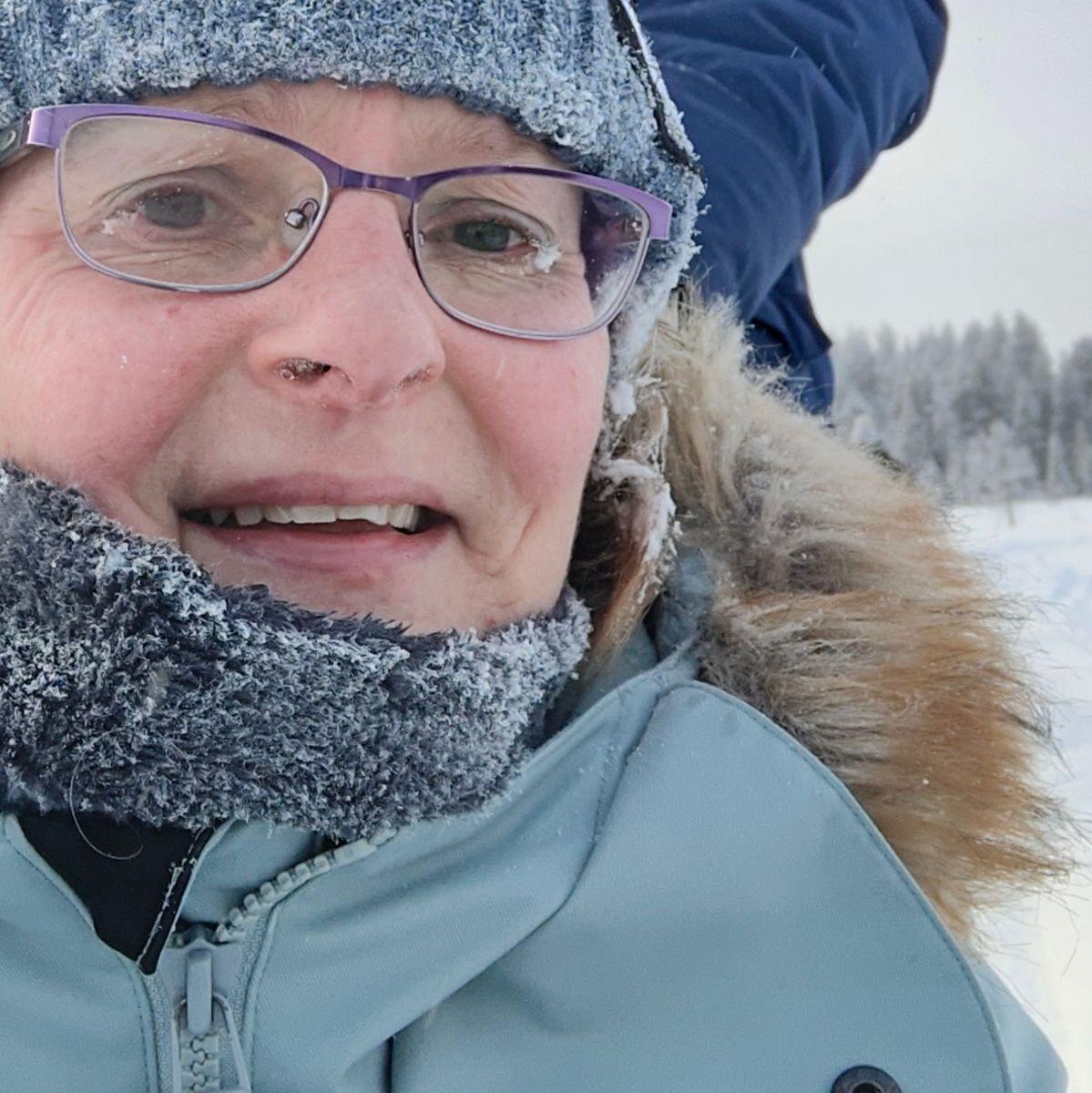
Half-Finn by then, and still cold.
This season demands a lot from you, and what it gives you in return is a landscape that, no matter how well you prepare, you can never quite get used to.
And that is the logic of the whole season. The clear, hard-frozen days are the cold ones, the colourful ones, the ones with the northern lights and the ones where the light finally comes back. You cannot have one without the other, which is exactly why this is the season I would return for.
Frequently asked question
When is the best time to visit Lapland?
The frosty winter, from mid-January to February, is the best time to visit Lapland. This is when the most snow falls, the pine forests are completely buried under a thick layer of snow, and the sky turns pink and red at sunrise. By the end of January, the sun reappears above the horizon, and thanks to the clear, cold nights, this is one of the best times to see the Northern Lights.
My honest take? December has the atmosphere: the darkness, the Christmas markets, the feeling of being somewhere at the very edge of the world. The icy winter in January and February has the landscape. More snow, better light, longer days, fewer people. If you want that postcard feeling, come in December. If you want Lapland, come in January or February.
Where Frosty Winter fits in the cycle
Frosty Winter is the first of the eight seasons, but it is not where the year starts. It follows Deep Winter, the darkest season of all, and that is exactly what gives it its character: everything here is defined by what came before it. The light returning, the snow piling up, the sun climbing a little higher every day. This is the turning point of the year.
Next in the cycle
By the end of February, the light has changed completely. The days are almost as long as they are in Belgium again, and you stop counting the minutes. The sun radiates real warmth, and the snow begins to behave differently: it melts in the afternoon and freezes again at night, layer upon layer, until it can support your weight.
That is season 2, ‘Crusty winter’, when the surface becomes hard enough to walk across the snowdrifts and the whole landscape unfolds.
Lapland 8 Seasons
Crusty Snow
Lapland 8 Seasons · THE first season
Discover the ‘Frosty Winter’ collection
Both artworks shown are available as high-quality prints on art blocks, metal prints and acrylic glass. Each artwork is part of the Lapland 8 Seasons collection.