
First Snow
The Season I Actually Experienced
Season 07 / 08
I had to paint “Ruska” out of longing. I was a few days too late for the colors. “First Snow” is the opposite. I experienced this season 100% firsthand. I stood in the garden at sunrise and watched as the whole world had turned white overnight, and I chased after the last dark nights before the snow came, when the northern lights had nowhere else to reflect off but the black river water.
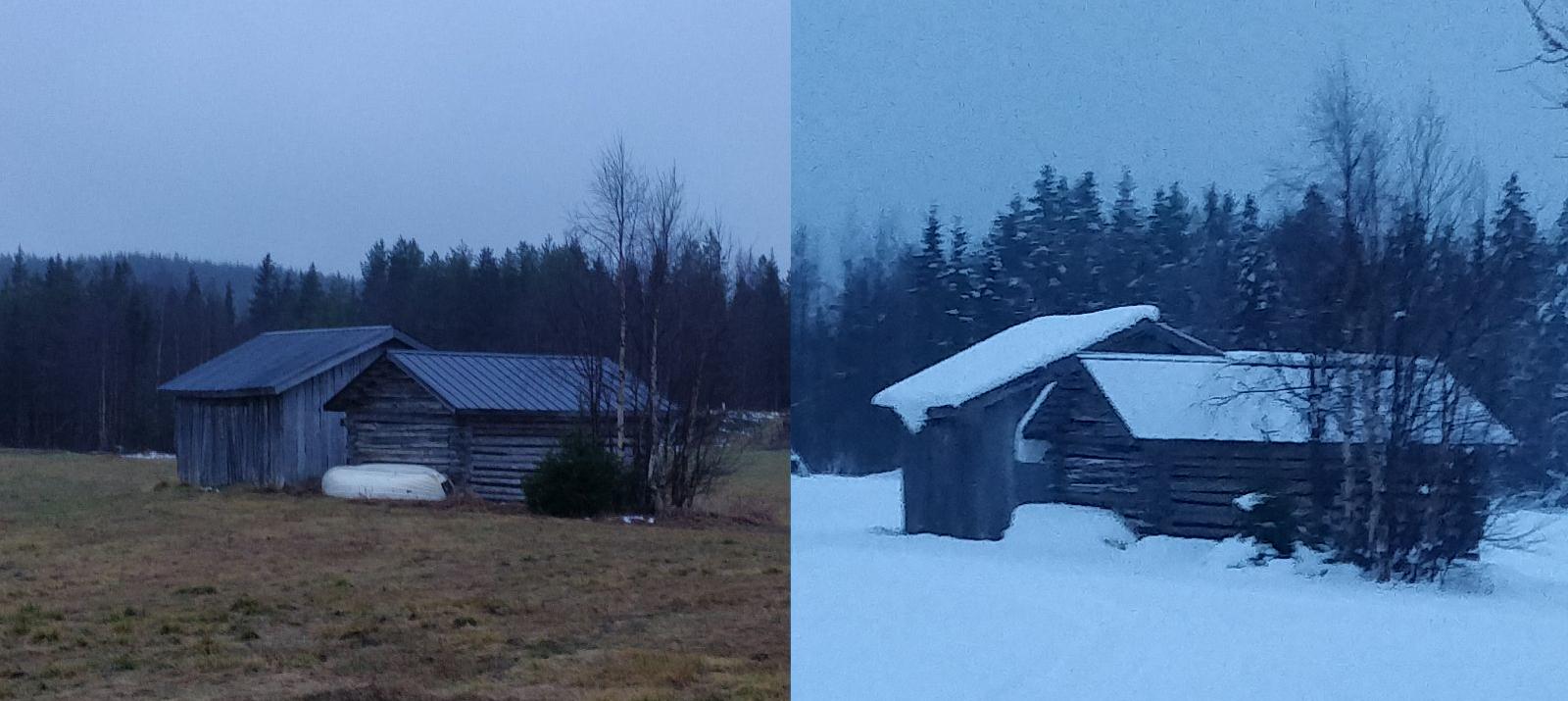
The same shed, days apart. That is how fast the first snow changes everything.
The season in one sentence
The seventh season is winter’s first kiss. Not yet the deep, settled white, but the turning point: the days are getting shorter, the weather is turning harsher, and the first flakes fall without warning.
The season
The season: October and November
October and November mark the seventh of Lapland’s eight seasons: the first snow. The days are rapidly getting shorter and the weather is turning gloomier. Somewhere between late October and early November, the first snowflakes fall, often without warning, and they often melt away again. On the higher fells around Levi, a first white dusting can appear as early as mid-October and be gone within a day. But with the next cold snap, fresh snow falls, and slowly the melting stops.
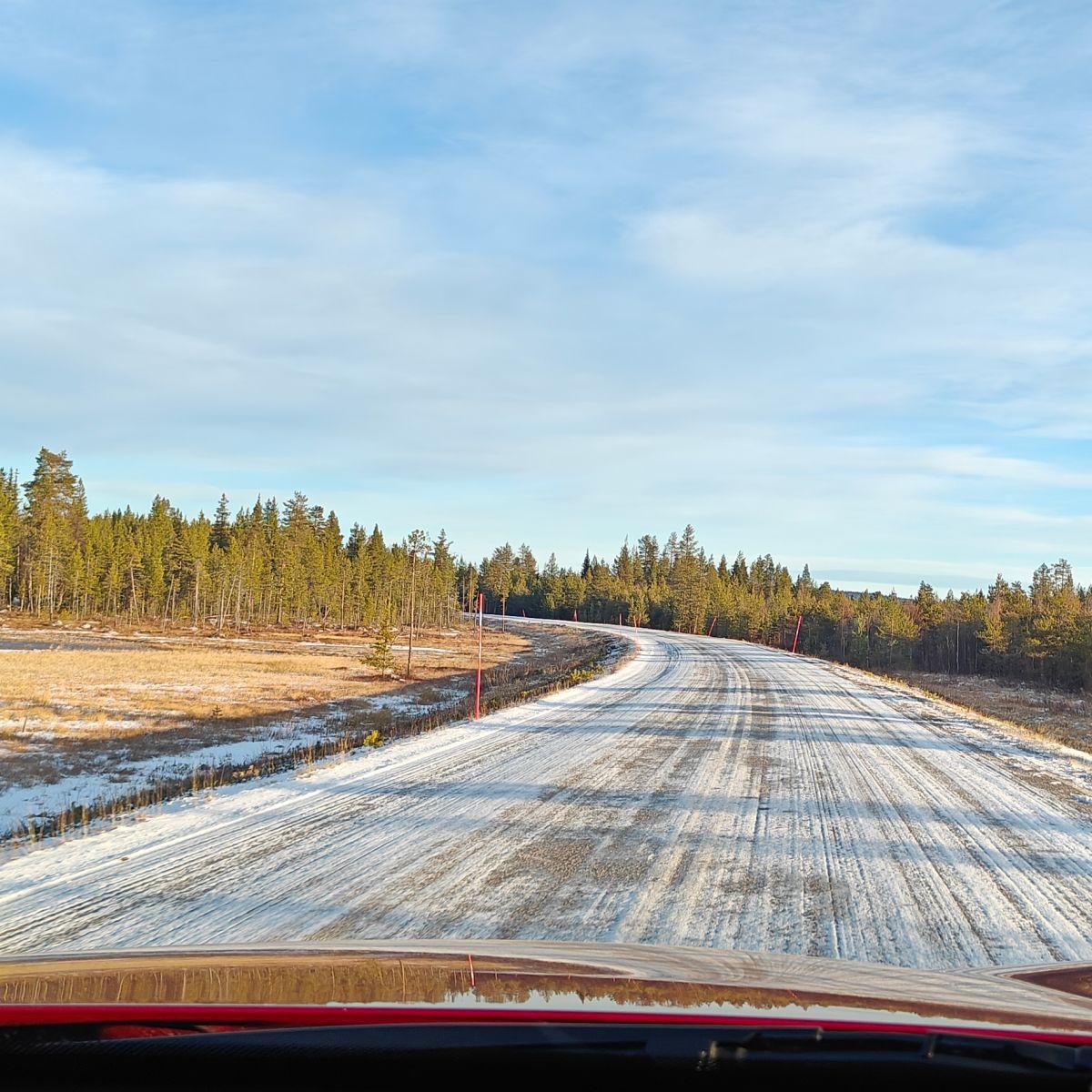
When can you expect the first snow in Lapland?
The truth is that the first snow always takes you by surprise. If you want to know a date (everyone does), the honest answer is: it depends on the year. During our very first winter in Finland, there was already more than twenty centimetres on the ground by the end of November and the lakes had frozen over. Our sixth winter was the complete opposite: we had to wait until mid-November before any snow settled at all. The permanent snow cover arrived late. And no, it is not white all year: if you are wondering whether there is always snow in Lapland, the season runs roughly from November to spring. After six winters, I still can’t tell you in advance when the first proper snow will fall. That’s one of the reasons why it remains so magical.
This changeable weather is typical of Lapland. In the weeks following the first snowfall, the temperature fluctuates around freezing point, causing a thin layer of snow to fall, partially melt and then freeze again overnight. The roads become as slippery as glass. We drive all the way from Belgium to Finland on studless winter tyres, as studs are not permitted on the roads on the mainland in the south. That worked fine for five winters. In the sixth winter, when the snow came so late and the cold was so indecisive, we finally gave in and bought a set of studded tyres. They’re still waiting at the tyre hotel, the Rengashotelli, in Rovaniemi, for a next winter in Lapland.
The darkness
The dark before the snow falls
Before the snow falls, the nights are at their darkest. There is no white surface to reflect what little light there is, so it was very dark; the water’s edge, in particular, was pitch black. It was the sort of darkness that frightens you. Once the snow has settled, it never gets completely dark again: even a crescent moon reflects off the snow and gives you something to focus on.
On the darkest nights, when the Northern Lights appeared, the whole landscape seemed to glow. We were standing on the riverbank one time with a couple of tourists who’d rented the cottage next to ours; we were all waiting when the Northern Lights suddenly appeared above us. It felt bright enough to read a book by. Perhaps the Northern Lights were that strong, or perhaps our eyes had become so accustomed to the darkness that we’d developed cat’s eyes.
· THE SEVENTH SEASON ·
Discover the First snow collection
The works shown are available as high-quality prints on art blocks, metal prints and acrylic glass. Each work forms part of the Lapland 8 Seasons collection.
Featured works
Two illustrations from this season
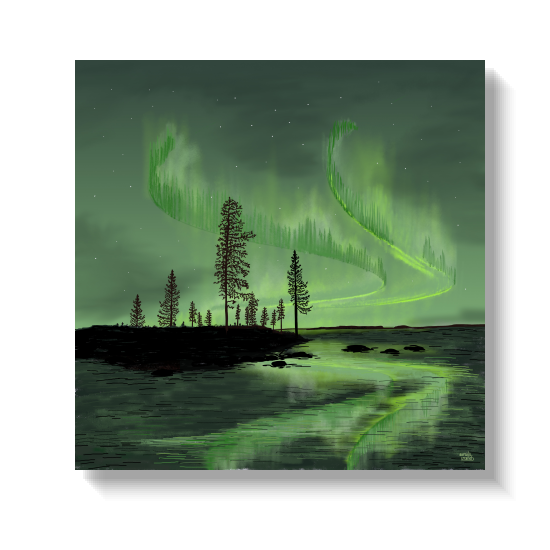
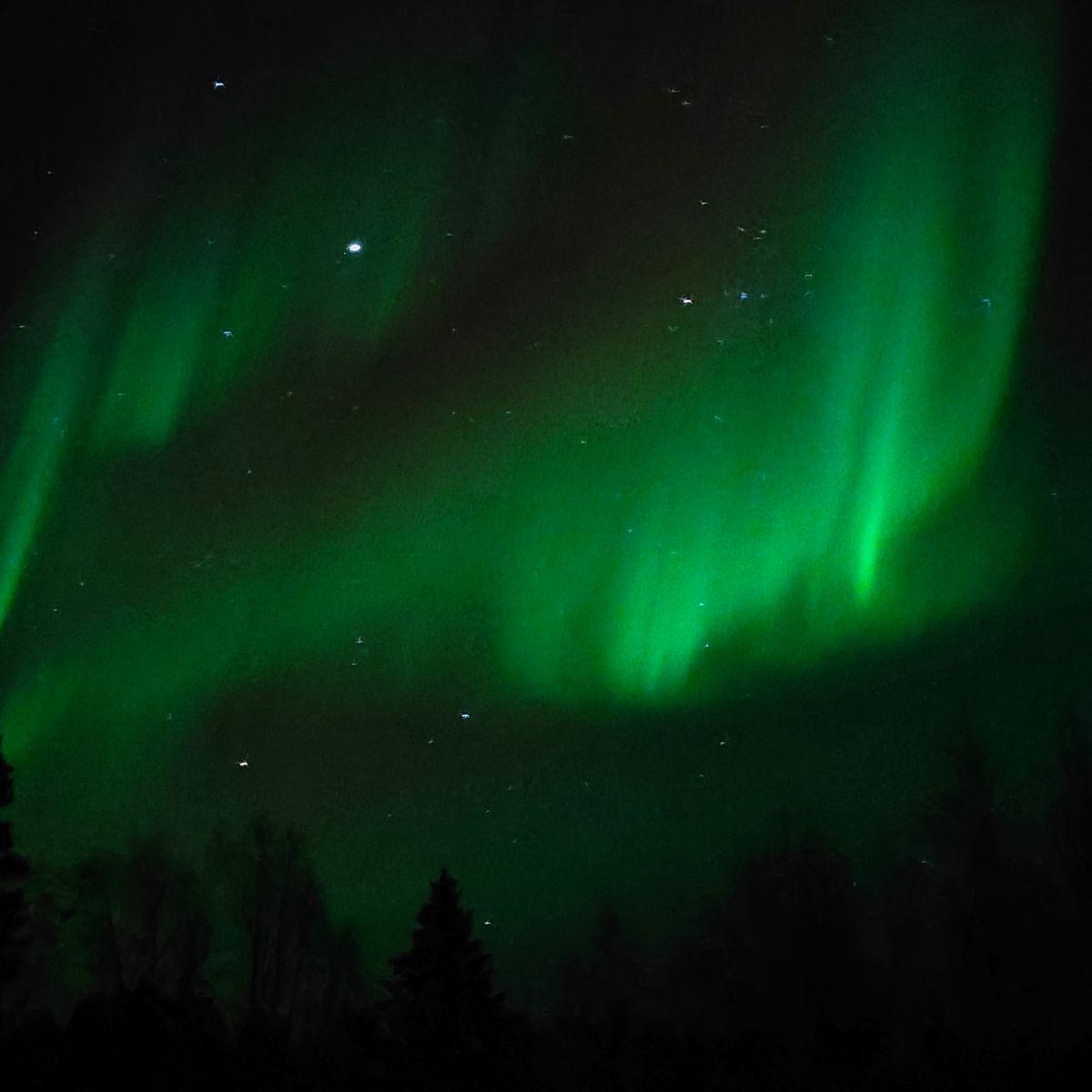
Green Reflection
This is that fleeting moment just before the first snow, when the nights are at their darkest and the Northern Lights shine most brightly. On the banks of a wild, untamed stretch of the Ounasjoki, the green light is perfectly reflected in the mirror-smooth surface of the water. A double Northern Lights display: once in the sky, once in the river.
We lived in Leppäniemi, a hamlet with perhaps ten houses, with the Ounasjoki flowing right behind our little yellow cottage. Close by was a set of rapids that froze late, often not until early January. On Christmas Day, you could still see the water flowing through a small hole in the ice. So on clear nights, we were treated to a double display of the Northern Lights: in the sky and on the water.
View the illustration: Green Reflection
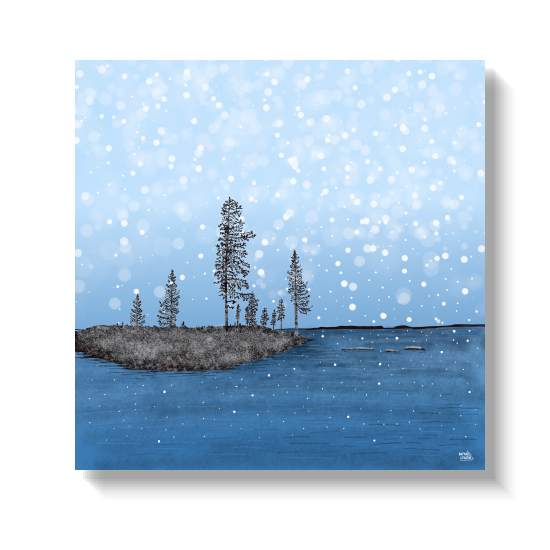
First snow
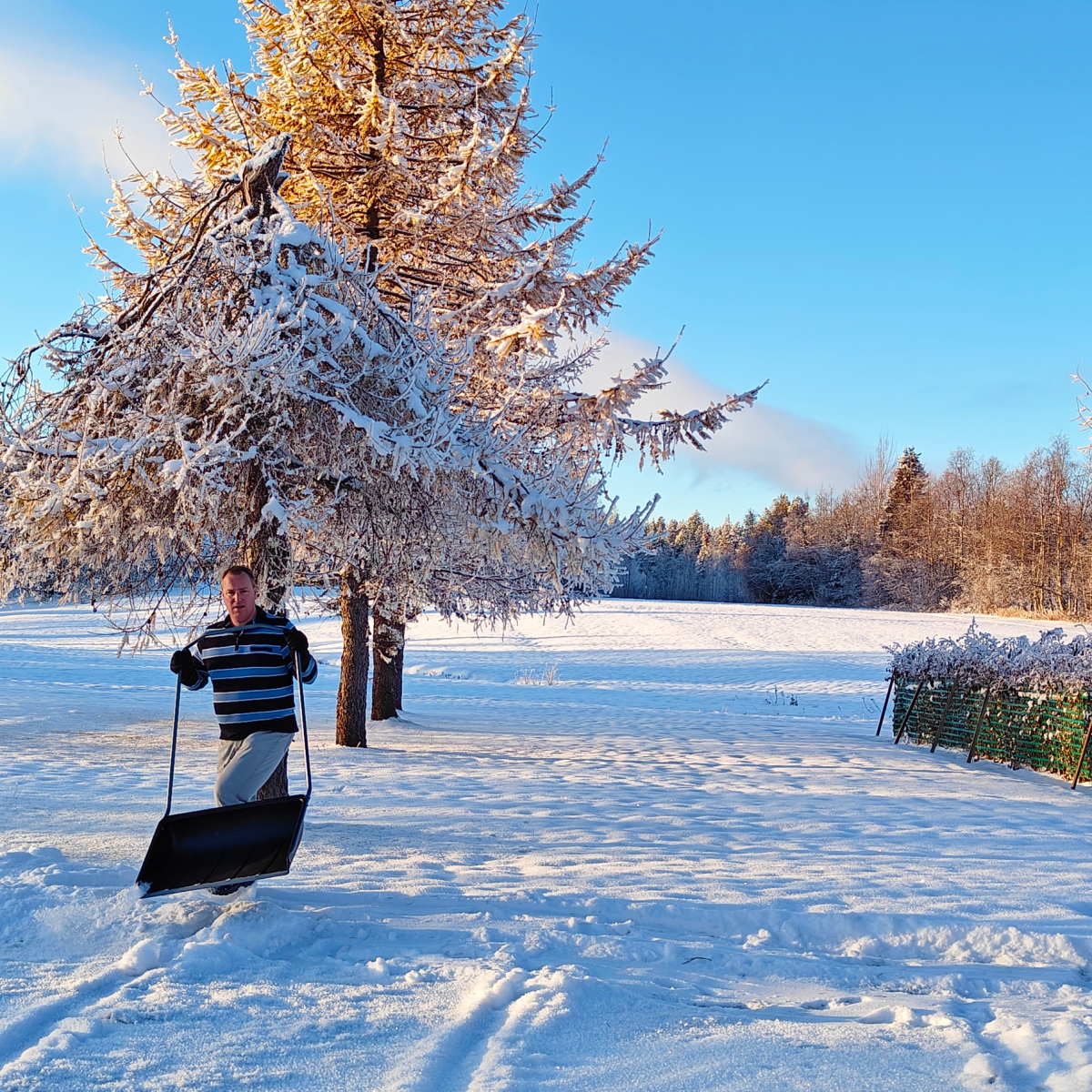
The first snowflakes of November, which fall without warning and may well melt away again. But the next cold snap brings fresh snow, which forms the first layer of the coming winter. By the end of November, there are already twenty centimetres on the ground on some days, and the lakes freeze over.
The first snow is always welcomed with joy. And then the winter gardening begins: clearing snow, with every new snowfall meaning you have to start clearing the driveway sooner with the lumikola, the Finnish snow shovel. In Belgium, there’s no gardening at all in winter. Here, it’s the first job of the season, and in a way, a happy one.
View the illustration: First snow
Northern lights
The cycle: what the first snow brings
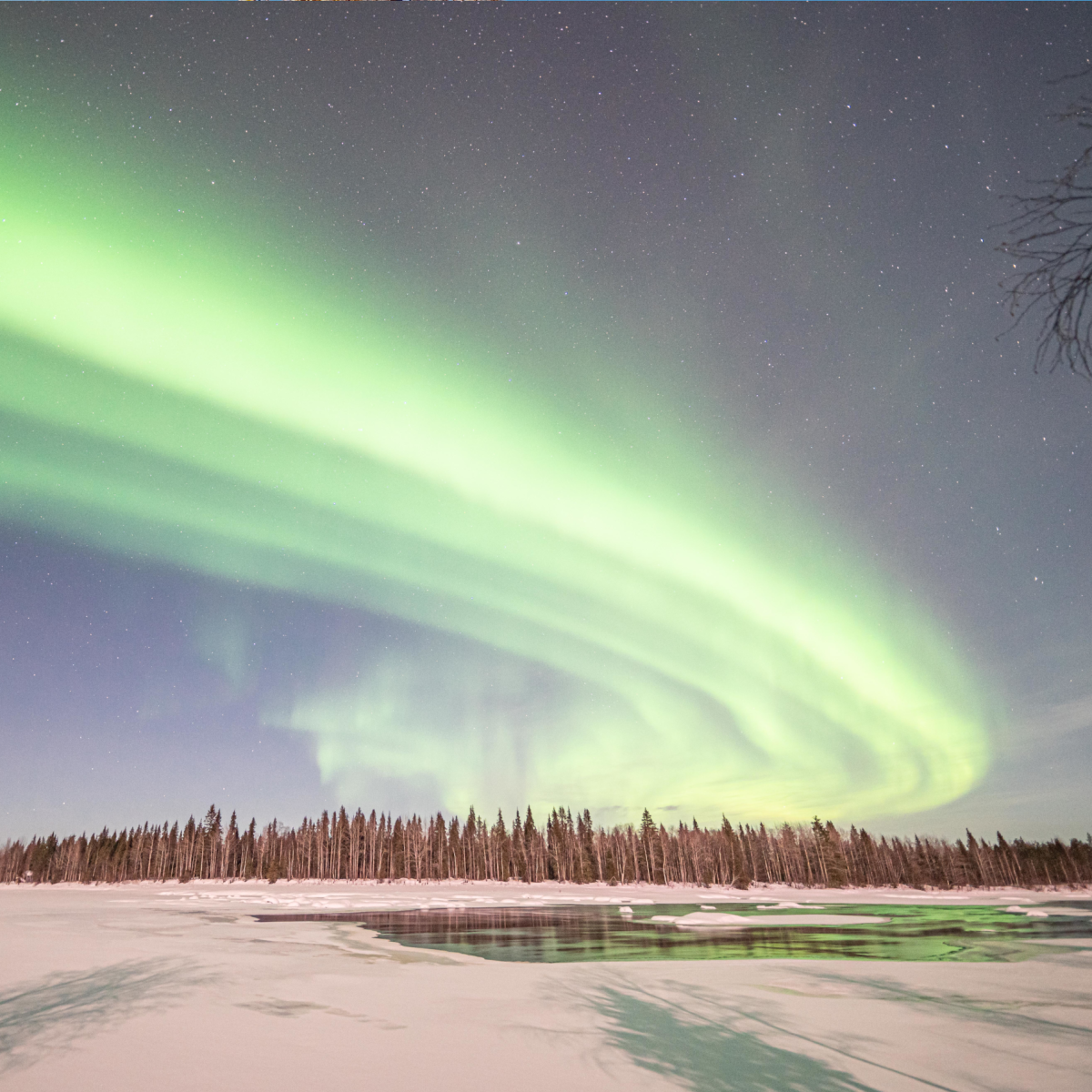
You never forget your first Northern Lights. We saw ours in Tromsø during a short trip in March 2019, without realising that we would spend the next six winters in Finland. Many nights followed, and there are always a few that stay with you. There was the night on 7 February 2020 when Mikko captured us beneath seven clearly distinguishable bands of the Northern Lights. And then there was 20 February 2023, when a huge, broad crown suddenly appeared in the sky, so vast that we lay back in the snow to take it all in at a single glance.
You come home tired after a day’s work, check the aurora app, see that the Northern Lights are visible, and suddenly you’re not tired at all. Quickly get dressed and head outside, hop-hop. The whole sky full of bright ribbons, and your bed pushed up against the window so you can keep watching from under the duvet.
Over the course of six winters, we saw the Northern Lights on 46, 34, 53, 44, 40 and 48 nights (yes, I've counted them all). The first snowfall was the moment when each of those winters really began. After this season comes the darkness: the polar night, kaamos, when the sun doesn’t rise above the horizon at all. But that’s the next chapter.
Frequently asked question
When can you expect the first snow in Lapland?
It depends on the year. The first snow usually falls in late October or early November, but it often melts again. In some years more than twenty centimetres settles by late November; in others the snow only stays from mid-November on. After six winters in Lapland, I still can't predict the exact date.
Where this season fits in the cycle
First Snow is the seventh chapter in the Lapland 8 Seasons cycle. It follows Ruska, autumn's last blaze of colour. As the first flakes fall and stay, the land turns from bare and brown to white, and the long slide into deep winter begins.
The season full with Autumn Colours.
Deep winter
Back to the overview: Lapland 8 Seasons
Lapland 8 Seasons · THE SEVENTH SEASON
Discover the First snow collection
Both artworks shown are available as high-quality prints on art blocks, metal prints and acrylic glass. Each artwork is part of the Lapland 8 Seasons collection.