
Ruska
The weeks when Lapland changes colours.
Season 06 / 08
I haven’t experienced Ruska yet. Not really. It’s only fair to say that right from the start.
I’ve lived in Finnish Lapland for six winters, so I’m familiar with the dark months: the first snow, the blue hour, the silence of a frozen lake. But the short, radiant weeks when the birch trees change color, the weeks the Finns call Ruska, I’ve only ever experienced them indirectly.
Once, we arrived in November and were treated to a string of snowless days. The grass was still green, the birches already bare, and the sun was so low that it felt like the fall we know back home in Belgium. Autumn, but up north. It was the closest I’d ever come to the end of Ruska, and it made me long all the more for a real autumn in Lapland. One day we’ll head north, just for those weeks, to stand beneath birch trees that haven’t lost a single leaf yet.
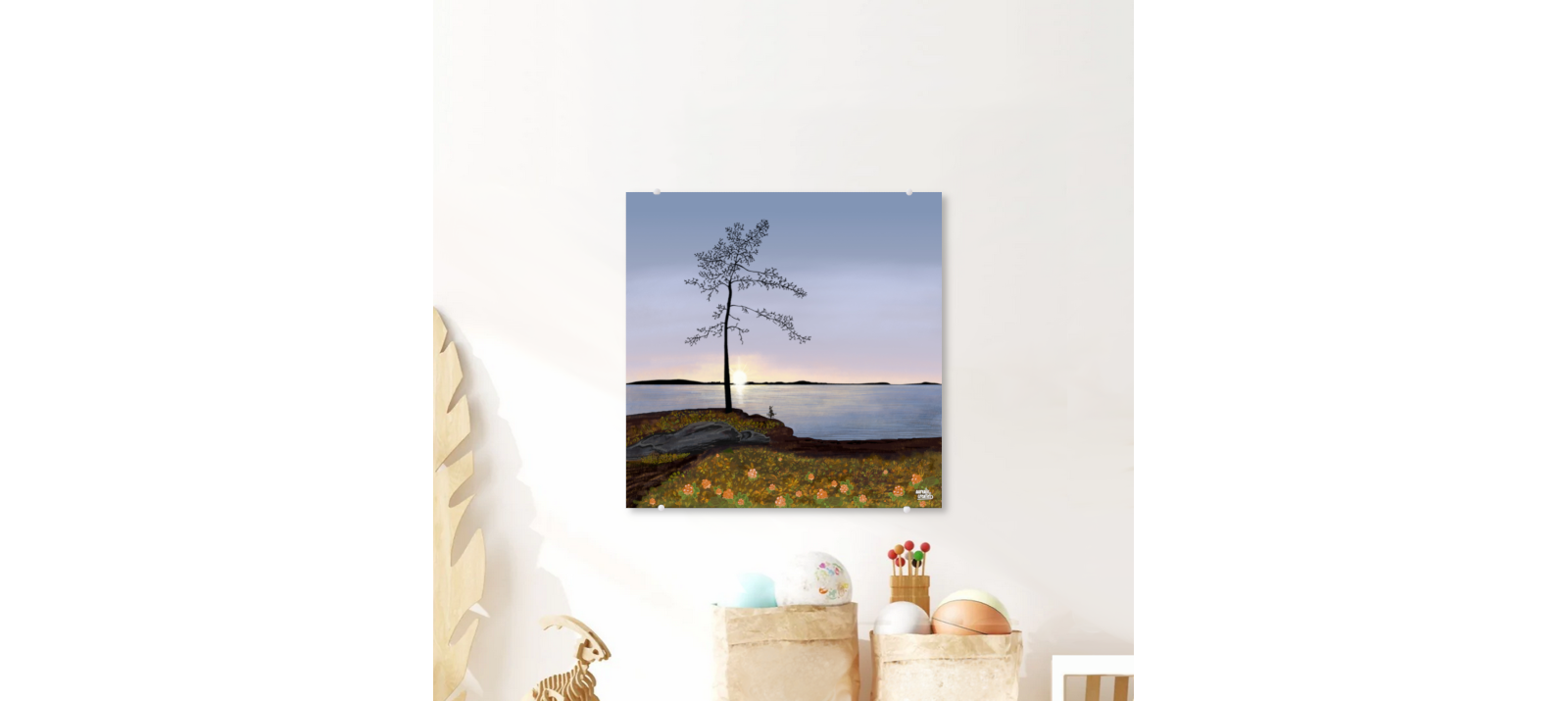
So this is a season in which I paint out of longing rather than from memory. The illustration at the top of this page, and the accompanying illustration further down, depict how I imagine Ruska, and how the Finns describe it: the forest blushing in anticipation of the snow.
The season in one sentence
This is Ruska the way I imagine it: the low sun and the turning birches sharing the same colour.
The season
What Ruska is
Ruska is the Finnish word for the autumn colors of the north. In late September and October, the birch trees and the tundra transform almost overnight into deep reds, oranges, and yellows. It is fleeting and complete. The trees turn such intense colors because they already know what is to come: soon they will be bare, and shortly thereafter they will welcome the first snow.
It is the sixth of the eight seasons in Lapland, the transition between the long light of summer and the darkness that follows. The nights, which barely existed a month earlier, have returned and are quickly growing longer. The colors give the impression that the land is taking one last deep breath before winter.
Why the light lingers so long up here
There’s one thing I’ve learned first-hand: this far north, sunrise and sunset really do last a long time. Both can stretch well over an hour. In the morning and evening, it lingers in that in-between state for ages before it gets truly light or truly dark.
There’s a simple reason for this. The sun’s apparent path across the sky is steep near the equator, causing it to drop straight down and night to fall quickly. The closer you get to the poles, the more oblique that path becomes. In Lapland, the sun glides toward the horizon at a shallow angle rather than sinking straight through it, causing it to skim just below the edge for a long time. It is precisely this shallow descent that gives Ruska such an endless “golden hour”: during these weeks, the low-hanging sun and the changing leaves seem to retain the same warm color for most of the day. It’s not just atmosphere; it’s geometry.
· THE SIXTH SEASON ·
Discover the Autumn season - collection
The works shown are available as high-quality prints on art blocks, metal prints and acrylic glass. Each work forms part of the Lapland 8 Seasons collection.
Featured works
The two illustrations
Golden hour
This is the illustration at the top of the page. It depicts Ruska at the warmest moment of the day: the entire scene is bathed in that long, slanting light I described above; the sun is low in the sky, the birch trees have already changed color, and the color of the leaves and that of the sky are almost indistinguishable from one another. It is the season painted at the one moment it most wants to be seen.
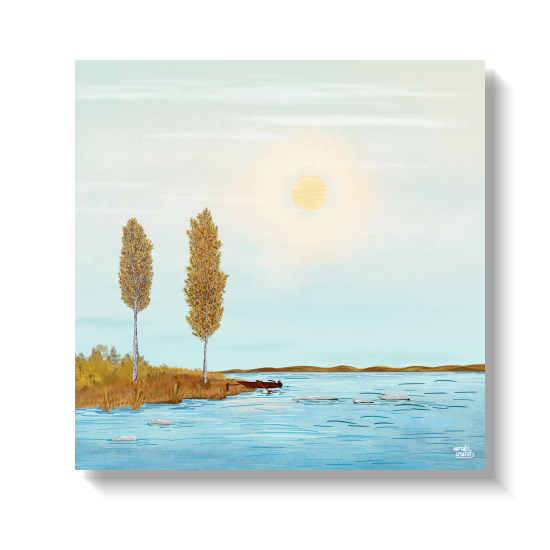
Indian summer
Here, it’s all about the birch trees. They turn red, orange, and yellow against a clear sky, and are at their most beautiful just before they shed their leaves. There’s something almost defiant about it: the trees know they’ll soon be bare, waiting for the snow, and this is their last, most striking display of color before silence sets in.
The birches blush, knowing the first snow is not far off.
What a visitor meets in this season
Typical activities:
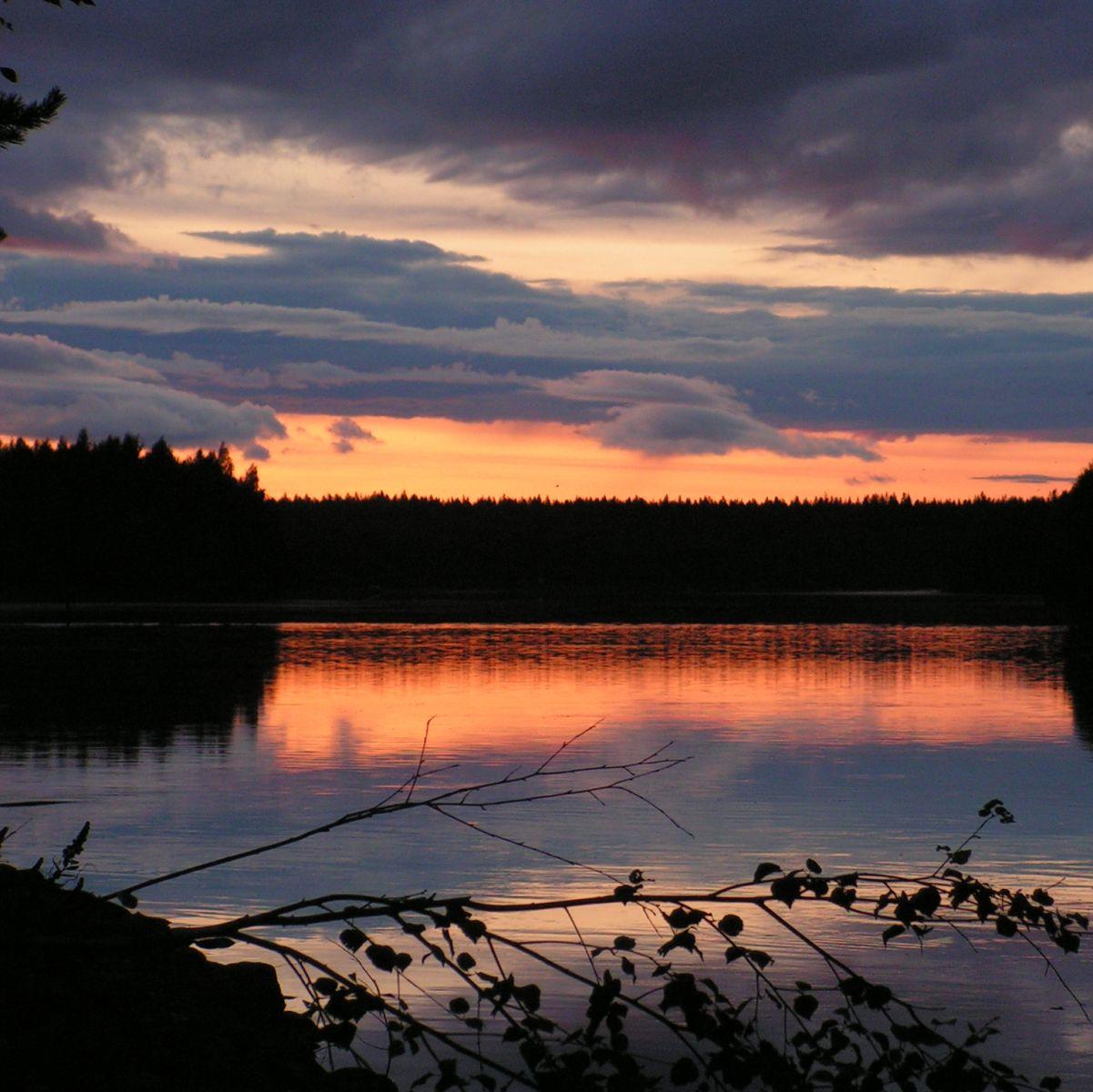
- Long walks and hikes through the colorful tundra, foraging for wild mushrooms in the forest, and the first tentative search for the Northern Lights as the nights grow longer again.
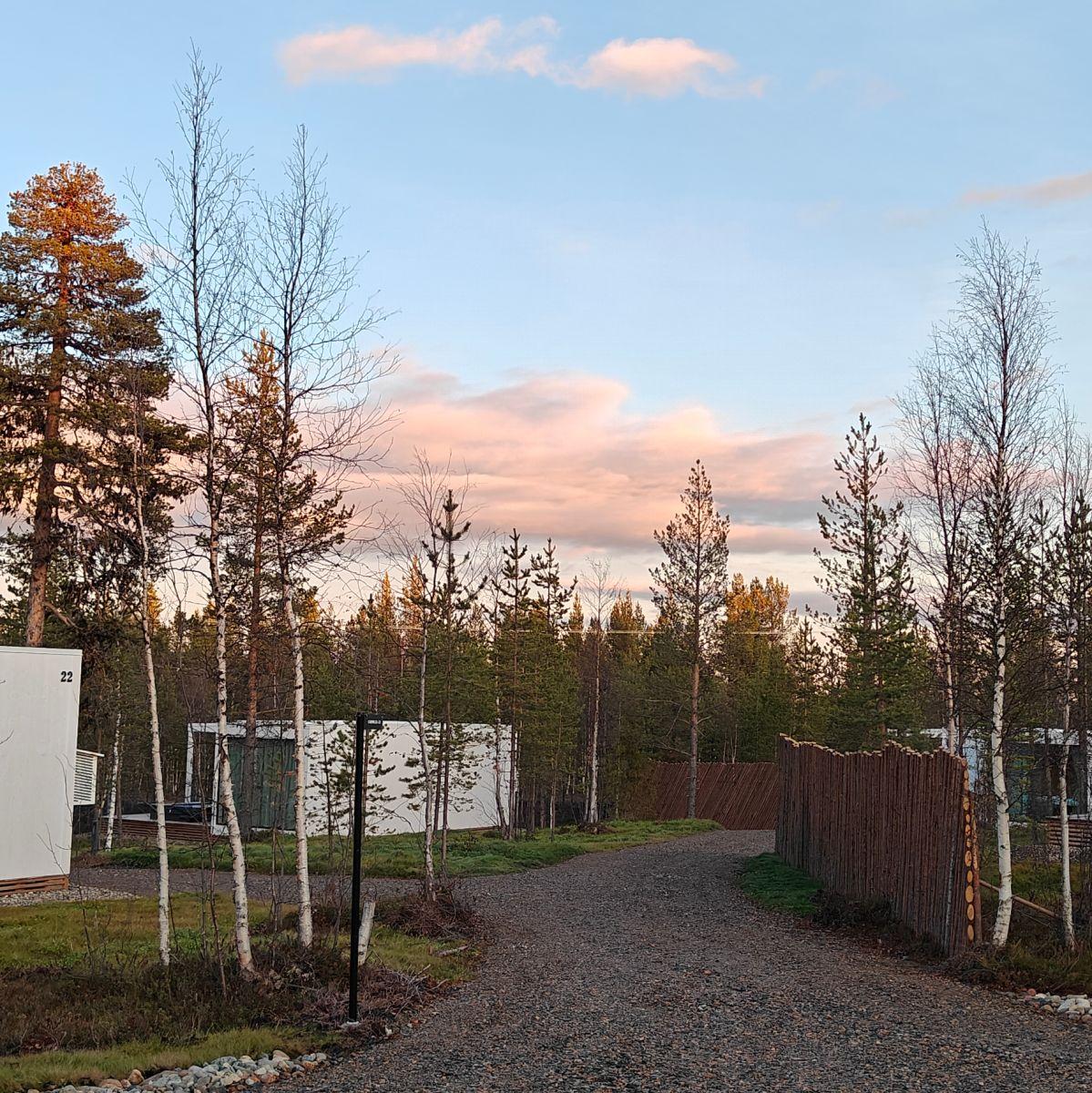
- Light and weather: crisp, clear days and a low-hanging sun; those famous long sunrises and sunsets; the first real chill in the air.
- Natural phenomena: Ruska itself, the tundra that changes color almost overnight; and the Northern Lights, which grow stronger and more reliable as the hours of darkness lengthen.
In one word: glowing.
Frequently asked questions
How long does Ruska last?
Not long, and that is part of its charm. Ruska usually lasts from the last week of September through the first two weeks of October, so roughly two to three weeks in total. The exact timing shifts a little each year and moves from north to south, arriving first in the far north.
Once it passes, the leaves fall quickly and the land waits for the first snow.
What is Ruska?
Ruska is the Finnish word for the autumn colours of the north. It is the short season when the birches and the tundra change colour almost all at once, turning deep gold, orange and red before the leaves fall.
In Lapland it is the sixth of the eight seasons, the turning point between the long light of summer and the dark and snow that follow. Ruska is brief and intense, which is part of what makes it so striking.
When do the autumn colours peak in Lapland?
Ruska is brief. In northern Lapland the colours usually peak in the last week of September and the first two weeks of October, and then it moves quickly. Within a few weeks the leaves are down and the land is bare, waiting for the first snow. What makes it so striking is that the colour comes in two layers. Up high, the birches turn almost all at once, whole stands shifting to orange and gold in the same short window. Down below, the tundra floor turns red: the dwarf shrubs, and above all the bilberry, flush a deep, fiery red, with rowan adding more red in its leaves. Gold above, red underfoot, the whole forest glowing at the same moment. It does not last long, which is part of why it feels so complete.
Where this season fits in the cycle
Ruska is the turning point. Behind it lie the light seasons; ahead lie the first snow, the blue hour and the long polar night. It is the last colour before the white. One season closes, the next is already on its way.
The season full with the return of the northern lights.
First snow
BACK to the overview: Lapland 8 Seasons
Lapland 8 Seasons · THE SIXTH SEASON
Discover the Autumn season-collection
Both featured works are available as premium illustrations on art blocks, metal plates, and acrylic glass prints. Each one is part of the Lapland 8 Seasons collection.