
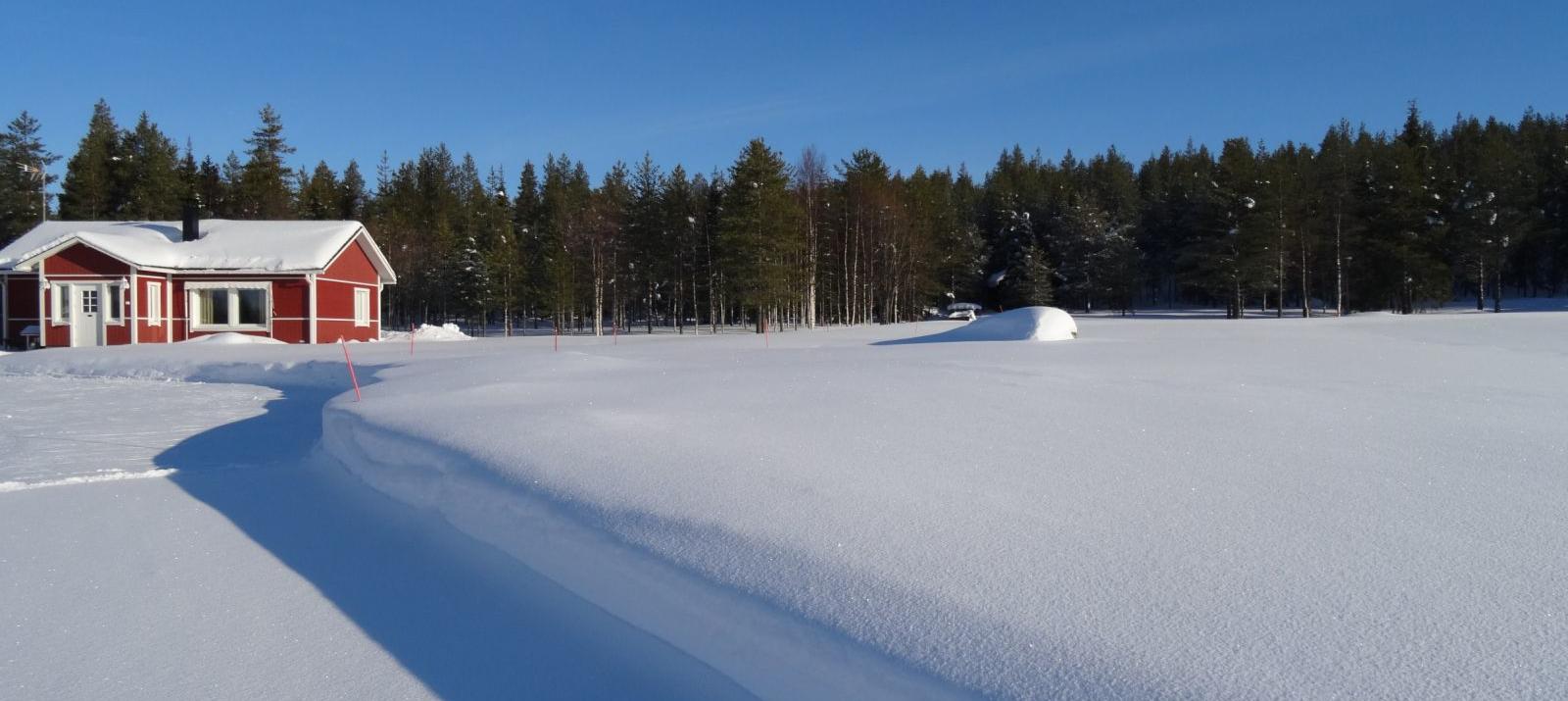
Crusty Snow: the season you can walk on the snow
Light in Lapland in March
Season 02 / 08
A crack through it
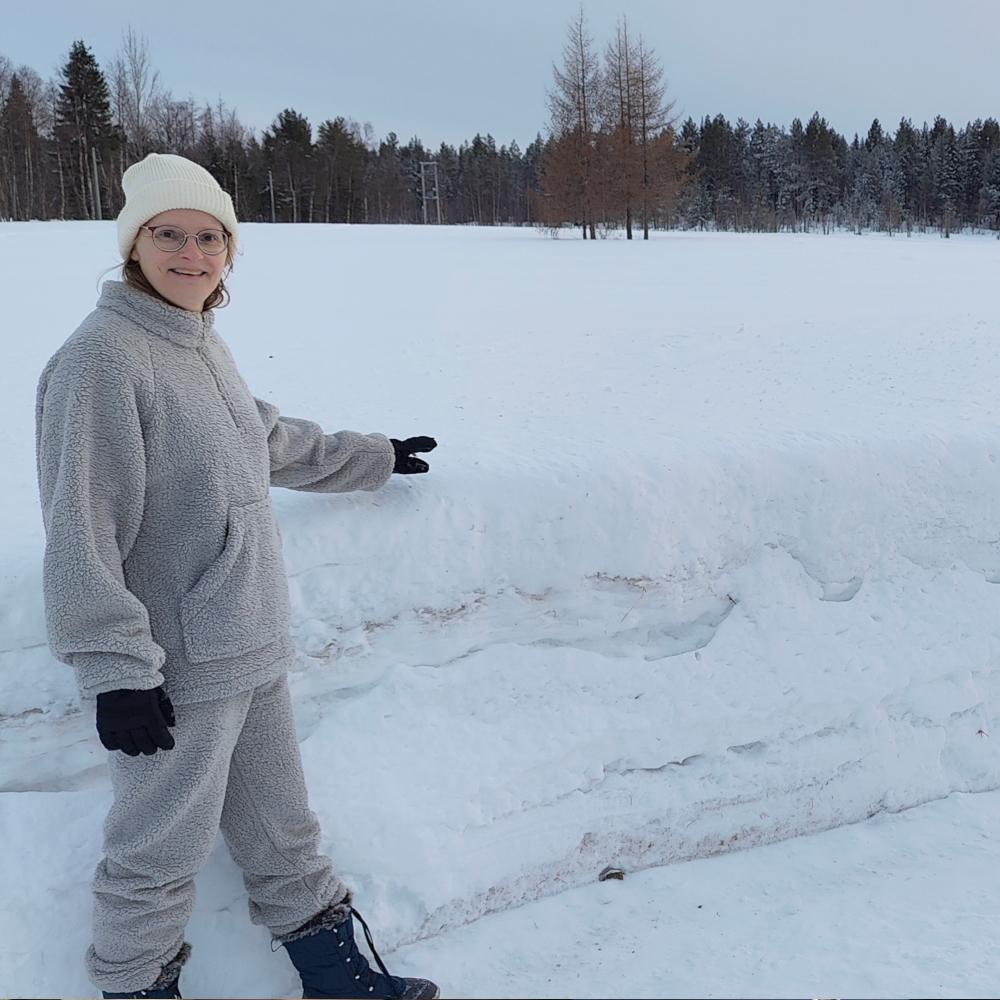
There comes a moment, sometime in March, when the snow is no longer something you sink into, but something you stand on. Not with snowshoes. Just on your own two feet, atop more than a metre of snow, as you walk through a garden that a month earlier would have swallowed you up to your hips. This happens thanks to a single simple rhythm that runs throughout the season: soft by day, hard by night.
The sun now brings real warmth and loosens the top layer; the cold night freezes it back into a hard crust. Do that a few dozen times, and the snow forms a crust strong enough to support an adult. That snow crust is typical of this season.
And every now and then, when the sun has done its work and the crust hasn’t refrozen yet, you hear it: a single, crisp crack under your feet. That sound is the arrival of spring.
The season in one sentence
And every now and then, when the sun has done its work and the crust hasn’t frozen over again, you can hear it: a single, crisp crack beneath your feet. That sound is spring arriving.
THe season
What Crusty Snow really is
On the calendar, spring in Lapland seems nothing like spring elsewhere. In 2020, there was as much as 1.20 metres of snow on the ground, and it remained white well into April. But the light changes everything. By the end of March, the day is already longer than the night, and by early April, the difference between a week in March and a week in April is measured in full hours of extra daylight, not in minutes. The days get warm enough to sit on a patio in a T-shirt, even while the thermometer in the shade still reads well below zero. That contrast, warm in the sun, freezing in the shade, is exactly what defines the season, and it’s exactly what makes it feel like a reward after the long darkness.
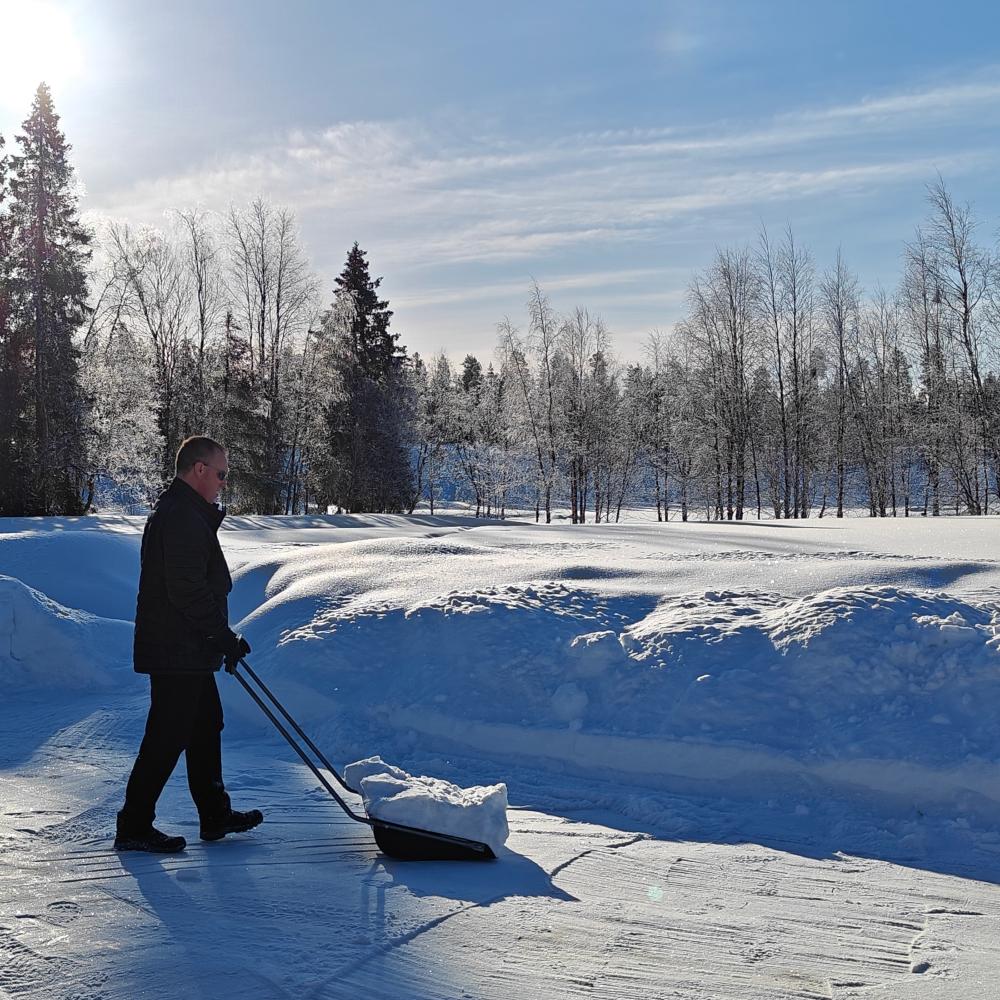
Snowshoes, which you’ve been wearing all winter, are suddenly unnecessary. The entire landscape opens up. You can walk anywhere: across fields, over the frozen river, straight through the forest, on a surface that glistens with millions of ice crystals in the ever-stronger sun. And no, after five months of snow, you never get tired of it. In March and April, fresh snow still falls, and it’s still a little dance of joy every single time.
· THE SECOND season ·
Discover the ‘Crusty Snow’ collection
The artworks shown are available as high-quality illustrations on art blocks, metal prints and acrylic glass. Each work forms part of the Lapland 8 Seasons collection.
1 metre of snow
Walking on a metre of snow
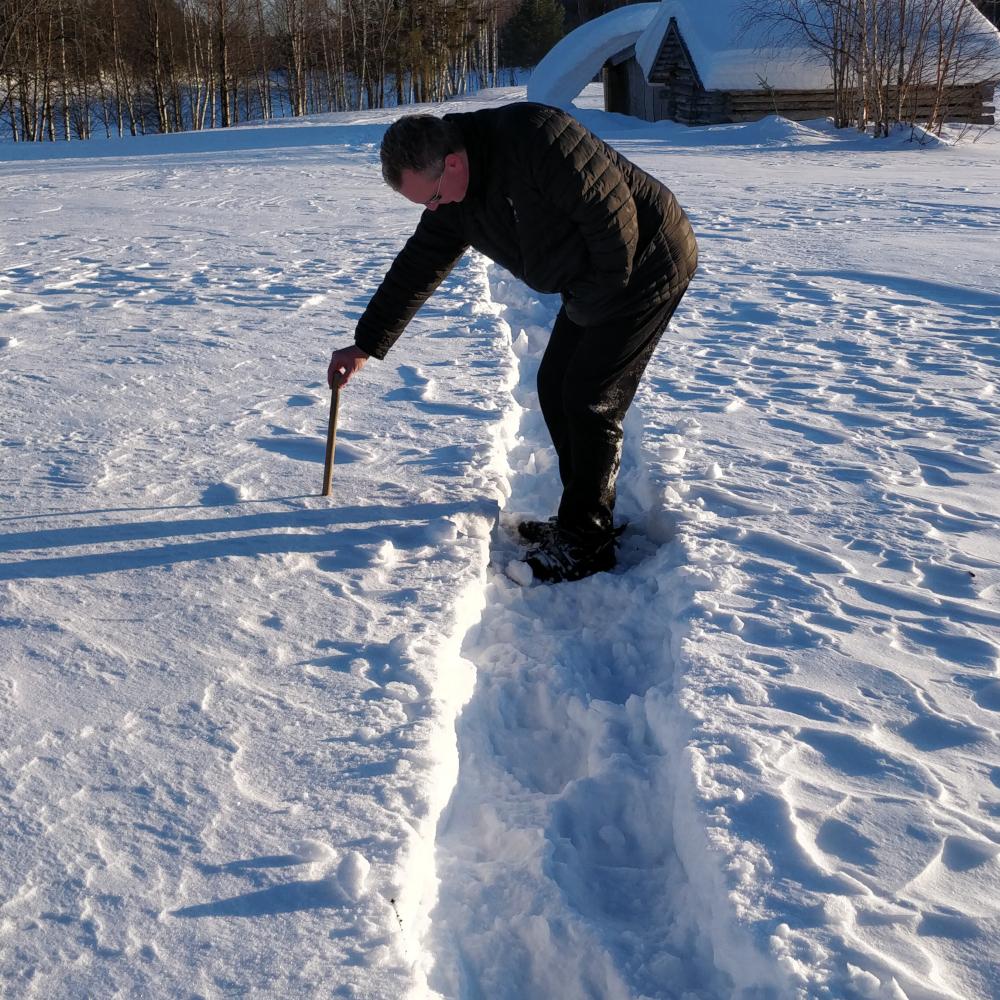
The first time it supports your weight, you don’t quite trust it yet. You take a cautious step, then another, expecting to sink through. When that doesn’t happen, something changes. Koen once pushed a broomstick straight down through the crust, and the entire stick disappeared into the ground; that’s when you truly realise how much snow is beneath your feet.
Of course, it’s never perfect. During the same walk across the frozen back garden, everyone still sinks through the crust every now and then, with one leg disappearing up to the knee while the rest of your body remains standing on top of 95 centimetres of snow. That misstep is part of the fun. Soft where the sun hit it, hard where it didn’t: the crust honestly shows you what’s what.
Featured work
Crusty Freshness
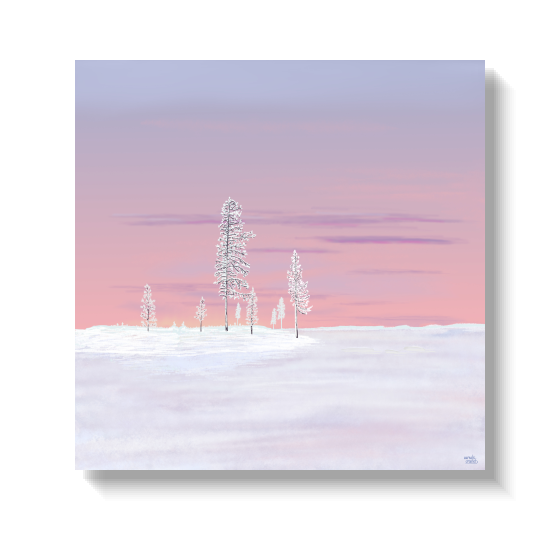
This season’s first illustration is all about that glistening crust. It captures the magic of spring in Lapland, when the landscape transforms into a glistening wonderland: an unbreakable crust of snow forming over more than a metre of pristine snow, the perfect surface for snowshoeing or simply wandering around.
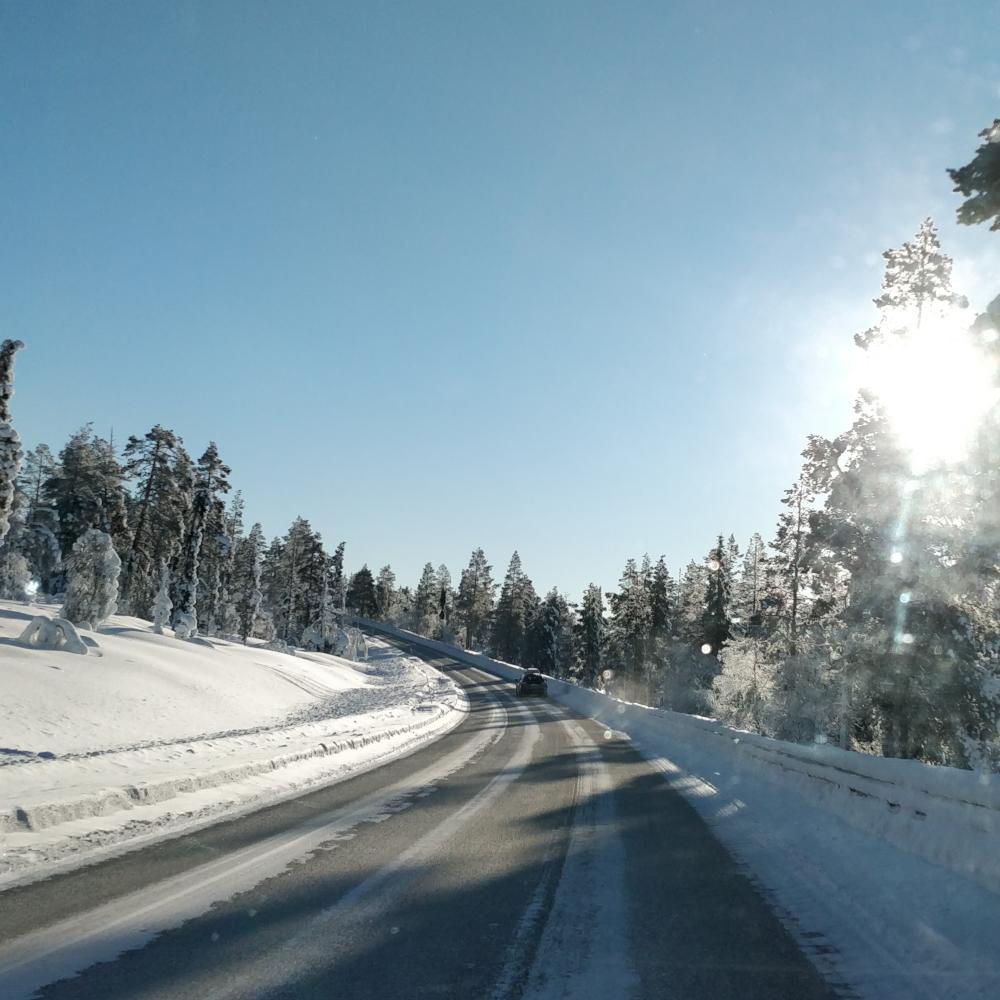
March and April reveal one of the Arctic’s most spectacular sights: millions of ice crystals sparkling like diamonds in the increasingly powerful sun, while temperatures rise just enough to make being outdoors pleasant and the thick crust remains firm beneath your feet. It’s a rare phenomenon, and it’s the reason this season got its name.
Featured work
Arctic Campfire under the Northern Lights
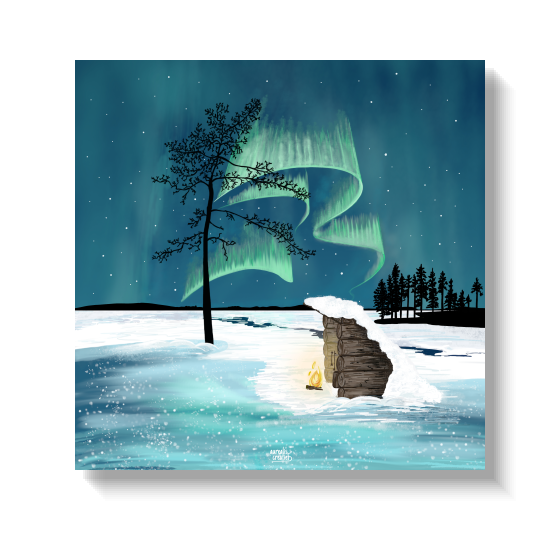
The second illustration transitions from day to night. As the sun sets, the same crisp cold that freezes the ice also creates a clear sky, and during the dark hours, the Northern Lights are still in full view in March. The scene is familiar to anyone who knows the outdoors in the North: on the shore of a frozen lake, a traditional Lapland fire pit glows warmly beneath the dancing Northern Lights. A wooden shelter, a kota, protects the fire while cooking sticks hang ready above the flames, and above it all, the Northern Lights illuminate the night sky. This isn’t about chasing a single spectacular burst. It’s about the warmth you build up against the cold: fire below, green light above, and the frozen lake that keeps the whole scene still.
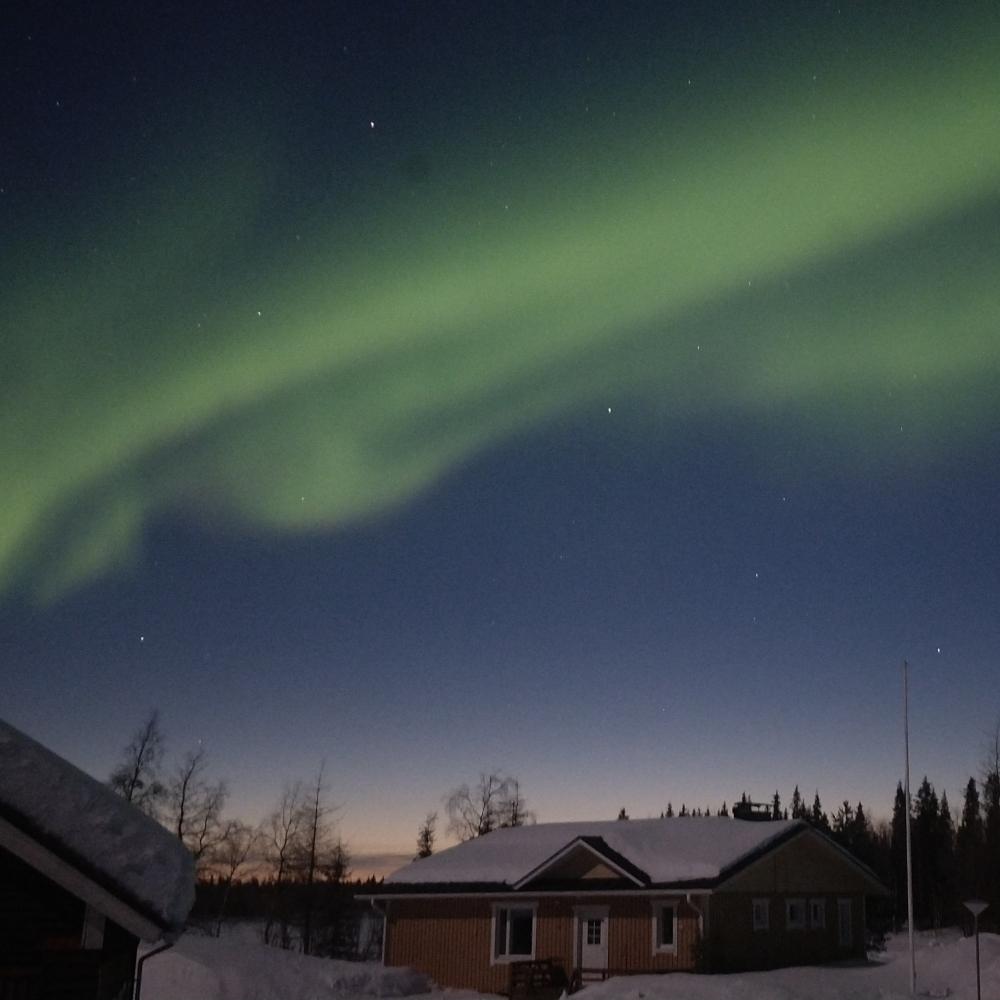
And the Northern Lights continue right through the end of the season. By early April, it hardly gets dark anymore; you’ll see them appear above the neighbours’ house while the horizon still glows pale blue and orange from a sun that has only just set. The nights no longer get completely dark, and those last green veils feel like a farewell to winter. Warm nights, milder days: the season is drawing to a close.
day vs night
Soft by day, hard by night
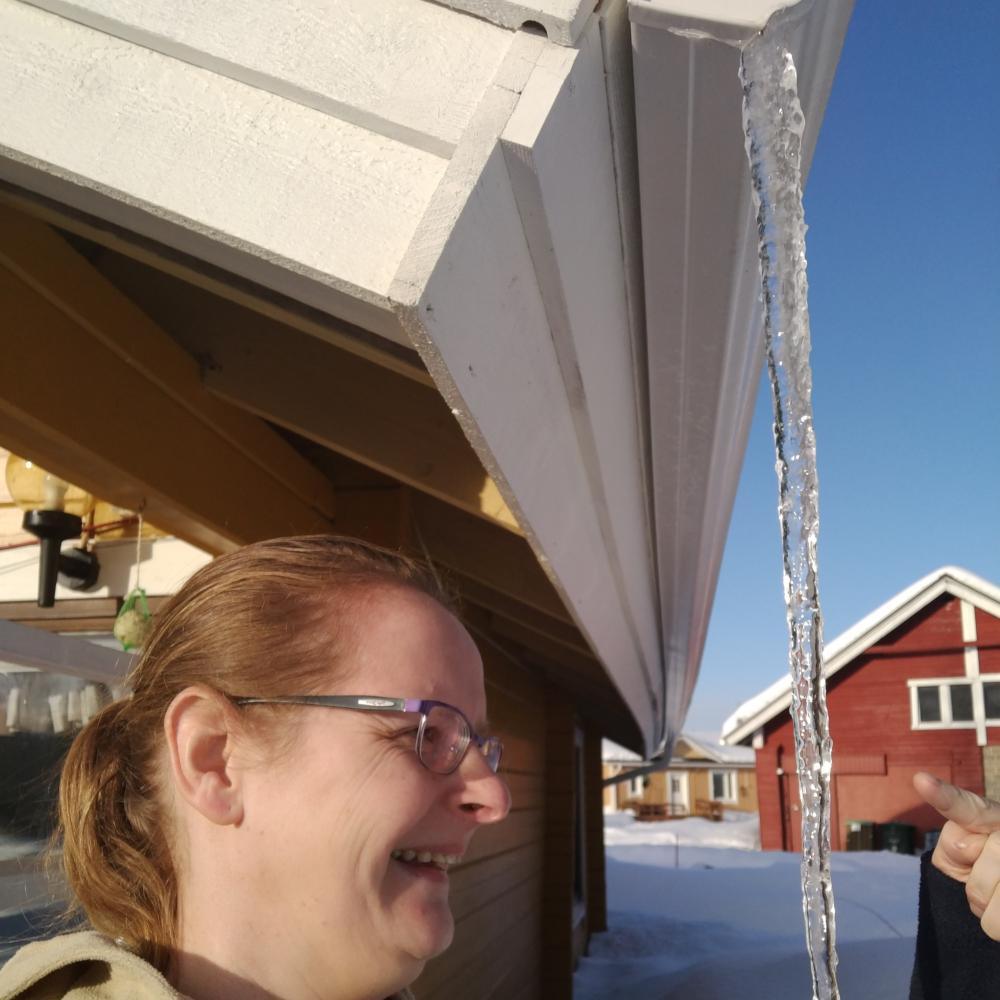
Once you’ve got the hang of it, you see it everywhere, not just in the snow. When you’re sitting on the terrace in full sun at minus five, it really feels like spring and warm, even though it was still minus twenty-four in the shade that very same morning. At night, the meltwater freezes again into a long icicle hanging from the roof; a few warm days later, it falls to the ground and shatters into pieces. Our unpaved road tells the same story. All winter long, it’s a joy to drive along it. Pure white, always beautiful. But as soon as the thaw sets in, by midday the road surface turns brown and soft, full of potholes and meltwater, only to harden again overnight into something you can actually drive over without dragging half of it home on your car. You learn to do your shopping whilst the road is still frozen.
And then, just when it seems like spring is well and truly here, it starts snowing again. Fresh, dry snow in mid-March; wet, sticky snow in April that soaks you to the bone, the sort you can finally build a snowman with, unlike the dry powder snow of mid-winter that you can simply brush off your coat. Every snowfall turns the world white one last time before the sun reclaims it. That’s Crusty Snow: winter and spring taking turns, hour after hour, until spring finally prevails.
Frequently asked questions
How deep is the snow?
In this table, you’ll find the snow depth recorded in Lepaniemi, Tepasto (Finnish Lapland), which is updated every winter.
This shows the local maximum snow depth, not a regional average.
We update this table every winter to ensure it remains up to date:
WinterMaximum snow depth2019 – 2020140 cm2020 – 202185 cm2021 – 2022130 cm2022 – 2023111 cm2023 – 2024118 cm2024 – 202584 cm2025 – 202679 cm
Frequently asked questions
How much snow falls in Lapland?
That varies greatly from winter to winter. Since 2019, we have recorded maximum snow depths here in Tepasto, ranging from around 79 cm in a mild winter to 140 cm in a harsh winter. It is precisely thanks to this depth that the spring crust can support your weight.
When is the best time to see the Northern Lights in Lapland?
Statistically speaking, aurora activity peaks around the spring and autumn equinoxes, roughly on 20 March and 22 September. Around the equinoxes, the way the Earth’s magnetic field aligns with the solar wind causes more energy to be channelled towards the poles, making bright equinox nights among the strongest of the year. In Lapland, late March is an ideal time: dark enough for the Northern Lights, but mild and sunny during the day.
ActiVities in Lapland
What to expect in Lapland's spring
In my opinion, March and April are the best months for exploring Lapland in a pleasant and active way. There’s plenty of light, the temperatures are mild enough to enjoy being outdoors for hours on end, and the snow is still deep and untouched.
- You can go snowshoeing, or leave your snowshoes at home altogether and walk on the snow crust.
- During the hours of darkness, you can still see the Northern Lights.
- In Levi, you can go skiing, and there’s something quintessentially Lappish about sitting in the sun outside an après-ski bar on Levitunturi, with snow all around you.
- You can visit the Lainio Snow Village whilst it’s still there, and
- you can write postcards at Santa’s own post office in Rovaniemi, where the yellow and red postboxes accept letters all year round.
Two practical things the sun and the cold will quickly teach you: bring lip balm and hand cream. The air is dry and cold, and this is definitely the sort of weather that leaves your hands and lips parched. Between us, we go through about six tubes of lip balm every winter.
Where Crusty Snow fits in the cycle
Lapland does not have four seasons, but eight. It's a way of dividing the year that dates back to the Sámi tradition in Finland, Sweden, Norway and Russia.
‘Crusty Snow’ is the second of the eight: the transition between the depths of winter and the true arrival of spring. It follows ‘Frosty Winter’, when the first sun reappeared above the treetops and the cold still held sway over the nights. It leads into the third season, ‘Departure of the Ice’, when the frozen river finally breaks open and the snow gives way to the ground for good.
Frosty Winter
Departure of Ice
Back to the overview: Lapland 8 Seasons
Lapland 8 Seasons · the SECONT SEASON
Discover the 'Crusty Snow' collection
Both featured works are available as premium illustrations on art blocks, metal plates, and acrylic glass prints. Each one is part of the Lapland 8 Seasons collection.