
Harvest season
The return of Lady Aurora
Season 05 / 08
There’s one season in Lapland that I’ve never truly experienced. I’ve worked six winters in the north, so I know the bitter cold and the long darkness by heart. But the harvest season, from late August through September, always fell into the gap between two lives: the summer vacation at home and the winter work that still lay ahead. I’ve only experienced its first chapter, during trips that took place in early August, and then I had to leave just before the fun part began.
That’s a fair starting point. I’m describing this season from the sidelines, from a few days of vacation, from six autumns spent watching the north from a distance, through friends and the aurora hunters I follow on social media, the ones who post the first sightings of the season.
The season in one sentence
This is the season that heralds the return of the aurora.
The season
The month when the nights return
Harvest season means that evening twilight is returning to the north, and with the darkness, the northern lights return as well. All summer long, the sky is never completely dark; by the end of August, it finally is. Around the 20th of the month, the first faint northern lights may appear, and by the end of August, the northern lights chasers I follow are usually already sharing their first sightings of the year. Every time I see those posts, a little clock starts counting down somewhere deep inside me.
The return of darkness is happening very slowly and yet not really; every week, another hour of darkness is added. The days are getting cooler, the first stars are reappearing in the sky, and the trees are starting to change color. It’s still warm enough to hike freely through the national parks, but darkness now falls a little earlier each evening, and the first cold nights are here.
· THE FIFTH SEASON ·
Discover the Harvest season - collection
The works shown are available as high-quality prints on art blocks, metal prints and acrylic glass. Each work forms part of the Lapland 8 Seasons collection.
Golden cloudberry
Berries in the bog
Before the dark returns, the ground reveals its harvest. This is the season when you can pick plenty of berries in the forest. I remember people emerging from the trees with large buckets filled to the brim with blueberries. Blue and red berries are everywhere: blueberries, red bilberries, cranberries, and those little red ones that the Finns simply call “the red berries.”
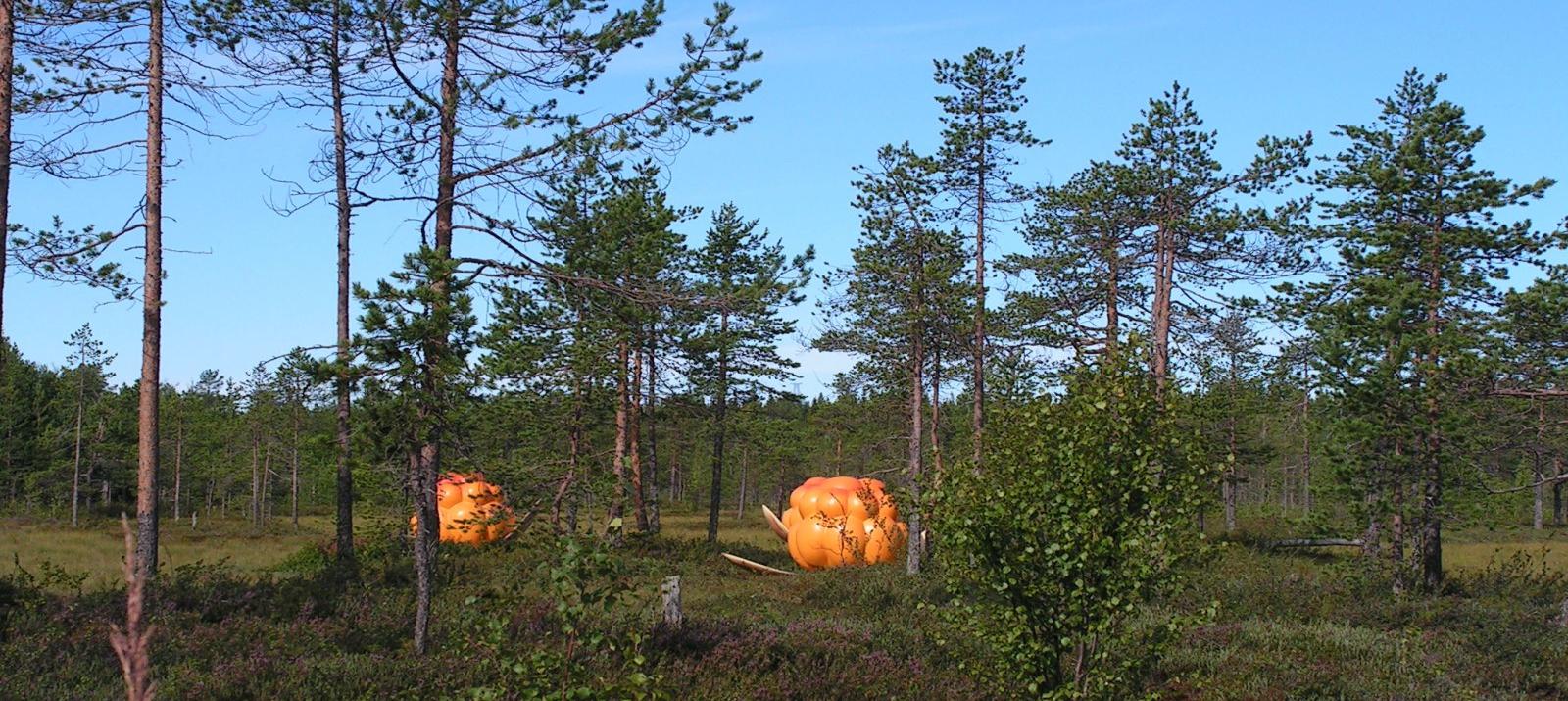
And then there’s the one everyone’s waiting for: the golden cloudberry, or lakka. It ripens for only a few short weeks in late summer, roughly from the end of July into August, and ripe means soft and amber, no longer the hard red of a week before. It grows only in the damp soil of the far north, looks like a light-orange raspberry, and is so rare that finding a good spot feels like uncovering a secret. I once photographed a single cloudberry glistening beside a wooden hiking trail near Rovaniemi. The jam isn’t my favourite because it’s full of tiny seeds. But since these berries are exceptionally rich in vitamin C, you’ll eat a spoonful or two every day in the winter if you feel a cold coming on. That little orange berry keeps you from having to visit the doctor during the winter.
There’s another way the Finns get their berries during the dark months. In the store, in the refrigerated section, you’ll see a heavy cardboard package that looks exactly like a liter of drinkable yogurt: it feels just as heavy in your hand and has the same shape. It’s not yogurt. It’s mustikkakeitto: blueberry soup. “Mustikka” means blueberry, “keitto” means soup, and that’s exactly what it is: a thick blueberry mixture that you drink or eat with a spoon as a snack. It’s enriched with vitamin C, which is exactly the point in a region where winter lasts a long time.
Featured works
Two illustrations from this season
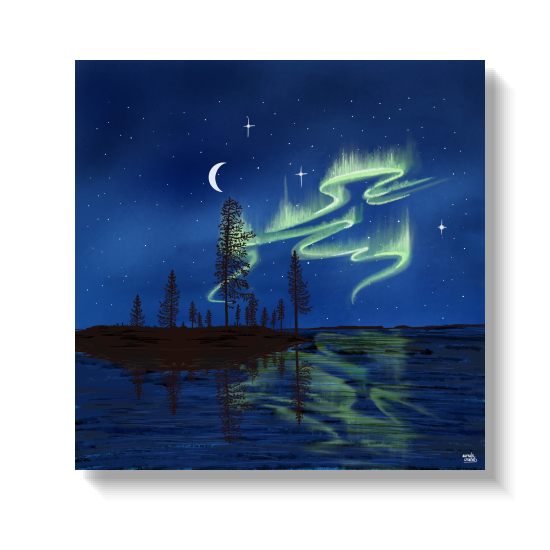
'The Return of Lady Aurora' is my response to that countdown.
It captures the exact moment when the season turns: the nights are growing dark again, the first light reflects off the still waters of a border river between Finland and Sweden, a double aurora, one in the sky and one on the water’s surface.
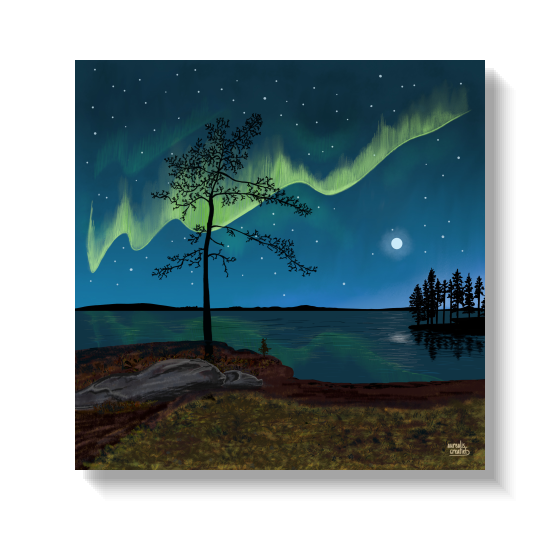
'The first glimmer of the northern lights' is more subdued. There’s still a trace of twilight on the horizon, because the nights are still short this early in the season, and in the foreground lie those golden cloudberries. It’s the entire season in a single image: the last light of summer, the first of winter, and the harvest in between. Even the faintest glow counts as a good night if it’s the first of the year.
Northern lights
Why I paint the northern lights so often
People sometimes ask me why the northern lights appear in so much of my work. The honest answer is that I’ve simply seen them so often. Over the course of six winters, I observed the Northern Lights nearly every two or three nights.
I’ve watched them change over the years, from predictable bursts around the equinoxes and quiet December nights to a period when every month brought its own storms. The sun is now nearly at the peak of its cycle, which means there are hardly any quiet months left.
So yes: lots of northern lights, observed over many nights. That’s why I keep drawing them. The harvest season is simply the time when the count starts all over again.
What a visitor meets in this season
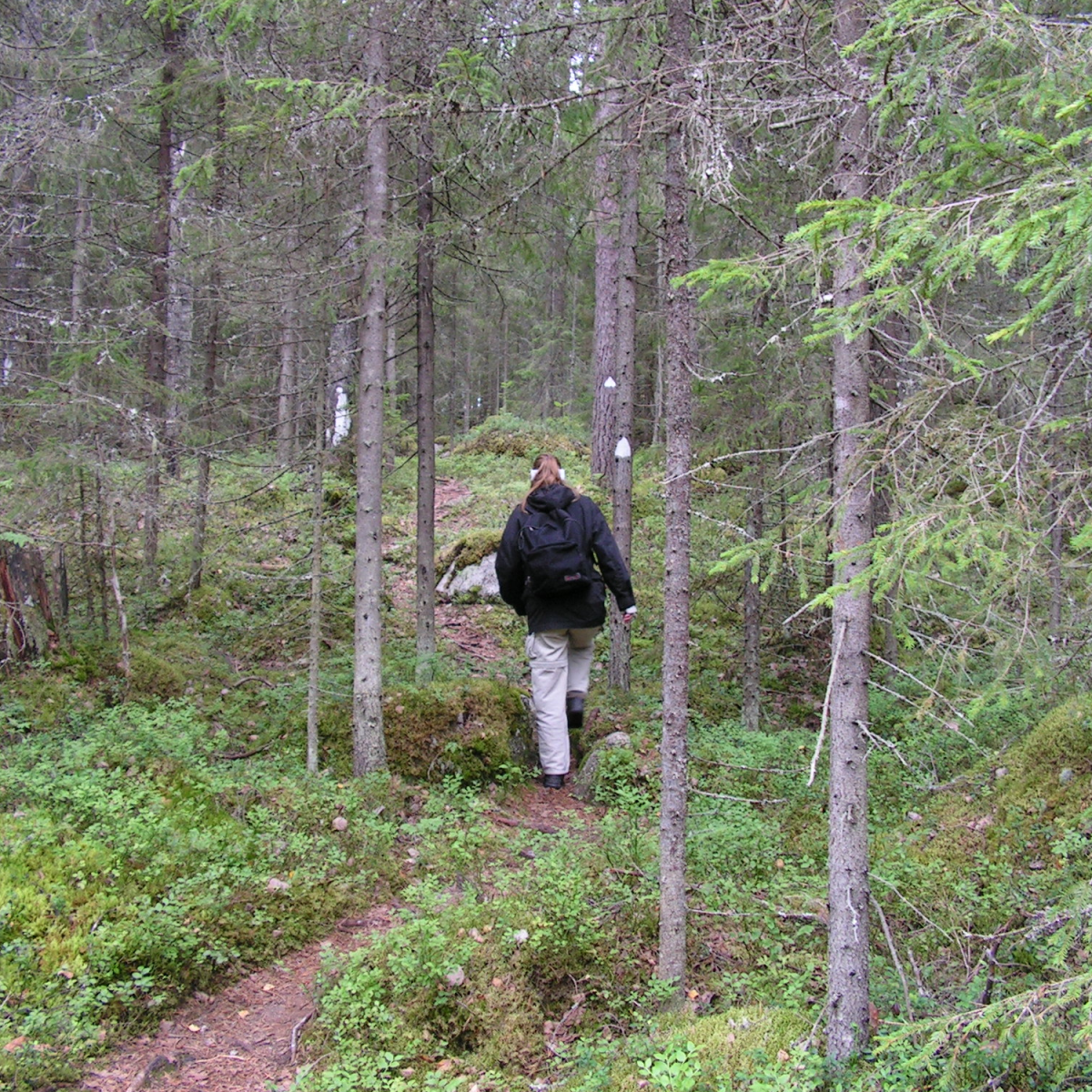
If you’re heading north now, you can look forward to a wood-fired sauna at the end of the day, long walks through national parks with a basket for mushrooms and berries, and the quiet pleasure of watching the sun finally set again.
And if you’re lucky and stay up long enough, you might catch a glimpse of the year’s first faint aurora while a sliver of daylight still lingers on the horizon.
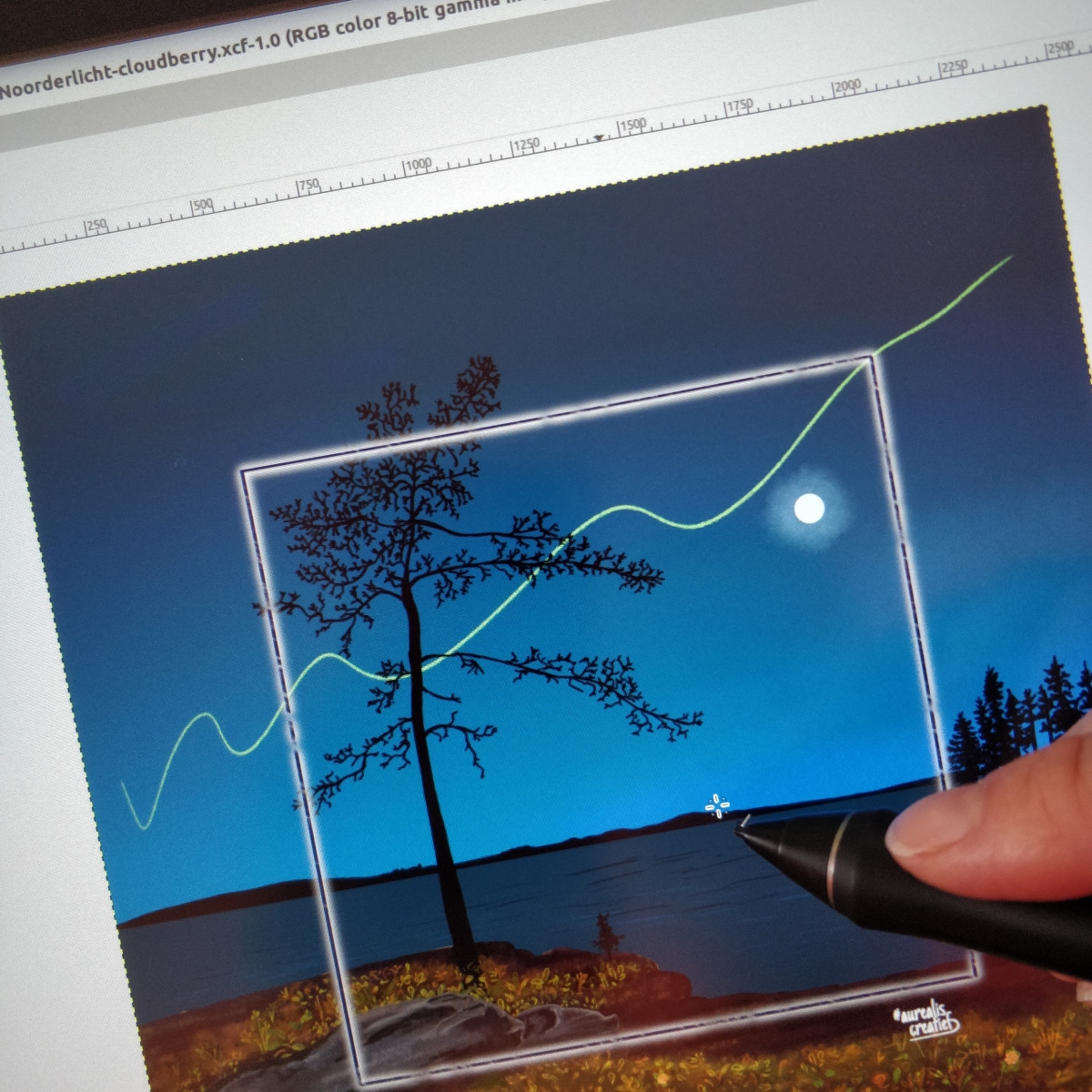
That’s the magic of this season in a single image: two kinds of light in the same sky.
Frequently asked questions
Can you pick berries and mushrooms freely in Lapland?
Yes, you can pick berries and mushrooms freely in Lapland, almost anywhere in the forest, thanks to a Finnish tradition called jokamiehenoikeus, or Everyman's Right. It allows anyone, residents and visitors alike, to walk, forage and camp in nature regardless of who owns the land, as long as you cause no damage and keep your distance from homes. In practice this means you may fill a bucket with bilberries or cloudberries in the harvest season without asking permission. A few things stay off limits, such as picking from private gardens or disturbing wildlife, but the freedom is real and it is one of the quiet joys of being in the north at this time of year.
When can you first see the northern lights in Lapland?
You can usually first see the northern lights in Lapland from around the 20th of August, once the summer nights finally grow dark enough again. Through the midnight sun weeks the sky never truly closes, so no aurora is visible even when it is active overhead. As the harvest season begins and darkness returns to the north, the first faint displays appear, and by early September the nights are long enough for the aurora to show clearly. The season then runs through to the spring. From my own six winters in the north, the light grew more reliable as autumn deepened, with the strongest early displays often around the September equinox.
Where this season fits in the cycle
The harvest season is the fifth chapter in the “Lapland 8 Seasons” cycle. It follows the endless light of the Midnight Sun. As the harvest is gathered, the first darkness returns to the sky and the first Northern Lights appear, and Lapland turns towards the deep colours of autumn.
Lapland's Nightless Nights.
Ruska
Back to the overview: Lapland 8 Seasons
Lapland 8 Seasons · THE FIFTH SEASON
Discover the Harvest season - collection
Both featured works are available as premium illustrations on art blocks, metal plates, and acrylic glass prints. Each one is part of the Lapland 8 Seasons collection.