
Departure of Ice: the season you hear before you see it
the season you hear before you see it
Season 03 / 08
Around mid-April, you first notice the change with your ears, before you see it with your eyes: the river is changing. All winter long, the river had been still, covered by a thick layer of ice, sometimes strong enough to serve as a road. Then, one day, you open the window at night and hear it: water flowing again. A soft, steady murmur where for months there had been complete silence.
That is the unmistakable hallmark of this season. The earlier seasons are things you look at: the frost patterns, the glistening crust. The melting of the ice is something you listen to. The warmth finally breaks through the heavy snow, the ice cracks, it shifts and the rivers awaken. Where there are rapids, the water is the first to show itself, and the babbling that returns to the world sounds almost loud after such a long time.
The season in one sentence
The silence is over.
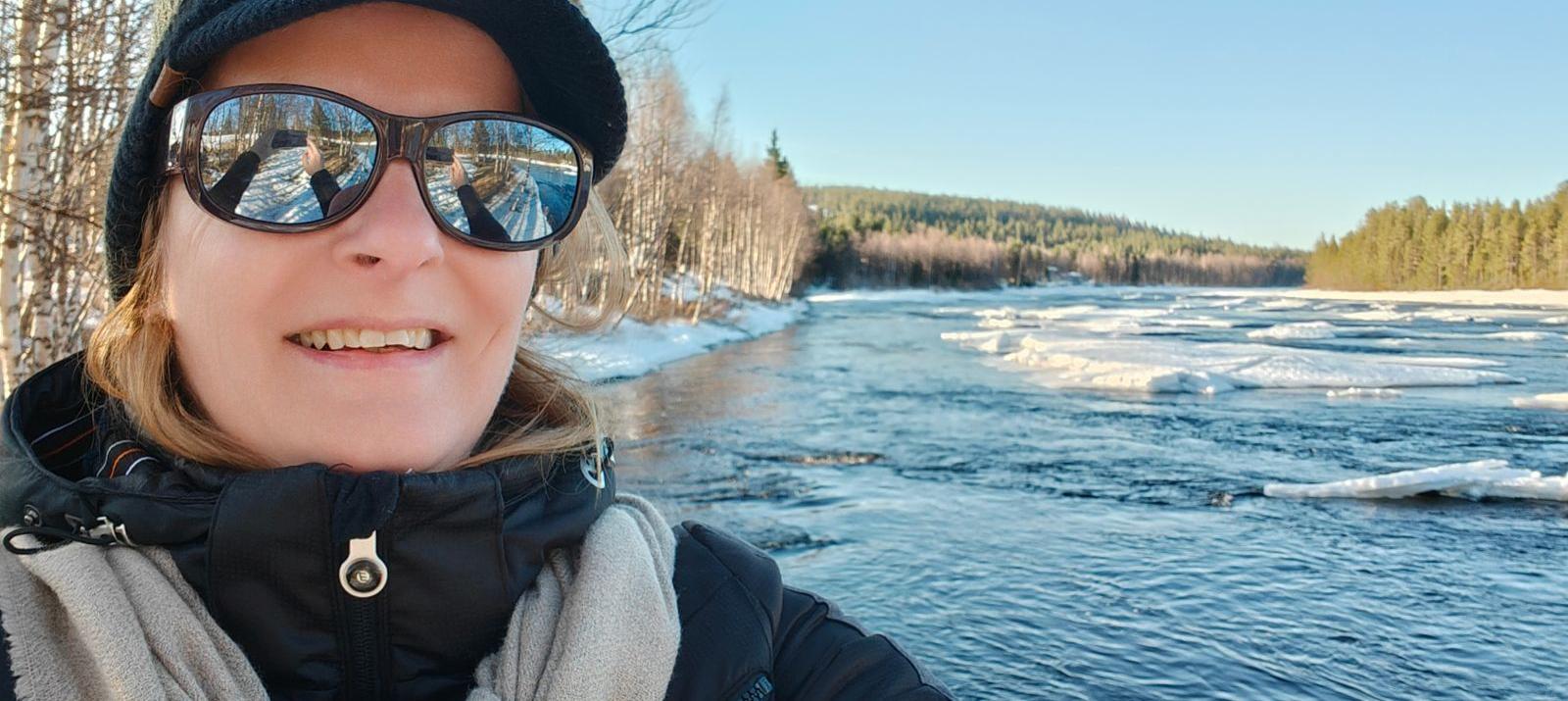
Late April on the Ounasjoki. Open water down the middle, ice floes breaking apart along the far bank. After months of silence, the river had found its voice again.
The season
What Departure of Ice really is
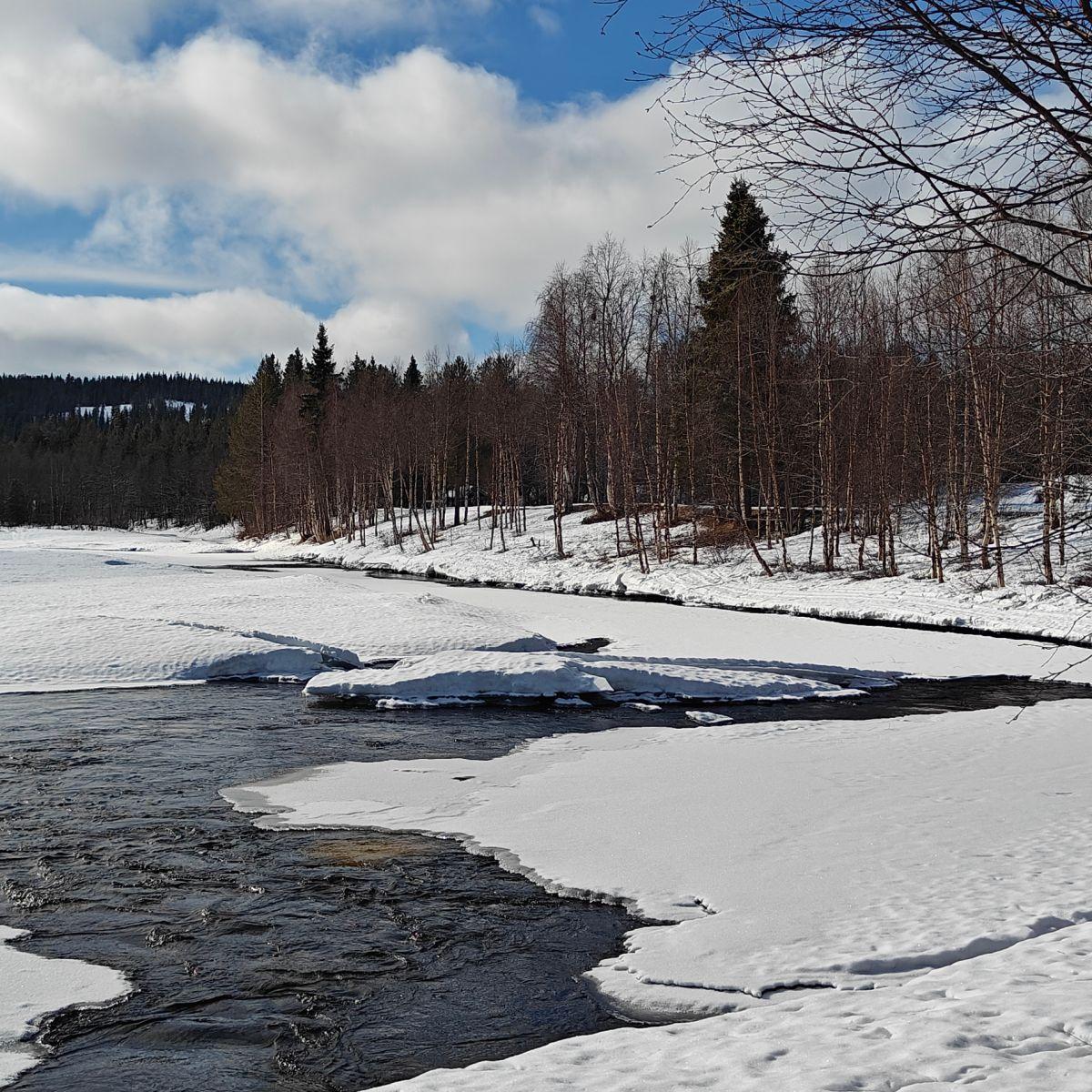
This is the third of Lapland’s eight seasons, the period from mid-April to mid-May, marking the transition between spring and summer. For all thirty-odd days of it, there is still snow on the ground. At the end of April 2025, there was still about a metre of snow on the ground in my neighbourhood – more than most people expect when they imagine a river breaking up – and it would take the whole of May for that snow to melt completely. That snow depth is a season in its own right; I’ve kept a running record of it on Crusty Snow (see the snow depth table there). But the river tells a different story than the snowfields do.
It’s an unstable, transitional state, and it’s exceptionally picturesque. The river is partly frozen, partly flowing. The first patches of wet ice appear. Ice floes break loose and drift downstream. The snowmobile tracks disappear, the ice roads close, and the first ice cream cone of the season starts to feel like a truly well-earned treat. Nothing happens gradually here: it changes a little more every day, and no two days look the same.
And the snow doesn’t give up easily. One morning in late April 2024, I built a snowman; by midday, with the temperature at plus four degrees, it had already collapsed. Two days later, I woke up to find everything white again: there were two centimetres of fresh snow covering the whole site, the trees were blanketed in a light dusting of snow, and the snow depth had risen again from 102 to 108 centimetres. My colleagues groaned. I thought it was lovely. By four o’clock in the afternoon, it had melted away again and the road was muddy once more. Winter and spring alternate, hour after hour, until spring finally gains the upper hand.
A Finnish expression that suits this season: ‘Onpa kaunis aamu’ - 'what a beautiful morning'.
You hear it here more often in May than at any other time of the year.
· The THIRD season ·
Discover the ‘Departure of Ice’ collection
The artworks shown are available as high-quality illustrations on art blocks, metal prints and acrylic glass. Each work forms part of the Lapland 8 Seasons collection.
Featured work
Floating Ice
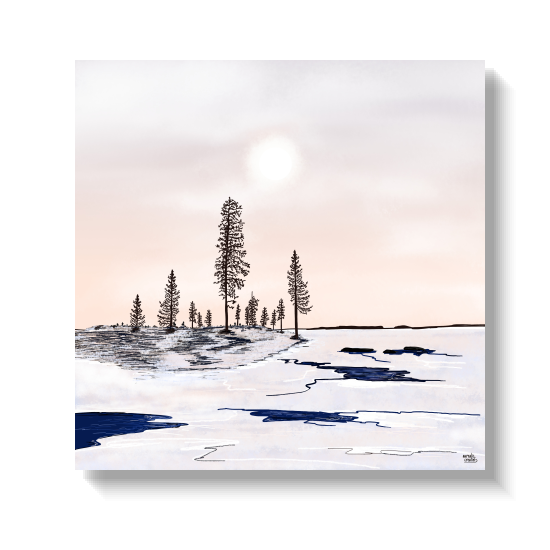
This season’s first illustration captures the river in a state of transition: the riverbed is half-frozen and half-flowing, with ice floes drifting along with the current beneath a gentle spring sky. It captures precisely the moment for which the season is named: when the warmth finally breaks through the heavy snow, the ice cracks and the rivers begin to flow once more, coming back to life after months of silence beneath a thick white blanket.
The landscape changes very quickly. It is the first real glimpse of the Lapland summer yet to come.
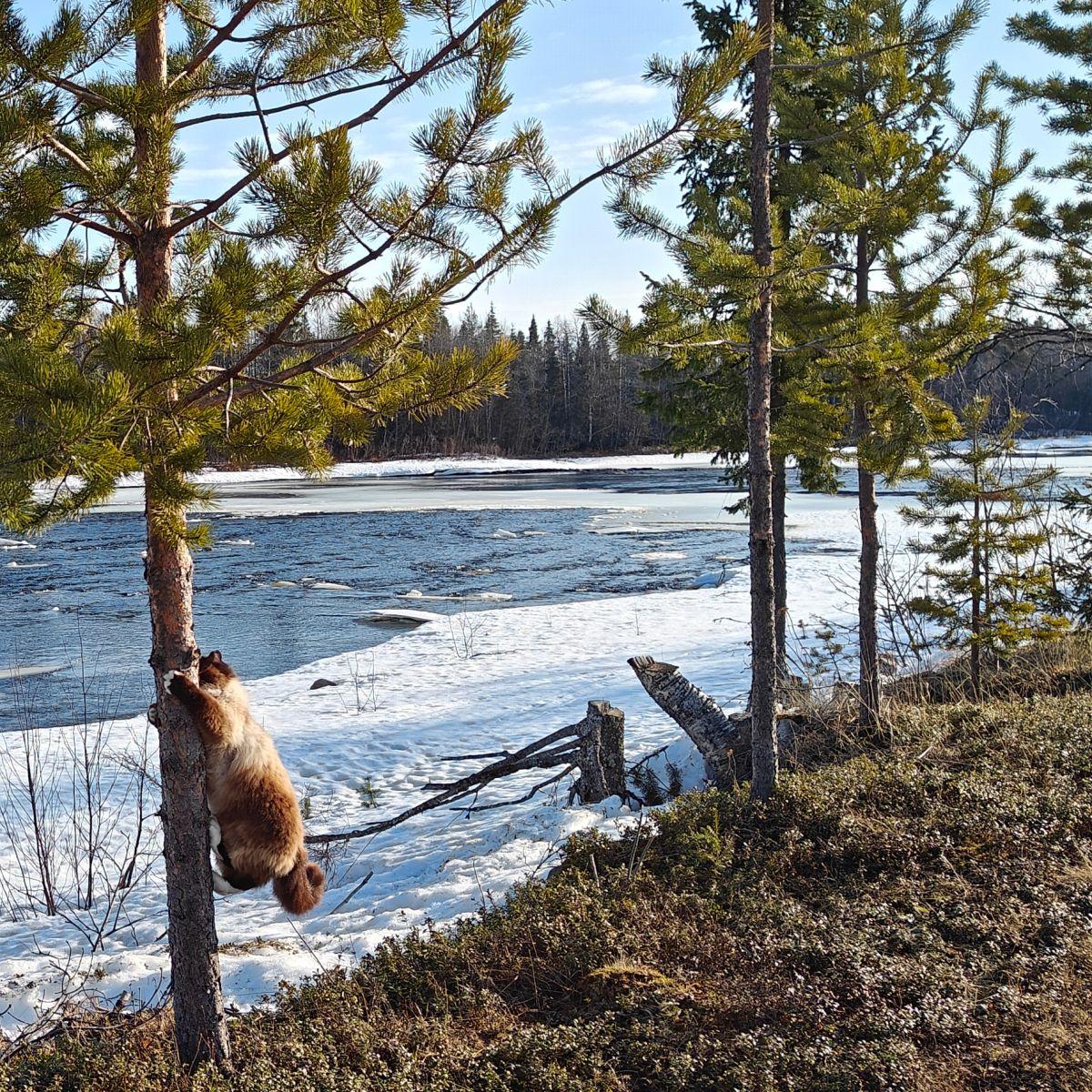
I painted it because I heard water flowing again after five months. For six winters, I lived on the banks of the Ounasjoki. Upon our arrival in November, we heard the river flowing; then there was a long silence as soon as the ice set in; and then, months later, the river came back to life, growing louder by the day. ‘Floating Ice’ captures that return, recorded on the drawing tablet.
Featured work
Awaken
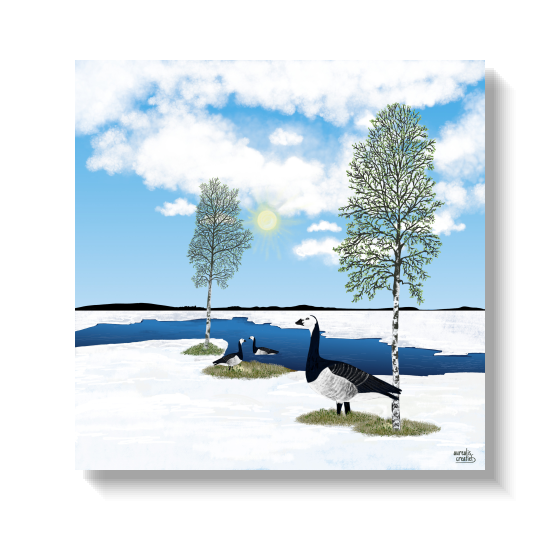
The second illustration shows the other side of the season: not the melting of the ice, but the awakening of life. On a lake that has just broken free of ice, a pair of barnacle geese rest on the shore – travellers who have flown thousands of miles from the south to reach their breeding grounds in the Arctic.
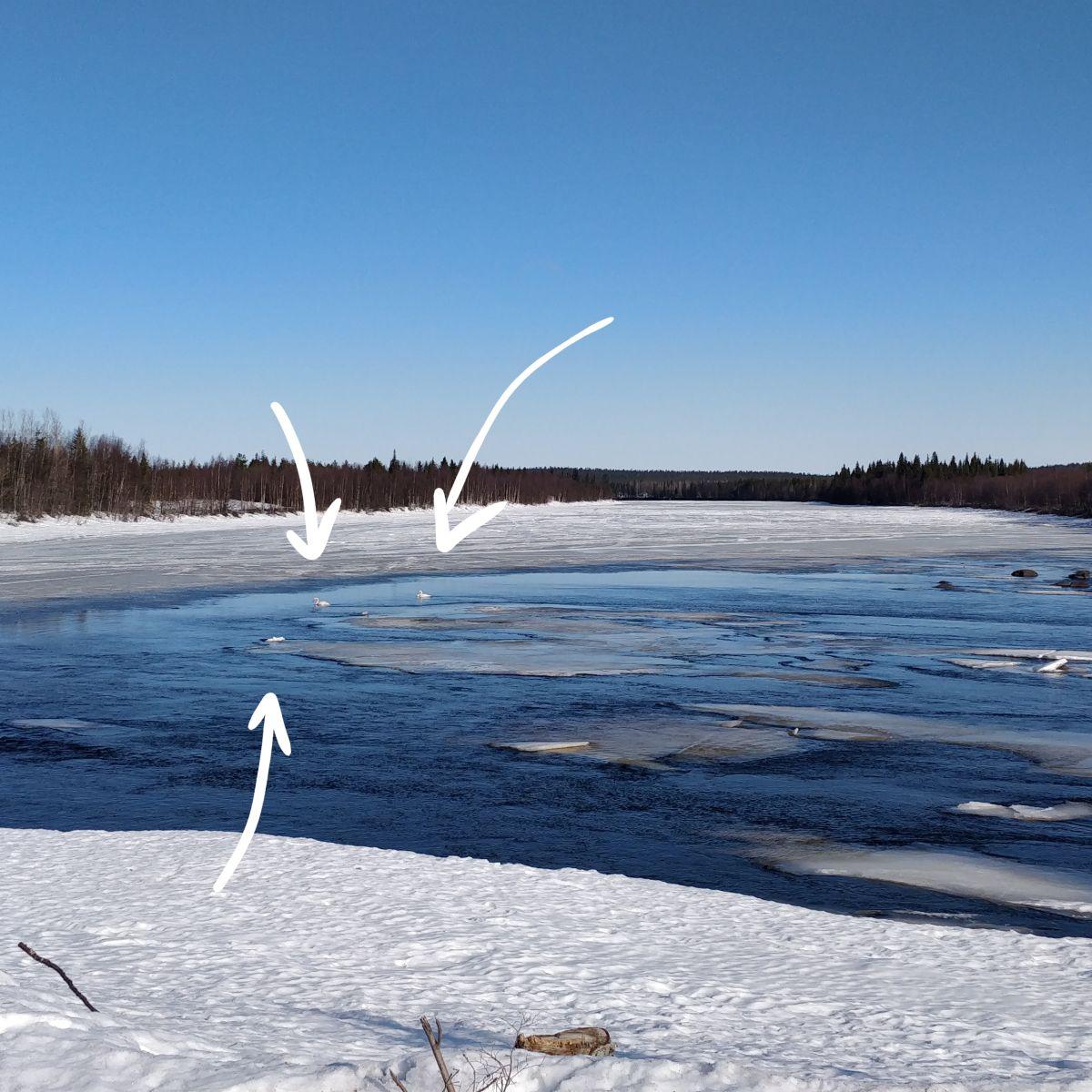
The migrating geese are among the first harbingers of spring; they arrive as the ice melts and the days grow longer. Their presence heralds the start of a new cycle in the wilderness.
This illustration, too, is based directly on my own experience. The very first to arrive are the wild swans, Finland’s national bird, which alight on the first patch of open water whilst the river is still half-frozen. At the end of April, I photographed three of them, resting on a strip of open water amongst the floating ice floes.
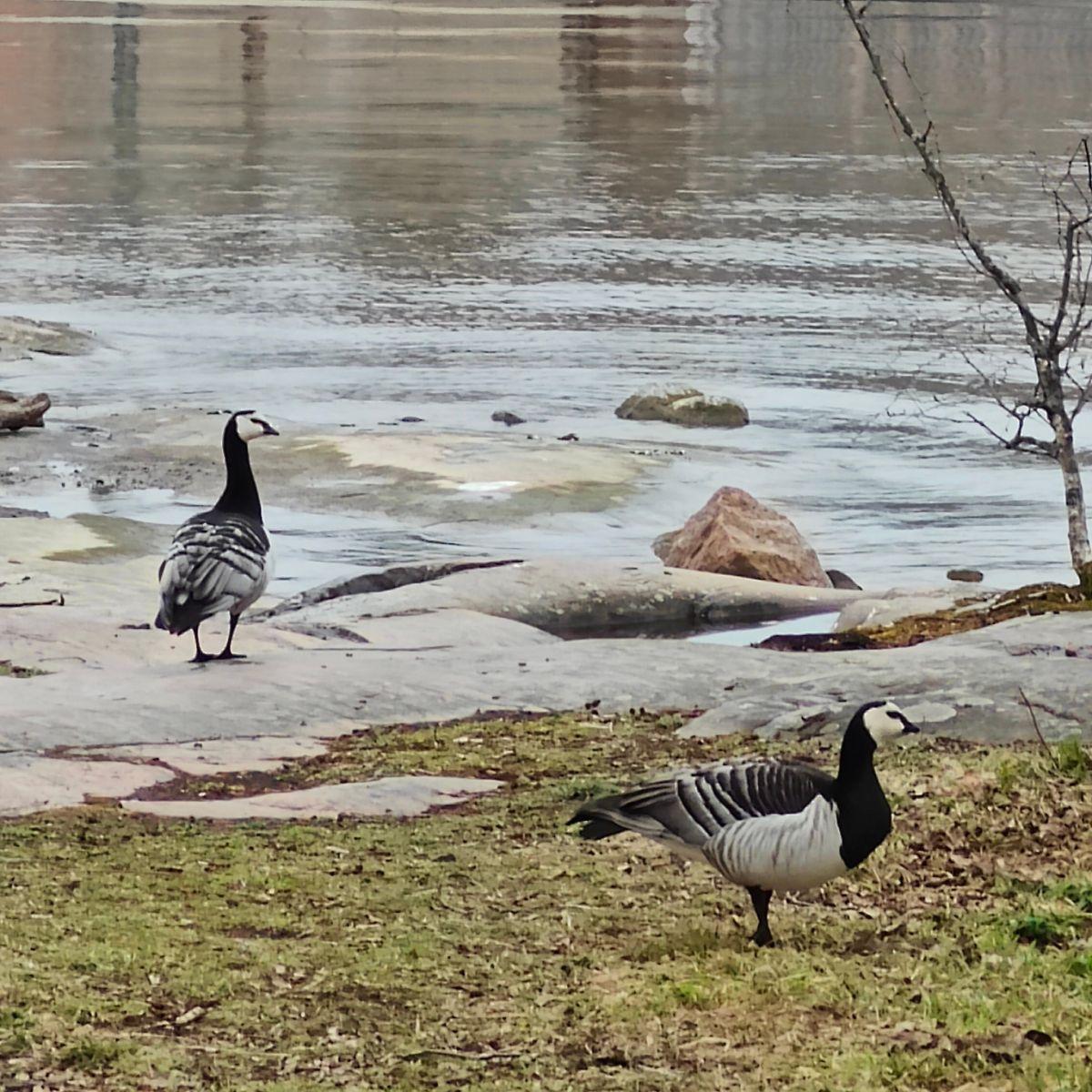
The barnacle geese, which can be seen in this illustration, follow a little later. That year, I came across them further south on my way home: a pair resting in Helsinki, having just arrived and with the entire journey north still ahead of them.
Then, day after day, more signs of life closer to home: a deer on the other side of the river on an early, far too bright morning; a fox visible from the sofa in the evening; a ptarmigan and small birds on the walk to work; the snow melting in a ring around each birch trunk, so that you suddenly see just how high it had piled up, and the first green shoots emerging from beneath it.
After six months under the snow, it all feels like a little miracle.
The night that no longer turns dark
Another thing this season is quietly doing is taking away the night. The Frosty Winter gave back the first rays of sunshine; the Crusty Snow gave back the first real warmth. The disappearance of the ice restores the light itself, everything. By the end of April, the sky no longer gets properly dark. To give you an idea of the amount of light: At the end of April (25 April), sunrise is at 4.24 am and sunset at 10.12 pm, and by a quarter to three in the morning it is already light. A few days later (29 April), it’s already bright twilight at three o’clock; the sun rises at 4.45 am and sets again at 9.56 pm. During those six hours of ‘night’ between sunrise and sunset, it really doesn’t get dark at all.
You come home after doing the shopping in Kittilä (the shops are open until 9 pm on weekdays), look at each other and say: ‘It won’t get any darker than this.’ At a time when it really ought to be dark already, it’s still twilight. That’s the first taste of the midnight sun, which is still a few weeks away (the midnight sun arrives around 21 June). The nights in this third season have their very own kind of magic. When the Northern Lights appear now, it feels like a farewell: the last time the sky is dark enough for the Northern Lights to be visible, before the endless light takes over.
What to expect when the ice in Lapland starts to melt
This is a season to take it easy and pay close attention, as nature changes right before your eyes. Here are a few things you can definitely count on between mid-April and mid-May:
- Walk to a river or lake and watch the ice break up. Open water appears first at rapids, and the sound carries far.
- Expect the weather to change suddenly. One day it might be eight degrees above zero, and the next it might be snowing, with a fresh white layer that has already disappeared by midday.
- Look out for the first returning birds: wild swans settling on the first patches of open water, barnacle geese and other migratory birds following as the ice recedes, and small ducks gathering where the river flows freely.
- In the evening, nature comes close. Hares, still in their white winter coats, playing in the garden before their coats turn brown again for the summer; a fox at dusk; deer on the other side of the river.
- Sit outside in the sun when temperatures are around freezing. The light already radiates real warmth, even if the thermometer doesn’t show it, and come evening, there’s little that can beat a hot tub under a sky that never quite darkens.
A practical tip, the same one that spring teaches you all season long: the air is still dry and cold, so keep lip balm and hand cream to hand.
Frequently asked questions
Frequently asked questions
When does the ice on the rivers in Lapland break up?
Usually from mid-April onwards, although this varies from year to year, depending on the amount of snow in winter. The rivers gradually become ice-free again, not all at once: first rapids appear, then floating ice floes, and it takes more than a month for the ice to disappear completely. In most years, the last of the ice does not disappear until around mid-May.
When does the midnight sun start in Lapland?
Above the Arctic Circle, the sun stops setting around mid-May and remains in the sky for weeks on end. However, you’ll notice the change well before then. By the end of April, the nights are no longer completely dark, and by early May there is only a brief twilight around two or three o’clock in the morning. The ‘Departure of Ice’ period is the build-up to this: the final few weeks in which there is still a proper night, before the endless light takes over.
Where Departure of Ice fits in the cycle
Lapland does not have four seasons, but eight. This is a tradition that dates back to the Sámi tradition in Finland, Sweden, Norway and Russia. ‘Departure of Ice’ is the third of the eight: the moment when the frozen river finally breaks open and the snow gives way to the ground for good. It follows on from ‘Crusty Snow’, the season when you could still walk across the snowpack on a firm crust, and leads into the ‘Midnight Sun’, when the sun no longer sets at all and the nights disappear for weeks on end.
the season you can walk on the snow.
Midnight sun
BACK to the overview: Lapland 8 Seasons
Lapland 8 Seasons · THE THIRD SEASON
Discover 'the Departure of Ice' collection
Both featured works are available as premium illustrations on art blocks, metal plates, and acrylic glass prints. Each one is part of the Lapland 8 Seasons collection.